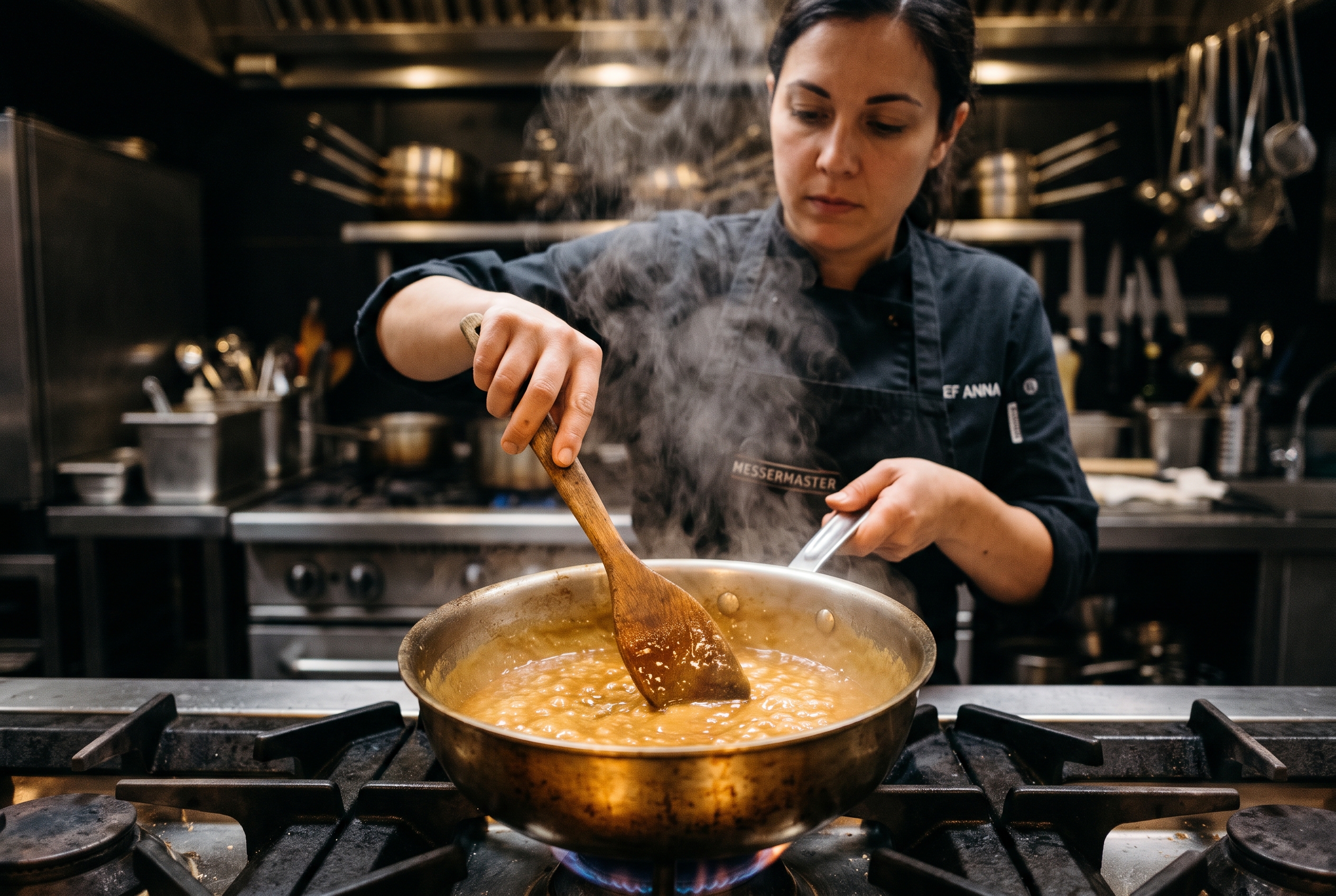
Prep Time: 5 minutes | Cook Time: 10–15 minutes | Servings: Makes approximately 400ml
If there is a single technique that separates a cook who can follow a recipe from a chef who understands cooking, it is the roux. A roux is nothing more than equal parts fat and flour, cooked together to eliminate the raw flour taste and create a starchy thickener. But a roux made wrong produces lumpy, pasty, floury sauces. A roux made right is the invisible foundation of béchamel, velouté, espagnole — three of the five French mother sauces — and countless derivatives.
In 10 years of hotel kitchens, I have used this technique every single day. Let me teach it properly.
Ingredients
For a Basic White (Blonde) Roux
- 50g unsalted butter
- 50g plain flour, sifted
To Make Béchamel (White Sauce)
- 1 x white roux (above)
- 600ml whole milk, warmed
- ½ small onion, peeled and studded with 3 cloves
- 1 bay leaf
- Freshly grated nutmeg
- Salt and white pepper
The Three Roux Stages
A roux cooks through three stages depending on how long you cook it. Each has different uses:
- White roux (1–2 minutes of cooking): Cooked just enough to eliminate the raw flour taste. Used for béchamel, cream sauces, macaroni cheese.
- Blonde roux (3–5 minutes): Light golden colour, nutty aroma. Used for velouté (chicken, fish, or veal-based white sauces).
- Brown roux (8–15 minutes): Deep caramel to chocolate colour. Used for espagnole (brown sauce) and Cajun cooking. Note: the darker the roux, the less thickening power it has — the starch partially breaks down with extended cooking.
Method
Step 1: Measure Precisely
Equal weights of fat and flour — not volumes. Weigh both. The ratio is the constant. The type of fat can vary (butter, clarified butter, oil, lard), but the ratio doesn’t.
Step 2: Melt the Butter
Use a heavy-based saucepan — thin pans create hot spots that burn the roux on the bottom while the top remains uncooked. Melt butter over medium heat until it foams and the foam subsides. This indicates the water in the butter has evaporated, which is correct — excess water can cause the roux to spatter when flour is added.
Step 3: Add Flour All at Once
Add all the sifted flour at once to the melted butter. Stir immediately and constantly with a wooden spoon or flat-sided spatula. Cook for the appropriate time depending on which roux you’re making, keeping the heat at medium and stirring continuously to ensure even cooking and prevent scorching. The mixture will look crumbly, then paste-like. This is normal.
Step 4: Add Liquid — The Critical Moment
For béchamel: infuse the milk by simmering the onion, bay leaf, and cloves in it for 10 minutes, then straining. The roux should be warm but not scorching when you add the first liquid. Add the warm (not boiling, not cold) milk in a thin stream, whisking vigorously. Add the first 100ml, whisk until completely smooth before adding more. Once about half the milk is incorporated, you can add the rest in a larger pour, whisking constantly. Bring to a gentle simmer and cook for 5 minutes, whisking regularly. Season with nutmeg, salt, and white pepper.
Step 5: Strain and Finish
Pass through a fine sieve for a perfectly smooth result. Cover with cling film pressed onto the surface to prevent a skin forming.
Common Problems and Fixes
- Lumpy sauce: Caused by adding cold milk to a very hot roux, or hot milk to a cold roux. Fix: blend with an immersion blender and strain.
- Floury taste: The roux wasn’t cooked long enough. Cook for longer before adding liquid — even a white roux needs a minimum of 90 seconds on the heat.
- Too thick: Add warm milk and whisk. Thin gradually — you can always add more liquid, but you cannot easily take it away.
- Too thin: Simmer longer to reduce. As a last resort, make a small separate roux and whisk into the sauce.
Follow @cookingdepth on Instagram for more professional recipes and chef secrets.