
Naan Vs Roti — What A Professional Chef Knows That Home Cooks Don’t
In every hotel kitchen I’ve worked — Park Hyatt Goa, Jaipur Marriott, HK Clarks Amritsar — the bread station was where the real artistry happened. I’ve watched bread chefs with calloused hands who could tell if a dough was ready by squeezing it for half a second. And the question they hated most from trainees like me? “Is naan basically just fancy roti?” No. It’s not. And after this post, you’ll understand exactly why — and you’ll never confuse the two again.
The short answer is that naan and roti differ in four fundamental ways: ingredients, leavening, cooking method, and texture. The long answer? That’s what the next 1000 words are for. Pull up a chair.
“Asking a chef if naan is just roti with toppings is like asking a pianist if a grand piano is just a big keyboard.”
The Fundamental Differences
Let me break this down the way I learned it in professional kitchens:
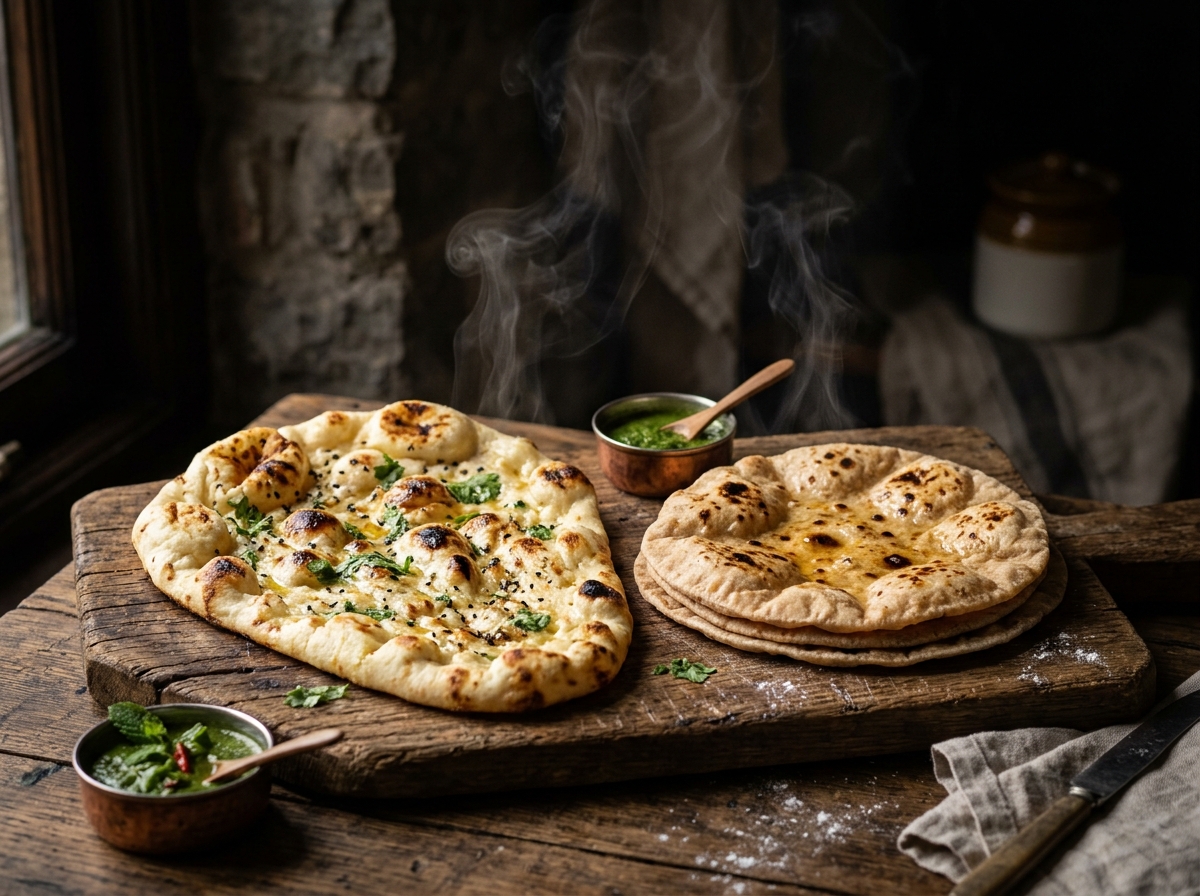
Roti is an unleavened whole wheat flatbread. It uses atta (whole wheat flour), water, and sometimes a pinch of salt. No yeast, no baking powder, no dairy. It’s cooked on a flat tawa (griddle) and then held directly over a flame to puff up. Roti is everyday bread — the workhorse of Indian meals.
Naan is a leavened bread made with maida (refined flour), yogurt, yeast or baking powder, milk, and often butter or ghee. It’s traditionally cooked in a tandoor — stuck to the inside wall of the clay oven where radiant heat and gravity create its signature tear-drop shape and charred bubbles. Naan is celebration bread — richer, softer, and more complex.
Surprising facts most people don’t know:
- Naan has Persian origins, not Indian. The word “naan” comes from Persian and the bread traveled to India with the Mughal empire. Roti is the indigenous Indian bread.
- Roti has more nutritional value. Because it’s made from whole wheat, roti retains fiber, B vitamins, and minerals that are stripped during the refining process that creates maida.
- Restaurant naan contains sugar. Almost every hotel kitchen adds a teaspoon of sugar to naan dough. It feeds the yeast for better rise and creates those beautiful brown spots during cooking.
- The tandoor isn’t just about heat — it’s about moisture. When naan sticks to the tandoor wall, the side facing the clay steams (from the dough’s moisture), while the exposed side gets dry radiant heat. This dual cooking is why tandoori naan has a soft, steamed interior and a slightly crisp exterior.
How to Make Restaurant-Quality Naan at Home
Ingredients:
- 2 cups maida (all-purpose flour)
- ½ teaspoon instant yeast
- ½ teaspoon baking powder
- 1 teaspoon sugar
- ½ teaspoon salt
- 3 tablespoons yogurt
- 2 tablespoons milk
- 1 tablespoon oil or melted ghee
- Warm water as needed (approximately ½ cup)
- Butter and garlic for finishing (optional)
Method:
Mix all dry ingredients. Add yogurt, milk, and oil. Gradually add warm water and knead for 8-10 minutes until the dough is smooth, soft, and slightly tacky — not sticky. Cover with a damp cloth and let it rise for 2 hours until doubled.
Divide into 6 balls. Roll each into a teardrop shape about 5mm thick. Here’s the home oven hack: preheat a cast iron skillet on the stove until smoking hot. Lay the naan on the dry skillet. When bubbles form on top (60-90 seconds), flip it and press gently. Cook another 60 seconds. For char marks, hold the naan with tongs directly over the gas flame for a few seconds per side. Brush immediately with butter.
How to Make Perfect Roti
Ingredients:
- 2 cups whole wheat atta
- ½ teaspoon salt
- Warm water as needed (approximately ¾ cup)
Method:
Mix atta and salt. Add water gradually and knead for 5-7 minutes until the dough is soft and pliable. Rest for 15-20 minutes covered. Divide into golf-ball-sized portions. Roll each into a thin, even circle. Cook on a hot tawa for 30 seconds per side, then hold directly over an open flame until it puffs up fully. Apply a thin layer of ghee if desired.
The key to roti that puffs: the dough must be rolled evenly (uneven thickness prevents full puffing), the tawa must be properly hot, and the direct flame exposure must happen quickly.
For the best bread-and-curry combinations, try our Paneer Butter Masala, Dal Makhani, Butter Chicken, or Heritage Biryani.
Which One Should You Serve?
In professional kitchens, we followed a simple rule: roti for everyday meals, naan for special occasions or rich gravies. Rich, creamy curries like butter chicken or paneer butter masala pair better with naan because its soft, absorbent texture soaks up thick sauces. Lighter dishes like dal or sabzi pair better with roti — the whole wheat flavor complements without competing.
Frequently Asked Questions
Can I make naan without a tandoor or cast iron?
Yes — any heavy-bottomed pan works. The key is extreme, dry heat. Some home cooks even make naan on an inverted wok over high heat. The surface must be hot enough that the dough immediately starts bubbling when it touches down. No oil on the pan.
Why does my roti turn hard after cooling?
Roti dries out quickly because it has no fat in the dough. Two fixes: apply ghee immediately after cooking (it seals in moisture), and store in an insulated container or wrapped in a cloth napkin. At hotels, we kept roti in specially designed hot boxes that trapped steam.
Is kulcha the same as naan?
Similar but not identical. Kulcha uses baking powder or baking soda instead of yeast, making it denser and less airy. Kulcha is also typically stuffed (with potato, paneer, or onion), while naan is usually plain or topped. In Amritsar, kulcha is practically its own food group.
The Bread Station Philosophy
At HK Clarks, the bread station chef told me something I’ve never forgotten: “Rice feeds the stomach. Bread feeds the soul.” Whether it’s a simple roti puffing over a flame or a buttery naan charring in a tandoor, Indian bread is where technique meets tradition in the most elemental way. Master both, and you’ve mastered the foundation of Indian cooking.
📌 Save this naan vs roti guide for the next time someone asks you the difference — now you’ll answer like a chef.
Have you tried making naan on a cast iron skillet? How do you get your roti to puff perfectly? Tell me in the comments 👇
Follow @cookingdepth on Instagram for daily recipes, chef tips, and behind-the-scenes hotel kitchen stories.