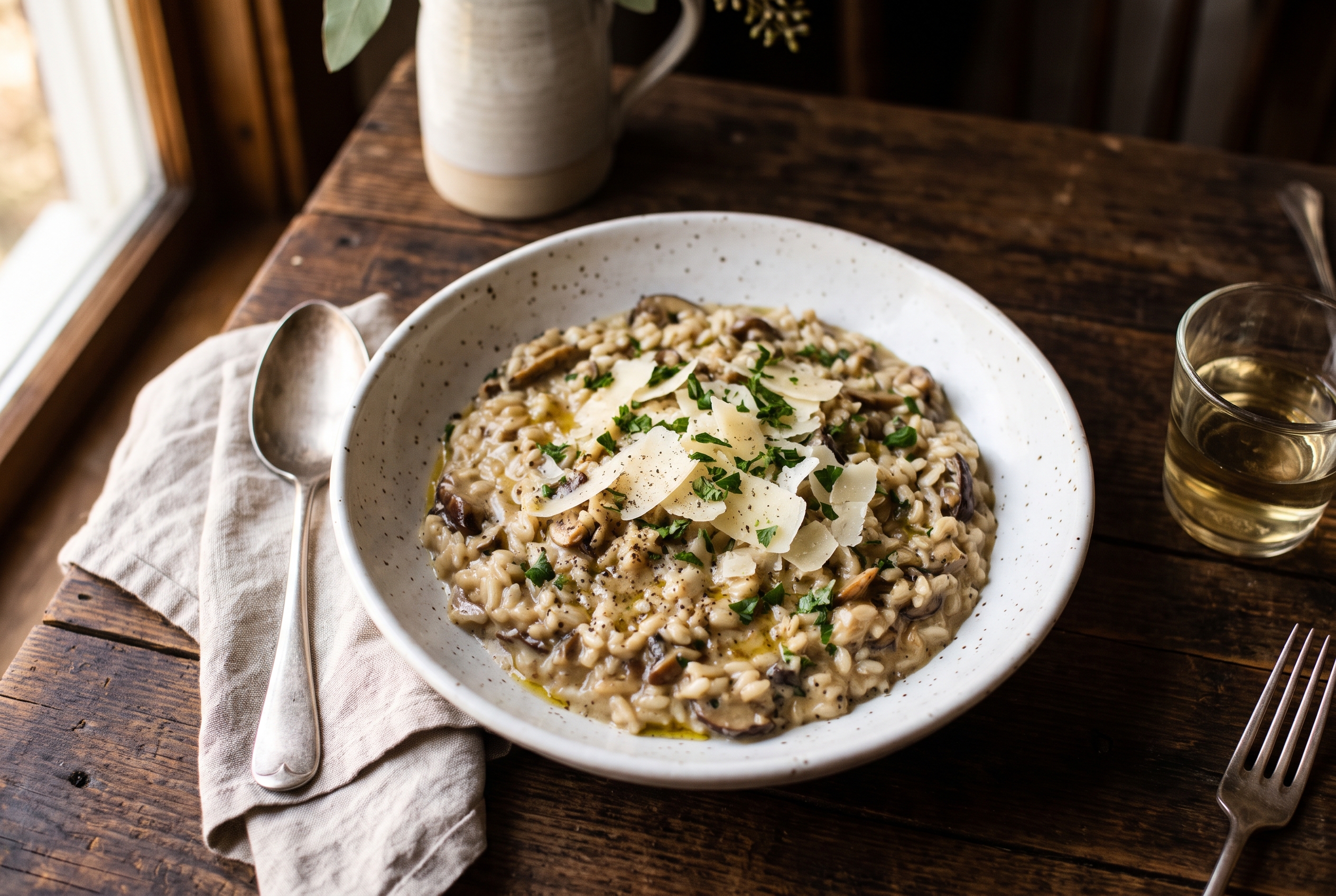
Prep Time: 10 minutes | Cook Time: 28 minutes | Servings: 4
I learned to make risotto in Italy on a chef exchange program, and the experience fundamentally changed how I approach cooking. My Italian host chef, Giancarlo, made me stand at the stove for three days making nothing but risotto. Not to practice the technique, he said, but to practice listening. The rice will tell you when it’s ready. You just have to learn its language.
Risotto is the dish that rewards patience and punishes distraction. It’s also one of the most satisfying things to eat in the world when done correctly — each grain swollen with flavour, enveloped in a creamy, flowing sauce that it has created from its own starch. No cream needed. No shortcuts.
Ingredients
- 320g Carnaroli or Vialone Nano rice (not Arborio — I’ll explain why below)
- 1.2 litres good-quality chicken or vegetable stock, kept at a bare simmer
- 1 medium white onion, finely diced (shallots in a restaurant kitchen)
- 2 cloves garlic, finely minced
- 150ml dry white wine
- 3 tbsp extra virgin olive oil
- 60g cold unsalted butter, cubed (for the mantecatura)
- 80g Parmigiano-Reggiano, freshly grated (not pre-grated)
- Salt and freshly cracked black pepper
- Fresh flat-leaf parsley
Method
Step 1: The Soffritto
Heat olive oil in a wide, heavy-based pan (a sauté pan, not a deep saucepan — surface area matters) over medium-low heat. Add the onion with a pinch of salt and cook for 10–12 minutes until completely softened and translucent but not coloured. Add garlic for the final 2 minutes. The soffritto is the flavour foundation — it must be done slowly and completely.
Step 2: Toast the Rice
Add the rice to the pan and increase heat to medium. Toast for 2–3 minutes, stirring constantly, until the rice is warm and beginning to smell nutty. You should see the white centre of each grain become slightly translucent around the edges. This toasting step seals the outer layer of starch, which controls how and when the internal starch releases during cooking.
Step 3: Wine Absorption
Add the wine all at once and stir constantly until it has been completely absorbed. The alcohol will cook off and the acidity will add brightness to the finished dish. Don’t skip the wine.
Step 4: Build with Stock — One Ladle at a Time
Reduce heat to medium. Add one ladle of warm stock and stir continuously until absorbed. Add the next ladle only when the previous one has been fully taken up. This continuous stirring agitates the rice, encouraging it to release its starch gradually into the liquid — this is how the natural creaminess is built. Continue for approximately 18 minutes, tasting as you go. The rice is ready when it is tender but retains a slight firmness at the very core (al dente).
Step 5: The Mantecatura
This is the critical finishing step that defines a properly made risotto. Remove from heat. Add the cold butter cubes and grated Parmigiano all at once. Stir vigorously — some Italian chefs actually shake the pan in a wave motion — until the butter and cheese are fully emulsified into the risotto, creating a glossy, flowing, unified sauce. Taste and adjust seasoning. The consistency should flow — Italians call it “all’onda” (wave-like). If it’s stiff and dry, add a final splash of warm stock.
Pro Tips
- Carnaroli over Arborio: Arborio is the variety most often sold in UK supermarkets. Carnaroli has a higher amylose (starch) content and a firmer grain that holds up better through cooking. It’s significantly harder to overcook and gives a better ‘al dente’ result. Source it from Italian delis or online.
- Your stock must be warm: Adding cold stock drops the pan temperature and stops the cooking process, breaking the gradual starch release. Keep the stock at a bare simmer in a separate saucepan throughout.
- Resting is not optional: After the mantecatura, allow the risotto to rest for 60–90 seconds before serving. This allows the starch to relax and the consistency to settle properly.
Follow @cookingdepth on Instagram for more professional recipes and chef secrets.