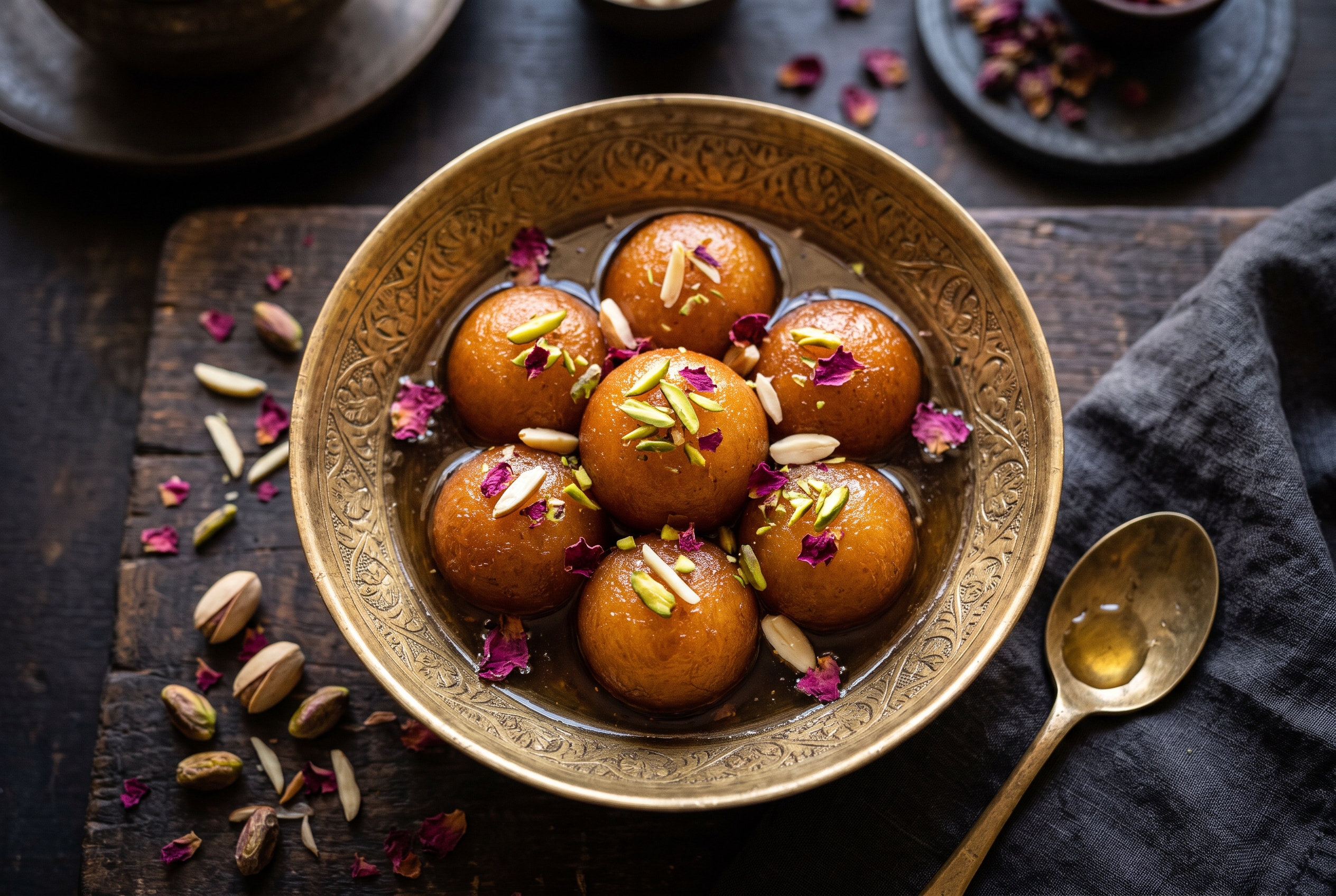
Prep Time: 20 minutes | Cook Time: 25 minutes | Servings: 25–30 pieces
Gulab jamun is the dessert that appears at every celebration in India — weddings, festivals, family gatherings. I grew up eating them, and then spent years trying to understand why the ones my grandmother made were always better than anything I could produce in a professional kitchen. The answer, I finally understood, is the patience with which she treated the milk solids and the restraint she showed with the oil temperature.
This recipe is the synthesis of her method and what I’ve learned in hotel kitchens about consistency and control.
Ingredients
For the Gulab Jamun
- 200g khoya (mawa) — dried whole milk solids, crumbled
- 50g paneer, mashed smoothly
- 50g plain flour (maida)
- ½ tsp baking powder
- A pinch of cardamom powder
- 2–3 tbsp whole milk (to bind)
- Oil or ghee for deep frying
For the Sugar Syrup
- 400g caster sugar
- 500ml water
- 4 green cardamom pods, cracked
- 1 tsp rose water
- 5–6 saffron strands
Method
Step 1: Make the Sugar Syrup First
Combine sugar, water, and cardamom pods in a saucepan. Bring to a boil and simmer for 8–10 minutes until the syrup is slightly sticky (one-string consistency: when you press a drop between thumb and forefinger and pull apart gently, a single thread forms). Add rose water and saffron. Keep warm — the syrup must be warm when the hot jamuns go in.
Step 2: Prepare the Dough
In a bowl, combine crumbled khoya, mashed paneer, flour, baking powder, and cardamom. Mix gently with your fingertips until combined. Add milk tablespoon by tablespoon until the mixture comes together into a soft, smooth dough. It should feel like softened Play-Doh — pliable, not sticky. If it cracks when you press it, add a little more milk. The dough should be made fresh and used within 15 minutes, or the baking powder will begin to activate.
Step 3: Shape
Divide into equal portions (about 15g each). Roll between your palms in smooth, circular motions to form balls with no cracks. Cracks will allow oil to penetrate during frying and create a heavy, greasy jamun instead of a light one. If you see cracks, resmooth them immediately.
Step 4: Fry at the Right Temperature
Heat oil to 140°C — use a thermometer. This is lower than most frying temperatures, and intentionally so. You need the jamuns to cook through slowly before the outside darkens. At 140°C, they will need 8–10 minutes to reach a deep mahogany colour. Fry in small batches — crowding drops the oil temperature and produces uneven results. Keep the oil temperature constant by adjusting the flame.
Step 5: Soak Immediately
Remove from oil and place directly into the warm sugar syrup. Do not drain on kitchen paper — the moment they hit the cool paper, the pores close. They need to go from hot oil into warm syrup so the pores remain open and the jamuns absorb the syrup deeply. Soak for a minimum of 2 hours. They are best at room temperature, 4 hours after frying.
Pro Tips
- The khoya quality matters: Fresh khoya from a dairy or a good Indian grocery store is significantly better than the packaged variety. If you can find it fresh, use it.
- Don’t rush the frying: High oil temperature produces a dark exterior over a raw, doughy interior. Low and slow is the rule.
- The syrup should not be boiling when you add the jamuns: Boiling syrup will cause the outer layer to harden immediately, preventing absorption. Warm syrup (around 60°C) is ideal.
Follow @cookingdepth on Instagram for more professional recipes and chef secrets.