
Butter Chicken — Why Restaurant Versions Taste Better (It’s Not Just Cream)
I’ve been asked this question at least five hundred times: “Chef, why does butter chicken at restaurants taste so much better than mine?” And every time, people expect me to reveal some exotic ingredient — a secret spice, a magic powder, something they can buy on Amazon. The truth is far more mundane and far more useful. Restaurant butter chicken is better because of three things: charring the chicken first, cooking the tomato sauce long enough, and finishing with cold butter instead of cream. That’s it. No secrets. Just technique that nobody bothers to explain properly.
At Park Hyatt Goa, our butter chicken outsold every other entrée by a 3-to-1 margin. I made it so many times that I could prepare the sauce with my eyes closed — and I nearly had to once during a power outage. This is the recipe that survived that night.
“Butter chicken is the great equalizer — billionaires and auto-rickshaw drivers love it with exactly the same intensity.”
The Three Secrets Restaurants Won’t Tell You
Secret 1: Char the chicken. Restaurant butter chicken uses tandoori chicken — not raw chicken dropped into sauce. The chicken is marinated, cooked at extreme heat until charred on the outside, and only then added to the gravy. Those charred bits dissolve into the sauce and create layers of smoky, caramelized flavor. At home, you can achieve this by broiling marinated chicken for 10-12 minutes until blackened spots appear.
Secret 2: The tomato sauce is cooked for 45+ minutes. Most home recipes cook the tomato base for 10-15 minutes. That’s not enough. Tomatoes need extended cooking to break down completely and develop sweetness. At Park Hyatt, our butter chicken sauce simmered for nearly an hour before we added anything else.
Secret 3: Cold butter, not warm cream, at the end. The original Moti Mahal recipe finishes butter chicken with cold butter stirred into hot sauce. The temperature differential creates an emulsion — the butter doesn’t melt completely but creates a silky, glossy coating. Adding warm cream gives you richness but not that distinctive velvety sheen.
Surprising facts:
- Butter chicken was invented from leftovers. Kundan Lal Gujral created it in the 1950s to repurpose leftover tandoori chicken in a tomato-butter gravy.
- Authentic butter chicken has no onion. The original recipe uses only tomatoes, butter, cream, and spices. Onions were added later by restaurants looking to extend the sauce cheaply.
- The dish sparked a $2.5 million lawsuit. Two Delhi restaurant families fought in court over who invented butter chicken, with the case going all the way to the Indian Supreme Court.
The Real Ingredient List
For the chicken:
- 500g boneless chicken thighs
- ½ cup yogurt
- 1 tablespoon ginger-garlic paste
- 1 teaspoon Kashmiri chili powder
- ½ teaspoon garam masala
- 1 tablespoon lemon juice
- Salt to taste
For the gravy:
- 6 large tomatoes (or 400g canned whole tomatoes)
- 10 cashews
- 4 tablespoons cold butter (divided)
- 1 tablespoon oil
- 1 teaspoon cumin seeds
- 2 green cardamom pods
- 1 small cinnamon stick
- 1 tablespoon ginger-garlic paste
- 1 teaspoon Kashmiri chili powder
- ½ teaspoon garam masala
- 1 teaspoon kasuri methi
- 1 teaspoon sugar
- ¼ cup cream
- Salt to taste
Step-by-Step: The Park Hyatt Method
Step 1: Marinate and char. Mix chicken with yogurt, ginger-garlic paste, chili powder, garam masala, lemon juice, and salt. Rest for 1 hour minimum. Arrange on a baking tray and broil on high for 10-12 minutes, flipping once, until charred spots appear. The chicken will finish cooking in the sauce — don’t worry about cooking it through at this stage.
Step 2: Build the tomato base. Roughly chop tomatoes. In a heavy pot, heat 1 tablespoon butter and oil. Add cumin seeds, cardamom, and cinnamon. Add tomatoes and cashews. Cook on medium heat for 25-30 minutes, stirring occasionally, until tomatoes completely collapse and the mixture reduces by half. Let it cool slightly, then blend until smooth. Strain through a sieve for a silky sauce.
Step 3: Finish the gravy. Return the strained sauce to the pot. Add ginger-garlic paste, Kashmiri chili, salt, and sugar. Simmer for another 15 minutes on low heat. Add cream and stir through. Add the charred chicken pieces and simmer gently for 8-10 minutes until chicken is cooked through.
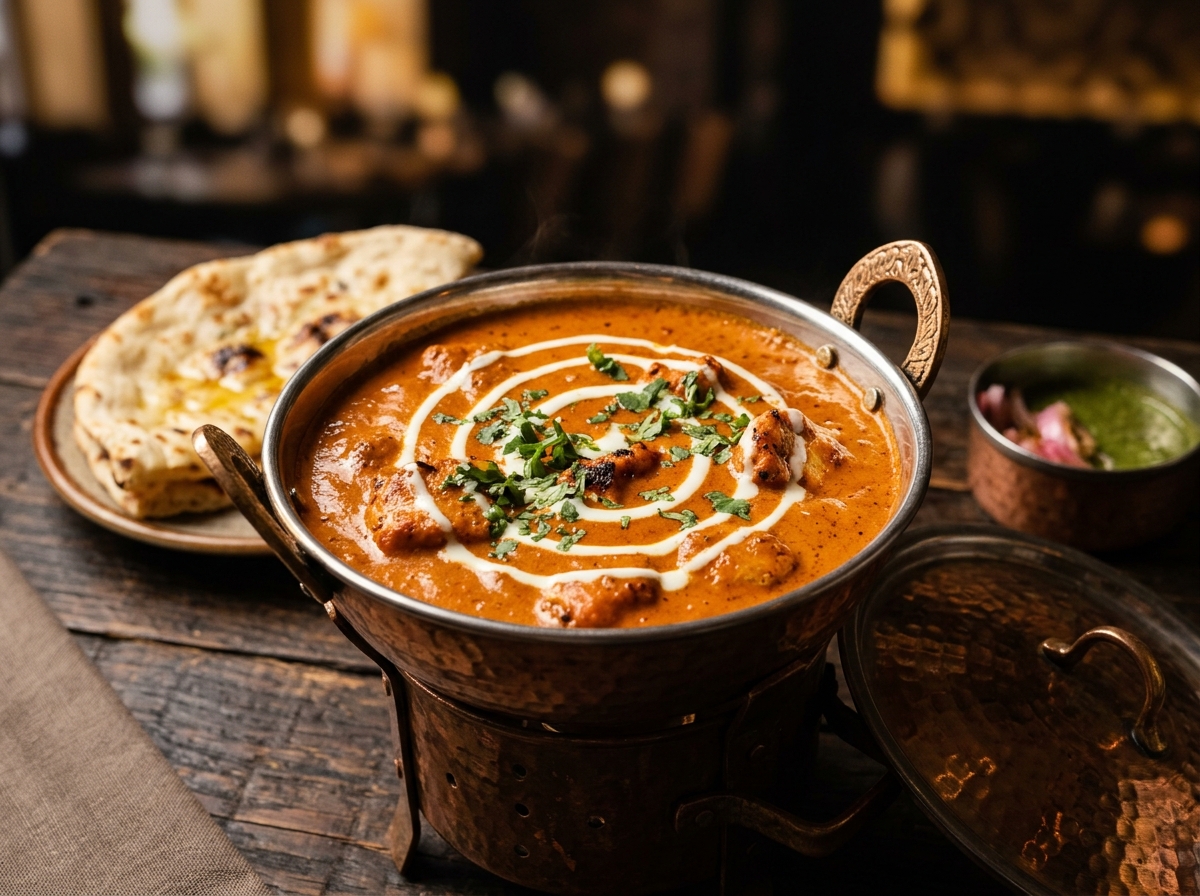
Step 4: The butter finish. Remove the pot from heat. Wait 30 seconds, then add 2 tablespoons of cold butter. Stir gently until just incorporated — don’t melt it completely. Crush kasuri methi between your palms and sprinkle over. Garnish with a swirl of cream and coriander.
Pair this with fresh naan or hotel-style biryani. More Indian classics: Paneer Butter Masala, Dal Makhani, and Tandoori Chicken.
Common Mistakes That Ruin Butter Chicken
Using breast meat: Thigh meat has more fat and connective tissue, which keeps it tender in the sauce. Breast dries out quickly. Every hotel kitchen I’ve worked in uses thighs for butter chicken — no exceptions.
Skipping the straining step: Unstrained sauce has bits of tomato skin and cashew that make it gritty. The smoothness of restaurant butter chicken comes entirely from straining.
Adding too much cream: Cream should be a supporting player, not the star. More than ¼ cup per batch mutes the tomato flavor and makes the sauce taste flat. Butter provides richness; cream provides body. Know the difference.
Frequently Asked Questions
Is butter chicken the same as chicken tikka masala?
No. Butter chicken (murgh makhani) is an Indian dish with a tomato-butter base. Chicken tikka masala was likely invented in Britain and uses a spicier, more onion-heavy gravy. They’re cousins, not twins. The flavor profiles are distinctly different — butter chicken is sweeter, milder, and more butter-forward.
Can I make butter chicken without a tandoor or oven?
Yes — pan-sear the marinated chicken in a very hot skillet instead. Get good color and char marks on both sides, about 3-4 minutes per side on high heat. You lose some of the tandoor smokiness, but the charring still adds tremendous depth to the sauce.
How do I make butter chicken less sweet?
Skip the sugar and reduce the cream. The sweetness in butter chicken comes from three sources: cooked tomatoes (natural sugars), cream, and added sugar. Eliminate the added sugar and add a squeeze of lemon at the end for brightness instead.
The Dish That Built Empires
Butter chicken is arguably the most successful Indian dish ever exported. It’s on menus in London, Tokyo, New York, and São Paulo. And yet, the best version I’ve ever eaten was in a tiny kitchen at Park Hyatt Goa, made by a chef who’d been cooking it for 25 years. Simple dish. Lifetime to master.
📌 Save this butter chicken recipe for your next weeknight dinner — it’s faster than ordering takeout and infinitely better.
Have you tried the cold-butter finishing technique? What’s your go-to butter chicken hack? Tell me in the comments 👇
Follow @cookingdepth on Instagram for daily recipes, chef tips, and behind-the-scenes hotel kitchen stories.