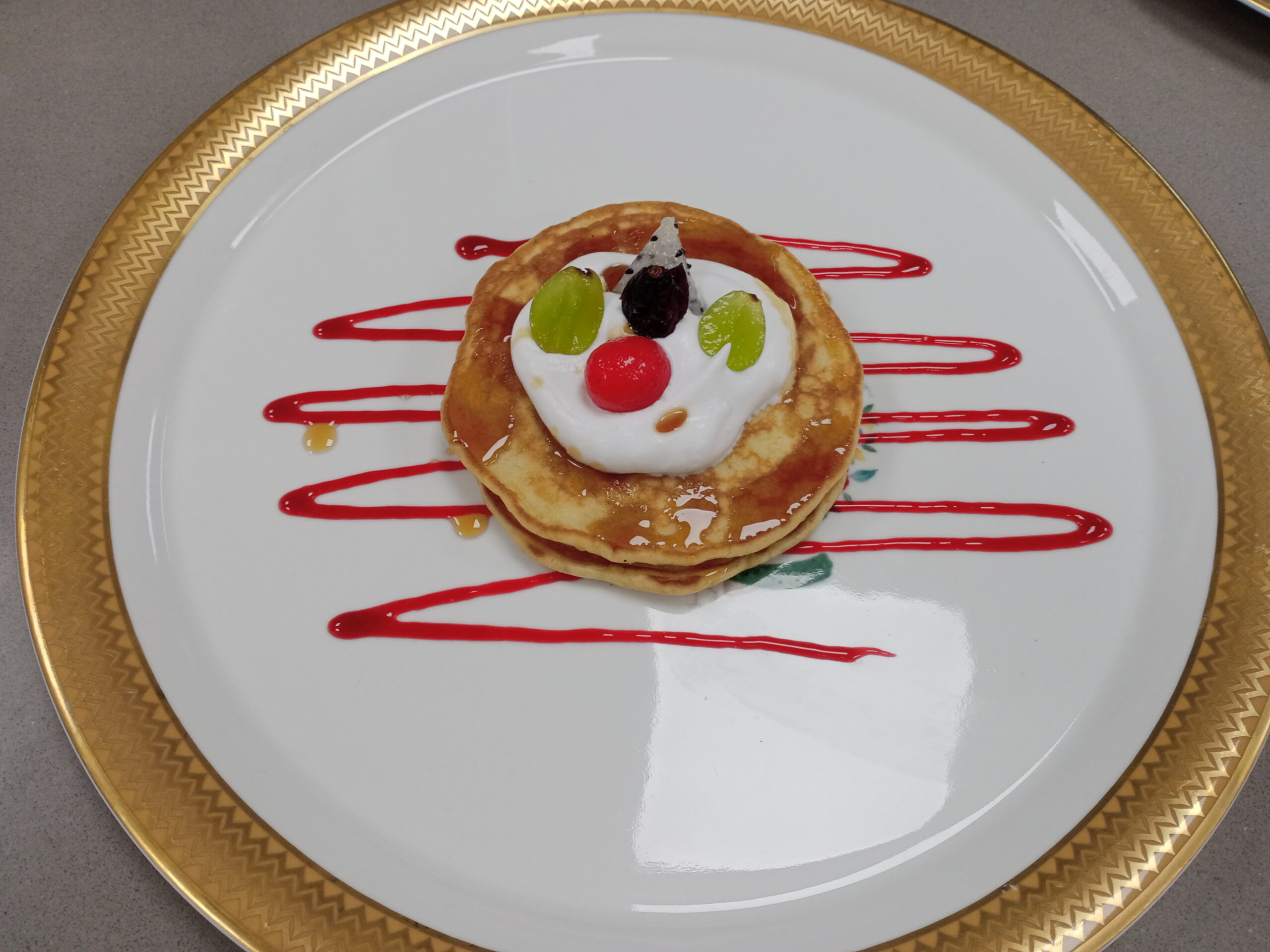
Every hotel I’ve ever worked in has the same scene at breakfast: a guest walks up to the buffet, sees the pancake station, and their eyes light up like a kid on their birthday. And every time they take a bite, the same reaction — “Why don’t my pancakes at home taste like this?” I’ve heard that question hundreds of times. And today, I’m going to answer it.
The truth about a really good fluffy pancake recipe is that it’s not one secret — it’s about five small ones that add up to something magical. None of them are complicated. But all of them matter.
Secret #1: Rest Your Batter (Seriously)
This is the biggest difference between hotel pancakes and home pancakes. In a hotel kitchen, we mix the batter at least 30 minutes before service — often an hour. This resting time lets the flour fully hydrate, the gluten relax, and the leavening agents start their slow work. The result? A batter that pours smoothly and produces pancakes that are tender, not tough.
At home, most people mix and immediately pour. I get it — you’re hungry, it’s Sunday morning, you want pancakes NOW. But that impatience costs you. Just 20 minutes of rest will transform your pancakes from “fine” to “incredible.” Mix the batter while your coffee brews. By the time you’ve had your first cup, it’s ready.
And while we’re talking about mixing — stop overmixing! I see this constantly. People whisk pancake batter like they’re trying to aerate whipped cream. A few gentle folds until just combined is all you need. Lumps are fine. Lumps are good. Every lump is a pocket of flour that will create a tender spot in the finished pancake. Overmixing develops gluten and gives you tough, chewy pancakes. Nobody wants chewy pancakes.
The best pancake batter looks slightly wrong — lumpy, thick, almost like it needs more mixing. That’s exactly when you stop. Trust the lumps.
Secret #2: The Butter and Heat Game
In the hotel kitchen, we cook pancakes on a flat-top griddle with a thin film of clarified butter. Not regular butter — clarified. Regular butter has milk solids that burn at medium heat, giving your pancakes dark spots and a bitter taste. Clarified butter (or ghee, which works brilliantly) has a much higher smoke point and gives you that even, golden-brown colour that looks like a magazine photo.
Heat control is everything. Too high and the outside burns before the inside cooks. Too low and the pancakes spread too much and turn pale and dense. The sweet spot is medium-low — what I call “patient heat.” You want the butter to sizzle gently when the batter hits the pan, not violently. If it screams at you, it’s too hot.
Here’s the hotel trick for perfect heat: flick a tiny drop of water onto the pan. If it sizzles and evaporates in about two seconds, you’re in the zone. If it evaporates instantly, too hot. If it just sits there looking at you, too cold.
Secret #3: The Flip Timing
How do you know when to flip? Bubbles. Watch the surface of the pancake. Small bubbles will form all over. When those bubbles start to pop and leave little holes that don’t fill back in, it’s time. The edges should also look slightly set — not wet and shiny, but matte and firm. Flip once, cook for about half the time of the first side, and you’re done.
Never press down on a pancake with the spatula. I’ve seen people do this and it physically hurts me. You’re squeezing out all the air that makes it fluffy. The whole point of a fluffy pancake recipe is to keep that air inside. Press down and you’ve made a crêpe. A sad, deflated crêpe.
One flip only. If you flip it twice, the internal structure breaks and it deflates. One confident flip. If it’s not perfectly centred afterward, that’s fine — character, not catastrophe.
Secret #4: The Hotel Recipe Twist
Most home pancake recipes use baking powder as the only leavener. Hotel recipes use baking powder AND a splash of something acidic — buttermilk or a tiny bit of vinegar in regular milk. This acid reacts with the baking powder to create extra lift and also gives the pancakes a subtle tang that makes the flavour more interesting. It’s why hotel pancakes taste “like something” and home pancakes sometimes taste like fluffy nothing.
Another hotel secret: a tablespoon of melted butter IN the batter, plus a pinch more sugar than you’d think. Not enough to make them sweet like dessert, but enough to help with browning and add depth. We’re talking maybe two tablespoons of sugar for a batch that makes 8-10 pancakes. It caramelizes on the surface and creates that gorgeous golden colour.
For the ultimate fluffy pancake, separate your eggs. Add the yolks to the batter as normal, but whip the whites to soft peaks and fold them in at the end. This is the Japanese soufflé pancake technique, and it creates pancakes so fluffy they practically float off the plate. It’s a bit more work, but for a special brunch? Absolutely worth it.
The final secret isn’t a recipe tip — it’s a serving tip. Eat them immediately. A pancake that sits for five minutes is a different animal than one that goes straight from pan to plate. In the hotel, we cook to order at the live station for exactly this reason. Stack them high, add your toppings, and eat while they’re still gently steaming. That’s the hotel chef way.