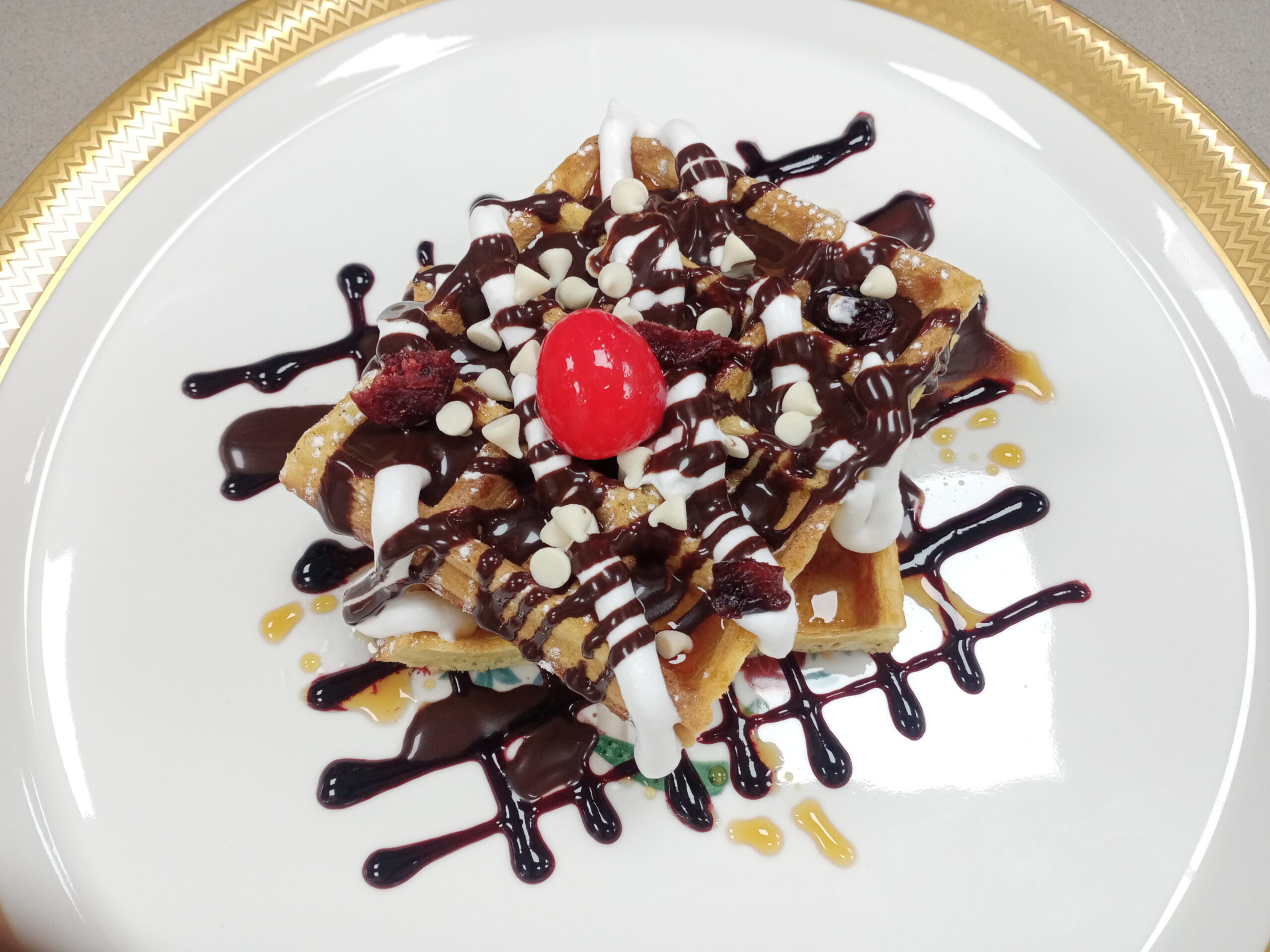
I need to have a serious conversation with you about waffles. Because somewhere between the frozen aisle and your kitchen counter, the crispy waffle has become an endangered species. Most homemade waffles start with promise — that beautiful golden grid pattern, the steam rising off the iron — and within three minutes they’ve gone limp, soggy, and sad. Like a deflated balloon at a party that ended too soon.
I’ve spent years perfecting a crispy waffle recipe at hotel breakfast stations, where guests expect that crunch to last from the buffet to their table. And I’m going to share every trick I know.
Why Your Waffles Go Soggy (The Science)
Let’s start with the crime scene. You pull a beautiful waffle from the iron, put it on a plate, and within minutes it’s turned into a floppy disc of disappointment. What happened? Moisture. When a waffle cooks, steam escapes through the grid pattern. But the moment you take it off the iron, that steam has nowhere to go. If you put it on a plate, the bottom traps the steam against the surface. The steam condenses back into water. Water makes things soggy. Crime solved.
The fix is embarrassingly simple: rest your waffles on a wire cooling rack, not a plate. Set your oven to about 90°C (200°F) and put the rack inside. As each waffle comes off the iron, it goes on the rack in the warm oven. The air circulates around all sides, the residual heat keeps evaporating moisture, and the waffle stays crispy for a good 15-20 minutes. This is exactly what we do in hotel kitchens. It’s not fancy. It just works.
Never, ever stack waffles on top of each other while they’re still warm. I’ve watched people do this and it’s heartbreaking. Each waffle steams the one below it, and you end up with a tower of sogginess. Single layer on a rack. Always.
The secret to a crispy waffle isn’t in the recipe — it’s in what you do in the first 60 seconds after it leaves the iron. Get that right and you’re already ahead of 90% of home cooks.
The Cornstarch Trick
Now let’s talk about the batter itself. The single most impactful change you can make to your crispy waffle recipe is replacing about 20% of your flour with cornstarch. So if your recipe calls for 200 grams of flour, use 160 grams of flour and 40 grams of cornstarch. Why? Cornstarch creates a drier, crisper exterior because it doesn’t develop gluten the way wheat flour does. It’s the same reason tempura batter uses cornstarch — that shattering crunch comes from starch, not protein.
In hotel kitchens, this was standard practice. Every waffle recipe I’ve ever used professionally included cornstarch. The first time I made waffles at home without it, I immediately understood why home waffles taste different. It’s not the waffle iron — it’s the starch.
Another batter secret: let it rest for at least 15 minutes after mixing. This hydrates the starches evenly and lets tiny air bubbles develop. A rested batter flows more evenly into the iron’s grid pattern and produces a more uniform, crispier waffle.
The Fat Question: Butter vs Oil
Here’s where it gets interesting. For maximum crispiness, oil beats butter. I know, I know — butter tastes better. And it does. But butter contains about 15-20% water, and that water creates steam inside the waffle, working against crispness. A neutral oil like sunflower or canola is 100% fat, which means more browning and less internal steam.
My compromise? I use mostly oil in the batter for structure and crispness, then serve the waffles with melted butter on top for flavour. Best of both worlds. In the hotel, we always had a little pot of warm clarified butter at the waffle station — guests would drizzle it over the crispy waffle and it would pool in those perfect little grid squares. Heavenly.
Also — and this is important — grease your waffle iron properly even if it’s non-stick. A light spray of oil on both plates before pouring the batter creates an extra-crispy shell on the outside. Don’t use butter spray — remember, water in butter equals steam equals soggy.
Hotel Waffle Station Secrets
Working the waffle station during a busy hotel brunch is chaos in the best way. You’ve got a line of guests, each wanting their waffle fresh and hot, and you’ve got maybe 3-4 irons going simultaneously. The tricks I learned there apply perfectly at home.
First: preheat your iron for at least 5 minutes before the first waffle. A properly heated iron sears the batter on contact, creating that initial crust that holds everything together. An underheated iron lets the batter slowly cook without searing, and slow-cooked waffles are soft waffles.
Second: don’t overfill. Pour batter to about two-thirds of the iron’s surface. It’ll spread as it cooks. Overfilling causes spillover and also creates a waffle that’s too thick in the middle — the center stays doughy while the outside burns. Less batter, more crunch.
Third: don’t open the iron to check. When you open it prematurely, you release all the steam at once and interrupt the crust formation. Most irons have a steam indicator — when it stops aggressively steaming from the sides, your waffle is close. Give it another 30 seconds after that and you’re golden. Literally.
So here’s your game plan: cornstarch in the batter, oil instead of butter, properly preheated iron, don’t overfill, don’t peek, and — most importantly — rack, don’t stack. Do all of this and I promise you’ll never eat a soggy waffle again. Your Sunday mornings are about to change forever.