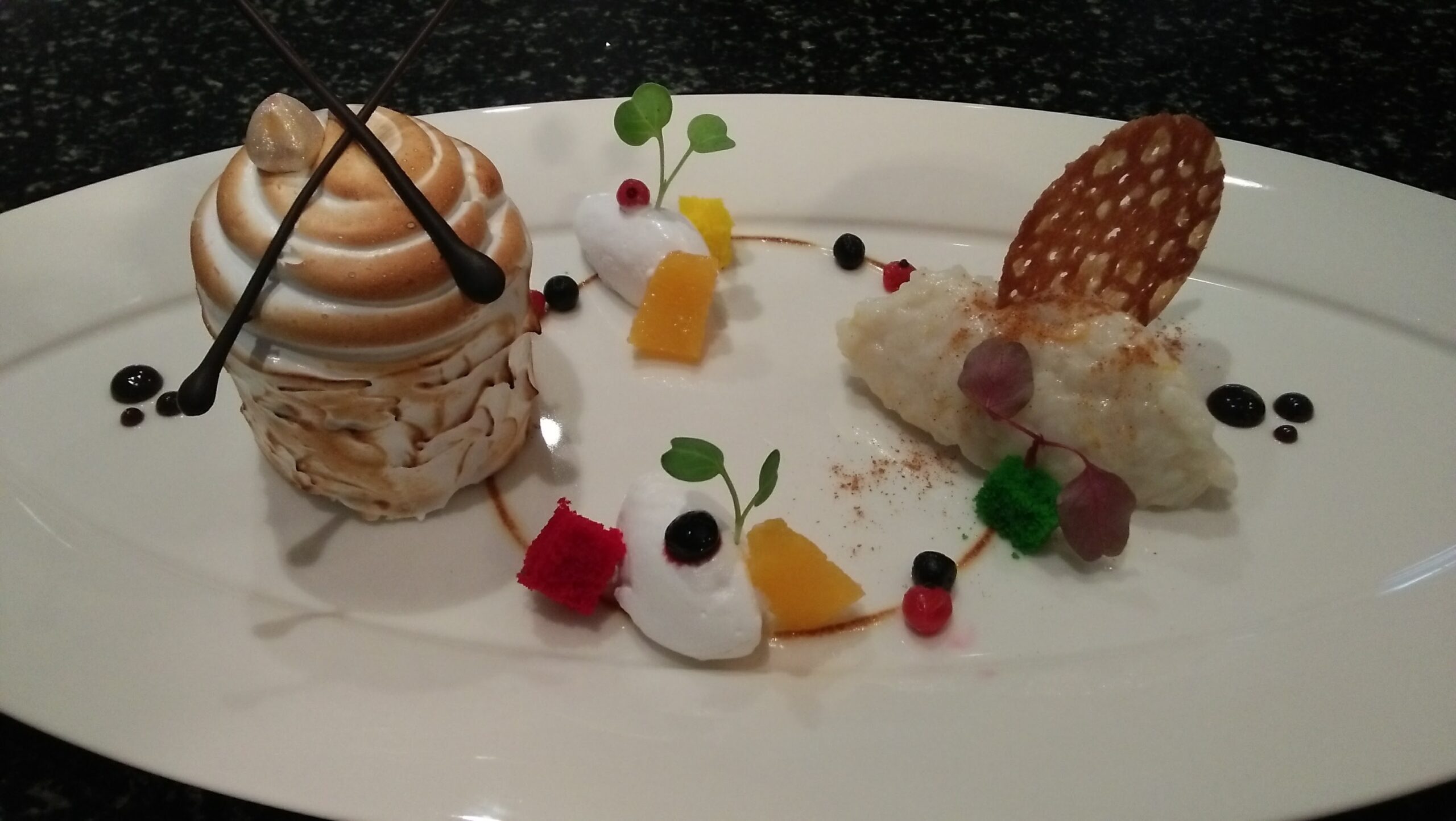
It started, as many of the best ideas do, as a joke. We were in the pastry kitchen one evening — that quiet hour between afternoon tea service and dinner prep when the kitchen belongs to conversations and bad ideas. Someone was making crème brûlée for the French restaurant. Someone else had made kheer for the Indian buffet. And a commis chef — I wish I could remember who — looked at both and said, “What if we just… torched the kheer?”
Everyone laughed. I laughed. And then I stopped laughing. Because actually… why not?
The Logic Behind the Madness
Think about it. Crème brûlée is custard with a caramelised sugar top. The magic isn’t really the custard — it’s the contrast. That thin, glassy layer of caramel that cracks when you tap it with a spoon, and the cold, creamy custard underneath. The temperature contrast. The texture contrast. Crunch versus silk. Hot versus cold. That’s what makes crème brûlée crème brûlée.
Now think about kheer. It’s already creamy, already slightly sweet, already infused with cardamom and sometimes saffron. It’s got rice in it, which gives it a gentle texture. What it doesn’t have is crunch. What if you gave it crunch?
The more I thought about it, the more it made sense. Kheer brûlée wasn’t a gimmick — it was a genuine flavour and texture improvement. The caramelised sugar would add bitterness and crunch. The cold kheer underneath would provide that same contrast that makes French crème brûlée work. And the cardamom would add something that vanilla never could — warmth, complexity, a sense of Indian identity.
My rule for fusion desserts is simple: if you can explain why it works in one sentence, it’s probably a good idea. Kheer brûlée works because caramelised sugar crunch plus cold creamy kheer equals the same magic as crème brûlée, but with Indian soul. One sentence. Done.
Getting the Kheer Right
Now, you can’t just take any kheer and torch it. Regular kheer is too liquid — it’ll pool under the sugar and you won’t get that clean crack. I needed to make a thicker, set kheer. Almost like a rice pudding that holds its shape in a ramekin.
Here’s what I did: I cooked basmati rice (washed and soaked for thirty minutes) in full-fat milk on a very low flame. The ratio was about 1:8 — one part rice to eight parts milk. I let it reduce slowly, stirring every few minutes, until the rice had completely broken down and the mixture was thick and creamy. This took almost an hour. Patience, patience, patience.
Then: crushed cardamom pods, a pinch of saffron bloomed in warm milk, a little sugar — less than a traditional kheer because the brûlée sugar on top would add sweetness. A few slivered pistachios and almonds stirred in for texture. I poured this into ceramic ramekins — the same ones we used for crème brûlée — and chilled them for at least four hours.
The torching was the fun part. A thin, even layer of caster sugar on top. Then the blowtorch — steady hand, even movement, watching the sugar bubble and darken from white to amber to deep caramel. The smell was incredible. Burnt sugar meeting cardamom and saffron — it smelled like a dessert that should have always existed.
The First Taste
I tapped the top with the back of a spoon. Crack. Perfect. That glassy, brittle sound that every pastry chef lives for. I pushed through with the spoon and scooped up caramel, kheer, and rice in one bite.
It was better than I’d hoped. The bitterness of the caramel played against the sweetness of the kheer. The crunch dissolved into creaminess. The cardamom and saffron wrapped everything in warmth. And the rice — those tiny, soft grains — gave it a texture that crème brûlée could never have. It was familiar and new at the same time. Indian and French, holding hands.
I made six more and sent them around the kitchen. The sous chef tried one and said nothing for ten seconds. Then: “This needs to be on the menu.” The Indian restaurant chef tried one and said, “My grandmother would either love this or disown me. Possibly both.”
From Kitchen Joke to Hotel Special
Within a week, kheer brûlée was on the dessert menu. We offered it as an alternative to the standard crème brûlée, and it outsold the original within the first month. Guests loved the story almost as much as the dessert — a French technique meeting an Indian classic, created because someone in a kitchen made a silly comment during a slow afternoon.
We experimented with variations. A mango kheer brûlée during summer — mango purée folded into the kheer before chilling. A rose kheer brûlée with dried rose petals pressed into the sugar before torching (the petals caramelise beautifully). A jaggery version where we used powdered jaggery instead of caster sugar for the brûlée top — darker, more complex, slightly smoky.
The mango version was probably the best. Alphonso mango and cardamom kheer with a crackly sugar top — that’s a dessert that could represent India at any international food competition and hold its own.
How to Make It at Home
You don’t need a blowtorch — though it helps. A very hot grill (broiler) works too. Put your chilled kheer ramekins under the grill for two to three minutes, watching constantly. The sugar will bubble and caramelise. It won’t be as even as a torch, but it’ll taste exactly the same.
The key is the kheer consistency. If it’s too thin, the dessert won’t work. Cook it low and slow until a spoon drawn through it leaves a trail that takes a few seconds to close. That’s your consistency. Then chill thoroughly — at least four hours, overnight is better.
And when you crack that sugar top for the first time, take a moment. You’re holding two culinary traditions in one ramekin. A French technique perfected over centuries. An Indian dessert loved for generations. Together, they’re something neither cuisine could have made alone. That’s fusion at its best — not a gimmick, but a conversation. A delicious, crackly, creamy conversation.