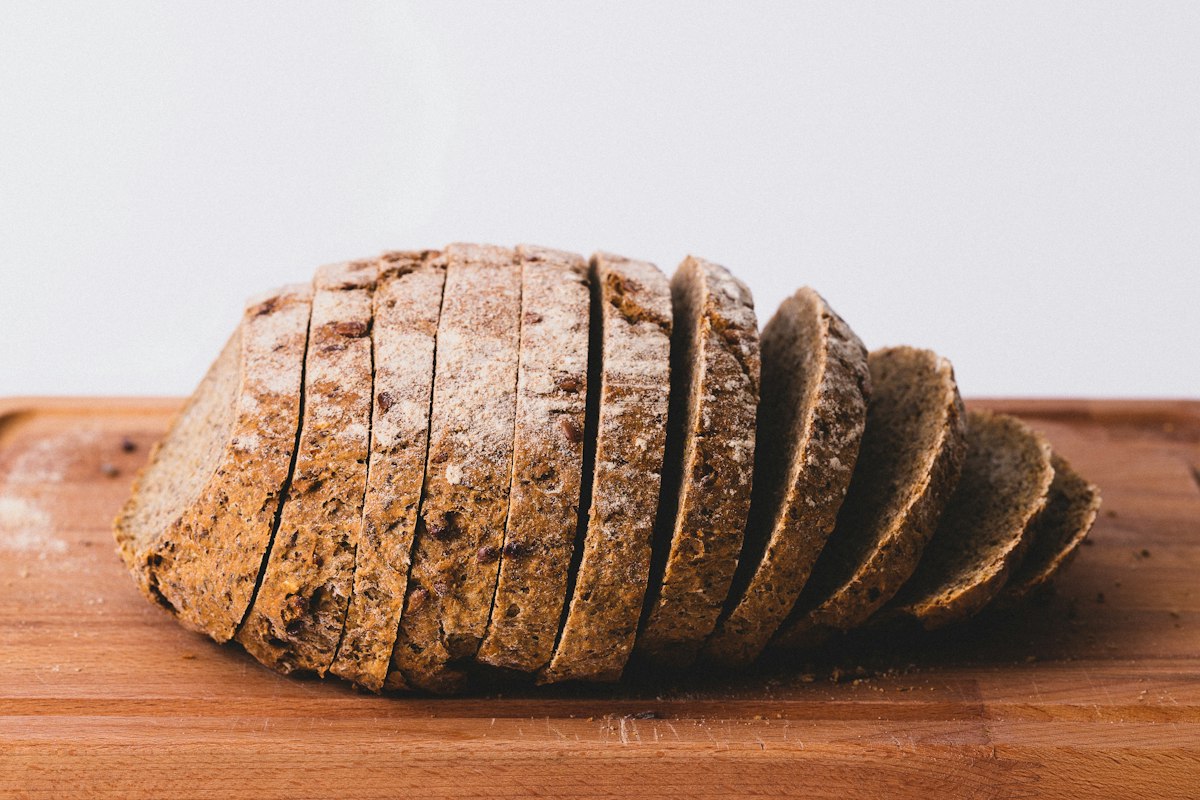
Nothing saddens a baker more than watching a beautiful loaf — one that took hours of fermentation, shaping, and careful baking — turn stale, hard, and flavourless within a day. After working in hotel bakeries where we produced hundreds of loaves daily and had to manage freshness across multiple service windows, I learned that bread storage is both a science and an art. Most people are storing bread wrong. Here’s the truth, and what to do instead.
The Science of Staling: It’s Not What You Think
Most people assume bread goes stale because it dries out — that it’s simply losing moisture to the air. This is partially true, but it misses the most important mechanism: starch retrogradation.
During baking, starch granules in the flour absorb water and swell in a process called gelatinisation, creating the soft, springy texture of fresh bread. As the bread cools and ages, those starch molecules begin to re-crystallise and pack back into an ordered structure — this is retrogradation. The result is bread that feels firm, dense, and “stale” — even if it still contains significant moisture.
Here’s the critical insight: starch retrogradation happens fastest between 0°C and 10°C. Guess what temperature most refrigerators operate at? 2–5°C. This is precisely why refrigerated bread goes stale 2–6 times faster than bread stored at room temperature.
The Fridge Destroys Bread — Here’s Why
Storing bread in the refrigerator is one of the most common kitchen mistakes I see. People do it to extend freshness, but they’re achieving exactly the opposite. The refrigerator temperature is the worst possible environment for bread because it sits right in the sweet spot for maximum starch retrogradation. Within 24–48 hours in the fridge, a fresh artisan loaf will be noticeably stale — dry, dense, and flavourless.
The Right Way to Store Different Types of Bread
Crusty Artisan Loaves (Sourdough, Baguettes, Ciabatta)
These breads are at their absolute peak within the first 4–6 hours of baking. After that:
- Day 1–2: Store cut-side down on a wooden board, or in a paper bag. Never plastic — it traps moisture and destroys the crust.
- Day 2–3: Wrap loosely in a clean tea towel. The towel allows some airflow, preventing crust sogginess while slowing moisture loss.
- Beyond day 3: Slice and freeze.
Soft Sandwich Bread (Milk Bread, Brioche, Commercial Loaves)
These breads contain added fat and sugar which naturally slow staling. They can be stored in their original plastic bag or an airtight container at room temperature for 3–5 days. The fat content inhibits retrogradation more effectively than lean doughs. Keep away from direct sunlight and heat sources.
Enriched Doughs (Brioche, Challah)
The high butter and egg content slows staling significantly. These can last 4–6 days at room temperature in an airtight container. After that, slice and freeze.
Freezing: The Professional’s Best Friend
Below -18°C (0°F), starch retrogradation essentially stops. This is why freezing is the only truly effective way to extend bread’s life significantly — and why we use it extensively in professional kitchens.
How to Freeze Bread Correctly
- Cool completely first — never freeze warm bread; condensation creates ice crystals that damage the crumb structure.
- Slice before freezing — frozen sliced bread can be toasted directly from the freezer, making it infinitely more practical.
- Double-wrap — wrap tightly in cling film, then place in a freezer bag. This two-layer barrier prevents freezer burn.
- Label and date — bread is best used within 3 months of freezing.
- Thaw at room temperature for 1–2 hours, or toast directly from frozen.
Reviving Stale Bread: The Professional Trick
Even bread that’s gone somewhat stale can be dramatically revived. The key is heat — specifically, heat above 55°C, which is enough to partially reverse starch retrogradation. Here’s my method:
- Preheat your oven to 180–220°C (depending on the loaf size and density)
- Run the cut surfaces of the bread under cold water briefly (for whole loaves, run water over the entire crust)
- Place in the oven for 5–12 minutes depending on size
- Remove and allow to cool for 2–3 minutes before eating
The steam from the water works with the heat to re-gelatinise surface starches, and the heat temporarily reverses retrogradation deeper in the crumb. The results are remarkable.
What You Can Do TODAY
- Take your bread out of the fridge — right now. Unless it’s a bread with fresh toppings (like focaccia with raw veg), it doesn’t belong there.
- Invest in a bread bin — a wooden or terracotta bread bin regulates humidity around the loaf, slowing both staling and mould growth.
- Slice and freeze any bread that won’t be eaten within 2–3 days.
- Revive, don’t waste — stale bread is the beginning of croutons, breadcrumbs, panzanella, and French toast. Zero waste is a professional kitchen standard.
Good bread deserves good treatment. Once you understand the science, the right choices become obvious — and your bread will last significantly longer without sacrificing a single point of quality.
Follow @cookingdepth on Instagram for more professional chef knowledge.