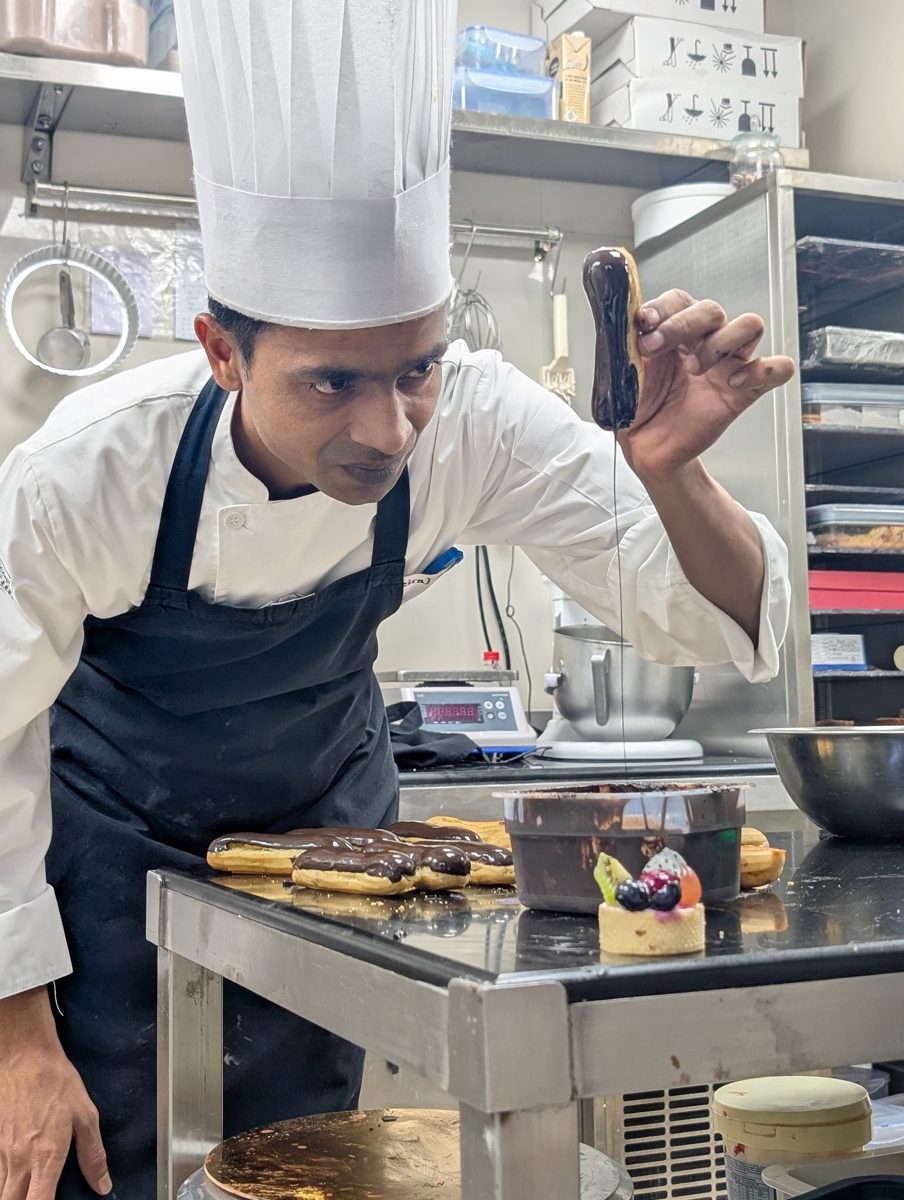
If you’ve ever eaten at a fine-dining restaurant and wondered how the plate looked so perfect — like a painting you almost didn’t want to touch — I’ll let you in on something. Food plating techniques aren’t magic. They’re a set of learnable skills that every professional chef practises until they become second nature.
I’m Giriraj Singh, a Pastry & Bakery Chef with over 10 years of experience in luxury hotels across India. I’ve plated thousands of dishes at properties like Park Hyatt Goa, Jaipur Marriott, and Rajmahal Palace Jaipur. And I can tell you — the difference between a home-cooked plate and a 5-star plate usually comes down to five or six simple principles.
Start With a Clean Canvas
The first rule of food plating techniques that most home cooks ignore? The plate itself matters. At Park Hyatt Goa, we never picked a plate randomly. White plates work best for colourful food. Dark plates — slate or matte black — make lighter dishes pop. The plate is your canvas. Respect it.
Before anything touches the plate, wipe the rim clean. Keep a damp cloth nearby. Every professional kitchen has one. No smudges, no drips, no fingerprints. That alone puts you ahead of 90% of home cooks.
Build Height — Don’t Spread Flat
One of the biggest food plating techniques mistakes I see is spreading everything flat across the plate like a map. Food should have height and dimension. Stack things. Lean things against each other. Create layers.
When I was working at Jaipur Marriott, my head chef taught me a simple rule — think in odd numbers. Three elements, five dots of sauce, one tall piece. Odd numbers feel more natural to the eye. Even numbers feel too formal, too stiff.
Use your protein as the anchor. Build around it. Vegetables go beside or underneath, never scattered randomly. A sauce swoosh or dots give direction to the eye.
The Rule of Colour Contrast
If your dish is all brown — a steak with mushroom sauce and potatoes — you need a pop of colour. A sprig of fresh thyme, a smear of green pesto, some microgreens. Colour isn’t decoration. It’s what makes the dish look alive.
In my pastry work at Rajmahal Palace, I always ensured desserts had at least three distinct colours. A chocolate tart gets fresh berries. A white panna cotta gets a vivid coulis. Your eye eats before your mouth does.
Sauce Placement: Swoosh, Dot, or Pool
There are really only three ways to place sauce on a plate, and each one changes the mood:
- The swoosh — Take a spoon, place sauce at one end, drag with the back. Creates movement and elegance.
- Dots — Use a squeeze bottle. Small, precise dots in a line or arc. Modern and clean.
- The pool — Pour sauce first, place food on top. Classic, comforting, rustic.
At Heritage Village Club Goa, we used the pool method for Indian curries served in fine-dining style. It grounded the dish. For Italian plates, the swoosh was king.
Garnish With Purpose
This is where most people go wrong. Garnish is not decoration — it should be edible and relevant to the dish. A parsley sprig thrown on top of a dessert? No. Fresh mint on a chocolate mousse? Yes — because mint and chocolate work together.
At Park Hyatt, we had a rule: if it’s on the plate, it’s part of the dish. No random flowers, no inedible leaves just for looks. Every element should make sense flavour-wise.
Use Negative Space
Don’t fill every inch of the plate. The empty space around your food is just as important as the food itself. In professional kitchens, we call it negative space, and it’s what gives a dish that clean, luxurious feel.
A plate that’s too full looks like a buffet. A plate with breathing room looks like fine dining. Leave at least a third of the plate empty. It sounds counterintuitive, but it works every single time.
Practice at Home — It’s Easier Than You Think
You don’t need tweezers or fancy equipment. Start with these simple steps:
- Choose the right plate for your dish
- Place your main element slightly off-centre
- Build a little height
- Add one colour contrast
- Wipe the rim before serving
That’s it. Five steps. Do this consistently and your home-cooked meals will start looking like restaurant plates. I’ve been doing this for over a decade across kitchens from Amritsar to Goa, and I promise — the fundamentals never change.
Follow me on Instagram @cookingdepth for daily cooking inspiration.