You follow the recipe perfectly. You use the same ingredients. But somehow, your food never tastes like what you get at a restaurant. Sound familiar? The gap between restaurant quality cooking at home and what most people actually achieve isn’t about talent or expensive ingredients. It’s about a handful of techniques that professional kitchens use every single day — and almost never talk about.
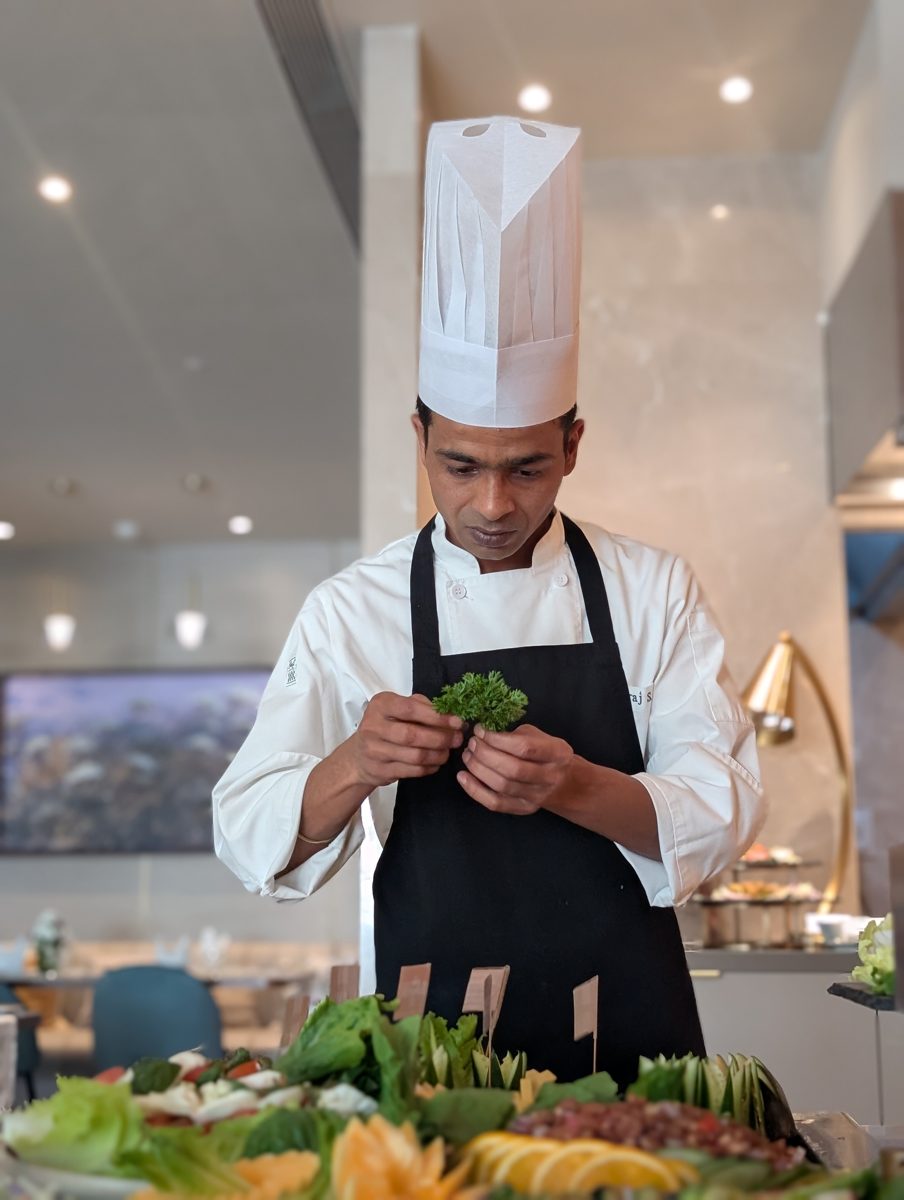
I’m Giriraj Singh, a professional chef with over 10 years in luxury hotel kitchens including Park Hyatt Goa, Jaipur Marriott, and Royal Orchid. Let me tell you exactly what restaurants do differently.
You’re Not Using Enough Salt (At the Right Time)
This is the number one reason home food tastes flat. Not under-seasoned at the table — under-seasoned during cooking. In every professional kitchen I’ve worked in, from HK Clarks Amritsar to Rajmahal Palace Jaipur, we season at every stage. When onions go in, salt. When the protein goes in, salt. When the sauce reduces, taste and adjust.
Salt isn’t just about making things salty. It amplifies flavour, balances sweetness, and suppresses bitterness. One pinch at the end can’t do what layered seasoning throughout the cooking process achieves.
Your Pan Isn’t Hot Enough
Home cooks are afraid of high heat. I understand — oil splatters, things smoke, it feels chaotic. But that searing, caramelised crust on a restaurant steak? That’s high heat. That golden-brown skin on a pan-roasted chicken? High heat.
At Jaipur Marriott, we’d preheat our pans until they were almost smoking before adding oil. The food hits the pan and immediately starts developing colour. At home, people put food in a lukewarm pan and wonder why it turns grey and steamed instead of golden and crispy.
Butter — The Not-So-Secret Weapon
Restaurant food tastes richer because it often is. Butter finishing — adding a knob of cold butter to a sauce right before serving — gives that silky, glossy, round flavour that you can’t quite put your finger on but absolutely notice.
I’m not saying dump a block of butter into everything. But a small piece swirled into a pan sauce, melted over grilled vegetables, or folded into mashed potatoes makes an enormous difference. This is standard practice in every Continental and Italian kitchen I’ve worked in.
You’re Not Resting Your Meat
You cook a beautiful chicken breast or a steak. You cut into it immediately because you’re hungry. All the juices run out onto the cutting board. The meat turns dry. And you blame the recipe.
Resting meat after cooking allows the fibres to relax and reabsorb the juices. Five minutes for a chicken breast. Ten minutes for a steak. At Park Hyatt, no piece of meat ever went straight from the pan to the plate. Ever. This single habit will transform your cooking overnight.
Acid: The Flavour People Forget
Salt gets all the attention, but acid is equally important for achieving restaurant quality cooking at home. A squeeze of lemon, a splash of vinegar, a spoonful of yoghurt — acid brightens everything. It lifts heavy flavours and cuts through richness.
Taste your dish before serving. If it feels flat even though you’ve seasoned well, it probably needs acid. A few drops of lemon juice can wake up an entire pot of dal or a cream-based pasta.
Fresh Herbs Go in Last
Dried herbs go in during cooking. Fresh herbs go in at the end — or right before serving. Cooking fresh basil, coriander, or parsley for too long kills their flavour and colour. At Heritage Village Club Goa, we always had fresh herbs prepped and ready to finish dishes. It takes seconds but adds a layer of freshness that transforms the plate.
Patience With Onions
Most Indian home cooks rush their onions. Five minutes on high heat until they’re slightly brown and they move on. In a professional kitchen, properly caramelised onions take 20-30 minutes on medium-low heat. They turn deep golden, almost jammy, and they give a natural sweetness and depth that quick-cooked onions simply cannot.
This patience is what separates a good gravy from a great one. I learned this in my very first kitchen at HK Clarks Amritsar, and it’s a lesson I carry into every dish.
The Real Secret
Restaurant quality cooking at home is absolutely achievable. It doesn’t require professional equipment or rare ingredients. It requires attention — seasoning in layers, using proper heat, finishing with butter or acid, and having the patience to let food develop flavour naturally.
Start with one or two of these changes tonight. You’ll taste the difference immediately.
Follow me on Instagram @cookingdepth for daily cooking inspiration.