
What Nobody Tells You About Being a Pastry Chef
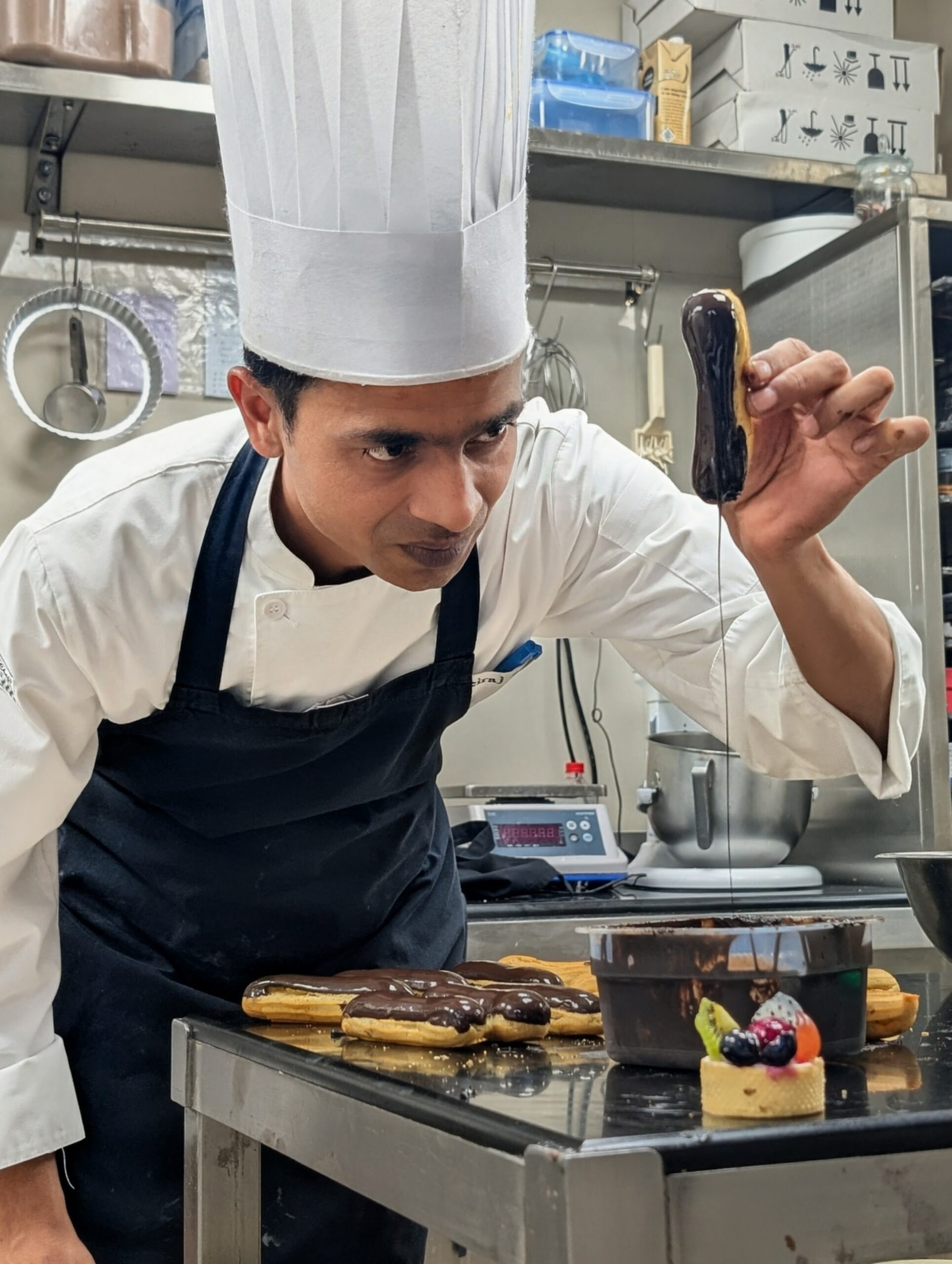
You see the Instagram photos — perfect cakes, artistic plating, white chef coats in gleaming kitchens. What you do not see is the reality behind the beauty. After 10+ years in professional pastry kitchens, here is everything nobody told me before I started.
When I enrolled at FCI Ajmer, I imagined a career of creativity and elegance. I pictured myself artfully piping chocolate, calmly decorating wedding cakes, and receiving applause from adoring guests. What I actually got was 5 AM starts, burns on both forearms, a salary that barely covered rent, and a head chef who communicated exclusively in controlled shouting. My first week at HK Clarks Amritsar, I went home and cried from exhaustion. Not from sadness — from pure physical exhaustion. My body was not prepared for what a professional kitchen demands.
People think pastry chefs spend their day decorating cupcakes. Brother, I spend my day lifting 25kg bags of flour and trying not to cry when sugar syrup hits my hand at 160°C 😂
The Hours Are Brutal
A typical shift in a five-star hotel pastry kitchen is 10-14 hours. Not occasionally — regularly. At Park Hyatt Goa during peak season, I worked 16-hour days for weeks straight. Weddings, festive brunches, special events — they all demand overtime. Your friends are partying on New Year’s Eve while you are tempering chocolate for a midnight dessert buffet. Your family celebrates Diwali while you are making 500 pieces of mithai for the hotel’s festival menu. Holidays do not exist in hospitality.
The Burns Are Real
Look at any pastry chef’s forearms. They look like a road map of scars. Sugar work involves temperatures above 155°C — hotter than a deep fryer. Caramel burns are some of the most painful kitchen injuries because the sugar sticks to your skin and keeps burning. I have a scar on my left wrist from a sugar pull that went wrong during a showpiece competition prep at Jaipur Marriott. It hurt for two weeks. I went back to work the next day.
Surprising fact: Professional pastry chefs develop partial heat resistance in their fingertips over years of handling hot sugar, chocolate, and baked goods. Our pain threshold is genuinely higher than average — not because we are tough, but because our nerve endings have adapted.
The Pay Starts Low — Really Low
A commis pastry chef in India earns between ₹10,000-15,000 per month. In cities like Goa, Mumbai, or Jaipur, that barely covers rent and food. I lived in shared staff accommodation for my first three years because I could not afford my own place. The pay improves significantly as you grow — a Demi Chef de Partie, Chef de Partie, and eventually Sous Chef or Executive Pastry Chef earn respectable salaries. But the first 3-5 years are a financial test of patience.
The Kitchen Hierarchy Is Intense
The brigade system in professional kitchens is quasi-military. You do not question orders. You do not talk back. You do what you are told, perfectly, immediately, and silently. At Royal Orchid, I once asked “why” when my senior told me to re-strain a sauce that looked perfectly smooth. He stared at me for three seconds and said “because I said so.” I learned quickly that “why” is a question you research on your own time, not one you ask during service.
This hierarchy serves a purpose — it keeps a high-pressure kitchen running efficiently. But it can also be toxic. I have seen chefs bullied, humiliated, and broken by abusive seniors. At Rajmahal Palace by RAAS and later in my career, I made it a point to teach with patience instead of intimidation. You can maintain standards without destroying people.
The Creativity Is Limited (At First)
For the first several years, you are executing other people’s recipes. You do not create — you replicate. You make the executive chef’s chocolate cake exactly as specified, 50 times, until you can do it in your sleep. Creative freedom comes only after you have proven your technical mastery. At Heritage Village Club Goa, it took me over a year before I was allowed to suggest a dessert for the menu. At City Palace Jaipur, I finally had the seniority to create freely — but that took years of earning trust.
Why We Stay
After reading all this, you might wonder — why does anyone choose this career? Because when it is good, it is magic. The moment a wedding cake you spent three days building makes a bride cry with happiness. The moment a child’s face lights up when you bring out a birthday cake. The moment a handwritten note arrives from a guest saying your dessert was the highlight of their trip. Those moments are not just satisfying — they are addictive. We are artists whose canvas disappears in minutes, and somehow that makes each creation more precious, not less.
I am also a content creator, a traveller, a singer, and a guitarist. But pastry will always be my first language. The kitchen is where I understand myself best.
FAQ
Should I still pursue pastry as a career after reading this?
If this post scared you away, this career was not for you — and that is completely okay. If you read all of this and still feel excited, welcome to the brigade. You are one of us.
Is culinary school necessary?
Not strictly necessary, but it gives you a structured foundation and industry connections. FCI Ajmer gave me both. Self-taught chefs exist and thrive, but formal training shortens the learning curve significantly.
Does it get easier over time?
The work stays hard. You get stronger. Your tolerance grows, your efficiency improves, and your skills compound. After ten years, the same shift that used to destroy me now feels like a normal day.
Save this tip 📌 — share this with anyone considering a culinary career. They deserve the truth.
Are you a chef or aspiring chef? What surprised you most about the industry? Tell me in the comments!
Follow @cookingdepth on Instagram 📸
Read about my full journey from FCI Ajmer and see my techniques in action in the Red Velvet Cake recipe.