
The Wedding Cake That Changed How I See Food
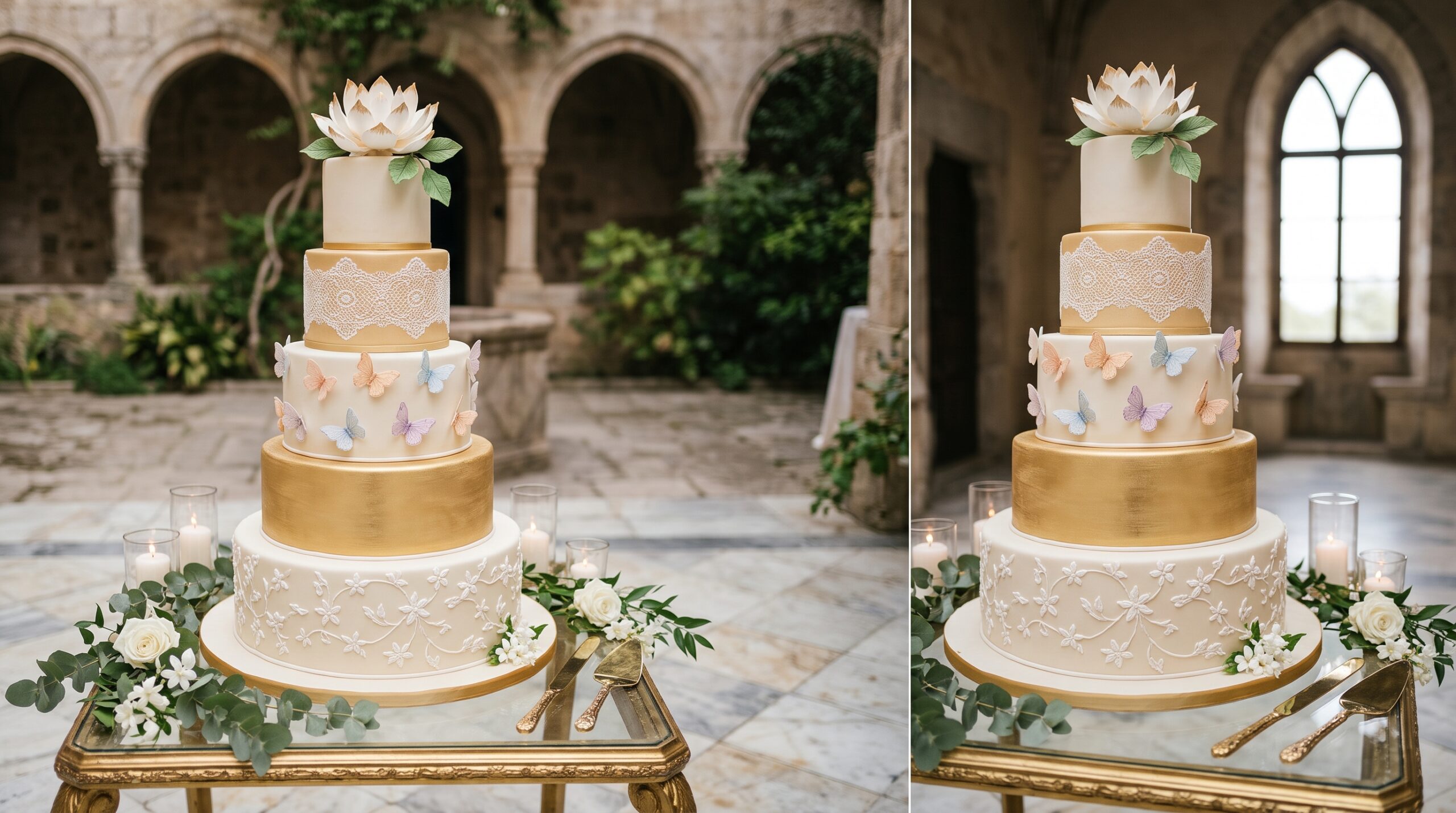
It was 2 AM on a Saturday in March, and I was in the kitchen of a heritage property in Jaipur, piping the final details of a wedding cake that would be served to 400 guests in twelve hours. The couple getting married had a specific request: they wanted a 5-tier cake that told their story — their love for travel, for each other, and for food.
Most pastry chefs get this kind of request all the time. “Make it personal,” the bride says. “Make it meaningful.” And most of the time, we nod and deliver something that looks beautiful and tastes correct, hitting all the technical marks. But that night, something was different. Maybe it was the hour. Maybe it was the story the bride had shared — how they’d met at a street food stall in Delhi, over shared plates of chaat.
I found myself working differently than I usually do.
The Precision That Almost Ruined It
By training, I was taught that a wedding cake is about precision. Every layer the same height. Every piping detail identical. Every element placed with mathematical perfection. Symmetry. Control. Perfection. After years in luxury hotels, I’d internalized this completely. A cake that wobbled, that had hand-painted details with slight imperfections, that showed the mark of the human hand too clearly — that was a failure. That was sloppy.
But that night, at 2 AM, I made a decision that would have been unthinkable in my earlier career.
I let it be imperfect.
Each tier was perfectly baked and perfectly flavored — that never changes. But instead of piping identical roses on every section, I varied them. Some were tight and precise. Others were looser, more organic. I hand-painted the travel details differently on each tier: the Eiffel Tower sketch a bit more romantic on one side, the street food stall illustration with more character and personality than a stencil would allow. The gold leaf didn’t go down in perfectly measured sections — it caught the light differently on each tier.
For the first time in my career as a pastry chef, I was less interested in proving I could execute flawlessly and more interested in telling a story that would resonate with two people.
What The Guests Actually Noticed
The cake was rolled out at midnight. I watched from the kitchen as servers began plating slices. What surprised me wasn’t the compliments — though there were plenty. It was the conversations I overheard. Guests weren’t just saying “this is beautiful.” They were saying “look at how the Eiffel Tower is drawn,” and “did you see the little painting of the street food stall?” One elderly woman sat with her slice and cried. Not because it was a perfect cake, but because she could see the love in it.
The bride’s mother pulled me aside before I left at 6 AM. She said: “You know what made me realize this was special? It wasn’t perfect. It was real. It felt like you actually knew my daughter and her husband. Like you cared enough to make it theirs, not just technically impressive.”
Those words hit differently than any compliment about my technique ever had.
What Changed
That wedding cake taught me something I’ve carried through every dessert I’ve made since: technical perfection is the price of entry, not the destination. Any trained pastry chef can bake a perfect genoise. Any culinary school teaches you how to pipe a perfect rose. But making someone feel something? Making them taste the care you put into understanding who they are? That’s the real skill.
I’ve since made cakes with deliberate imperfections — more texture, more personality, more humanity. Some traditional pastry chefs look at my work now and see “less controlled.” I see it as more controlled in a different way. Instead of controlling every millimeter of appearance, I’m controlling the emotion the cake creates. I’m being intentional about imperfection.
It sounds strange, but that wedding cake — the one where I let go of my obsession with flawlessness — became one of the most technically sound decisions I’ve ever made. Because it made me a better chef. Not a more technically perfect one, but a more thoughtful one.
And that, I’ve learned, is the difference between a good pastry chef and one who actually feeds people’s souls. 🔱