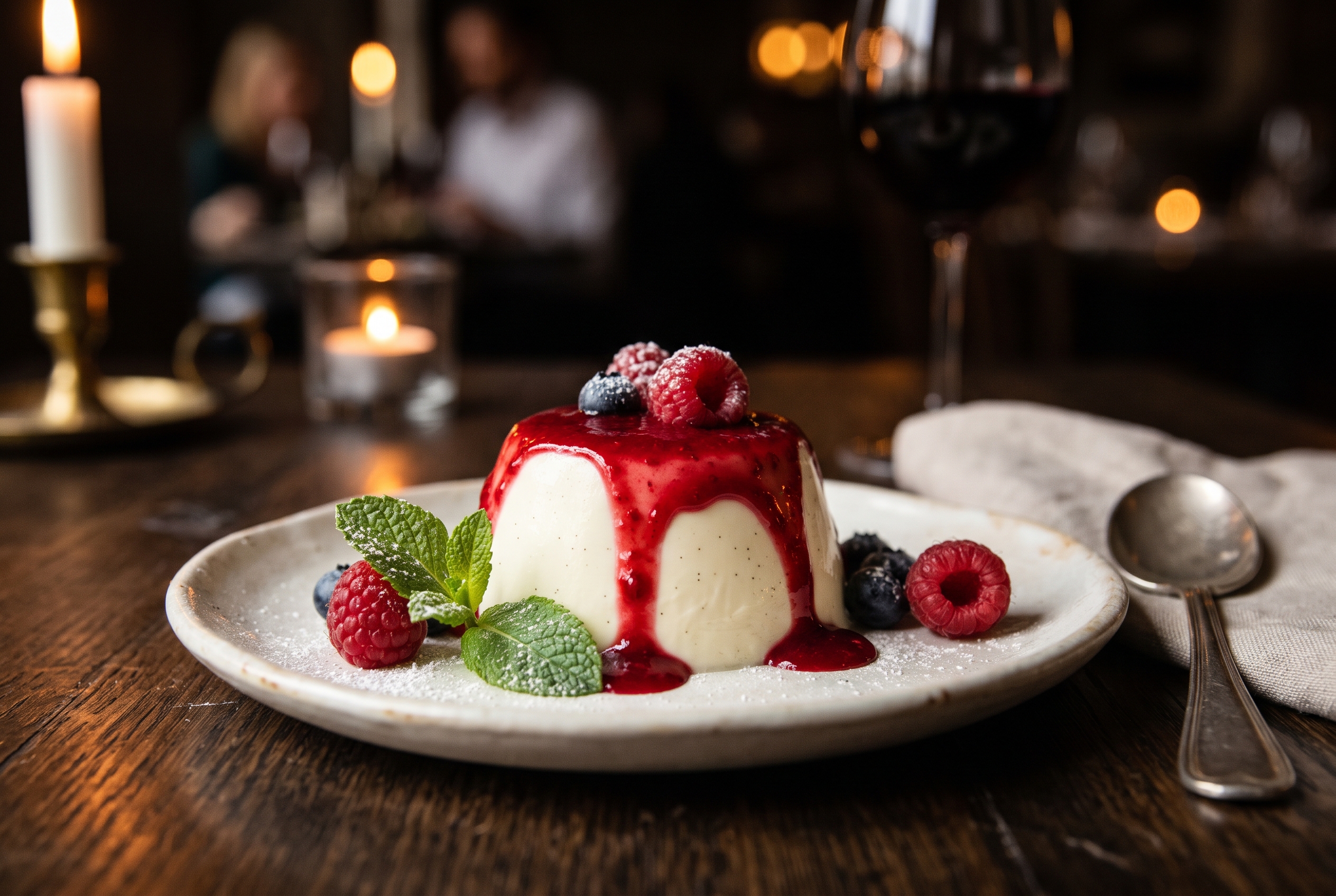
Prep Time: 10 minutes | Cook Time: 10 minutes (+ 4 hours setting) | Servings: 6
Patience is a culinary virtue, and no dessert teaches it more gently — or more deliciously — than panna cotta. The name means “cooked cream” in Italian, and that’s exactly what it is: cream, barely heated, just enough gelatin to hold it, and nothing to hide behind. I first encountered a properly made panna cotta at a hotel in Verona during a chef exchange program, and it changed my relationship with simplicity forever.
Panna cotta is a dessert that exists in the space between a custard and a mousse. It should just barely hold its shape when unmoulded — trembling slightly, yielding to the touch, melting instantly on the tongue. If it bounces, you’ve used too much gelatin. If it collapses, not enough. The margin is razor thin, and learning to navigate it is the lesson.
Ingredients
- 600ml double cream
- 200ml whole milk
- 80g caster sugar
- 1 vanilla pod, split and scraped (or 2 tsp vanilla bean paste)
- 3 tsp (approx 9g) powdered gelatin, or 4 platinum-grade gelatin leaves
- 3 tbsp cold water (for blooming powdered gelatin)
For the Berry Coulis
- 250g mixed berries (fresh or frozen)
- 60g caster sugar
- 1 tbsp lemon juice
Method
Step 1: Bloom the Gelatin
If using powdered gelatin: sprinkle over 3 tablespoons of cold water in a small bowl. Leave for 5 minutes until it becomes a swollen, spongy mass. Do not stir. If using sheet gelatin: soak in cold water for 5 minutes until softened, then squeeze out excess water before use. Blooming is the process of hydrating gelatin before dissolving it — adding dry gelatin directly to hot liquid creates clumps.
Step 2: Heat the Cream
Combine cream, milk, sugar, and vanilla (pod, seeds, and all) in a medium saucepan. Heat over medium-low heat, stirring occasionally, until just beginning to simmer — do not boil. Boiling cream concentrates it and changes the texture of the final panna cotta. Remove from heat.
Step 3: Dissolve the Gelatin
Remove the vanilla pod. Add the bloomed gelatin to the warm cream and stir gently until completely dissolved. This should take no more than 1–2 minutes. If you see any undissolved granules, return the pan to very low heat briefly — but be careful not to boil. Strain through a fine sieve.
Step 4: Mould and Set
Pour into lightly oiled individual dariole moulds, ramekins, or glasses. If serving directly in glasses, no need to oil. Refrigerate for a minimum of 4 hours, ideally overnight. The longer it sets, the cleaner the unmoulding.
Step 5: Make the Coulis
Simmer berries, sugar, and lemon juice for 8–10 minutes until berries have broken down. Blend and pass through a fine sieve. Cool completely before using.
Step 6: Unmould and Serve
To unmould: run a thin knife around the edge, dip the base of the mould in hot water for 10 seconds, place a plate on top, and invert with confidence. Serve with the coulis and fresh berries.
Pro Tips
- Less gelatin = more luxury: The minimum amount of gelatin that will hold the shape is what you’re after. I use 3 tsp for this volume. Going higher produces a bouncy, gummy result that no one wants to eat.
- Gelatin grades matter: Platinum-grade sheet gelatin (the highest grade) is most consistent. Bronze-grade requires slightly more to achieve the same set.
- Flavour variations: The base recipe accepts any infusion beautifully. Try steeping Earl Grey tea, lemongrass and ginger, or cardamom in the cream before straining. The cream acts as a carrier for almost any flavour.
Follow @cookingdepth on Instagram for more professional recipes and chef secrets.