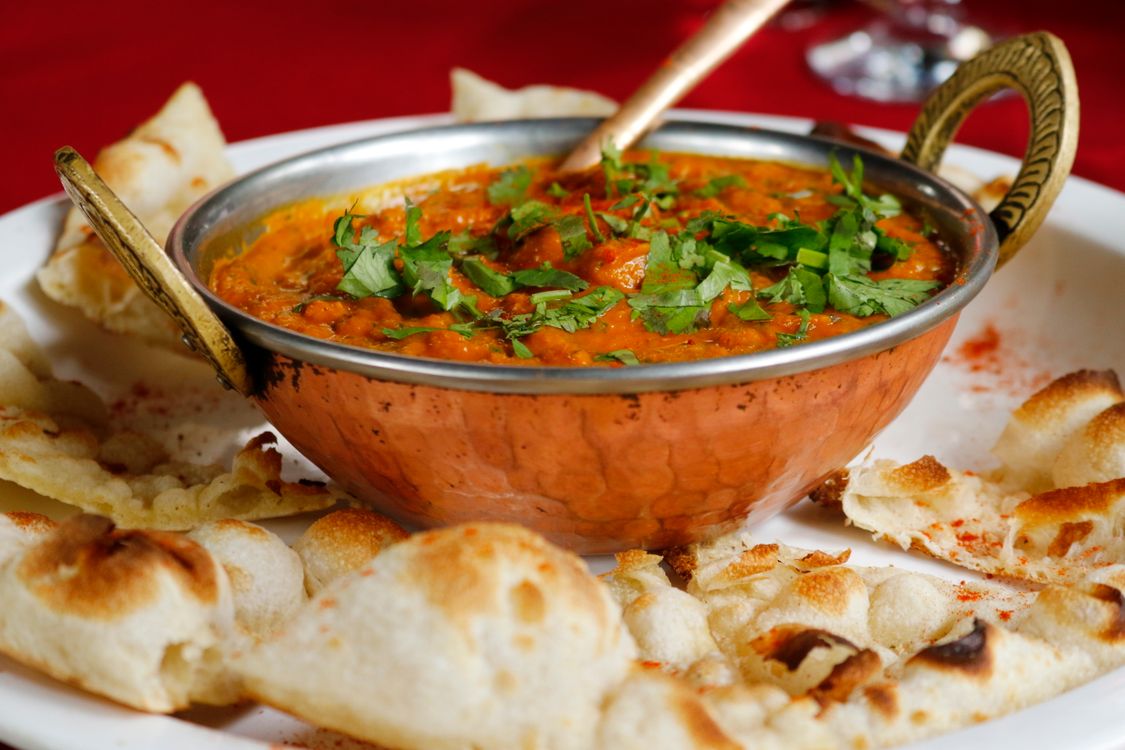
Prep Time: 30 minutes | Cook Time: 40 minutes | Servings: 4
Every restaurant has a version of paneer butter masala. Most of them are shortcuts — cream added at the end to compensate for a thin base, dried fenugreek to mask a poorly balanced masala, cashew paste to fake the texture of a properly made gravy. I grew up eating my mother’s paneer curry in Rajasthan, then spent years at the Rajmahal Palace watching the hotel kitchen produce an elevated version that somehow captured the same comfort.
This is the restaurant version. No shortcuts. If you follow this, your paneer butter masala will be better than most of what you’ll order in a restaurant — because you’ll control the quality of every element.
Ingredients
For the Makhani Gravy
- 500g ripe tomatoes, quartered (or 400g canned San Marzano tomatoes)
- 1 large onion, roughly chopped
- 6 cloves garlic
- 2cm piece of fresh ginger
- 2 tbsp ghee or neutral oil
- 2 green cardamom pods, cracked
- 1 bay leaf
- 1 tsp Kashmiri red chilli powder (for colour and mild heat)
- 1 tsp coriander powder
- ½ tsp cumin powder
- Salt to taste
- 1 tbsp caster sugar
- 3 tbsp cold unsalted butter, cubed (the makhani secret)
- 150ml double cream
- 1 tsp kasoori methi (dried fenugreek), crushed between palms
For the Paneer
- 400g paneer, cut into 3cm cubes
- 1 tbsp ghee
- ½ tsp Kashmiri chilli powder
- ¼ tsp turmeric
- Salt to taste
Method
Step 1: Build the Gravy Base
In a heavy-based pot, heat ghee over medium heat. Add cardamom and bay leaf and let them splutter for 30 seconds — you’re blooming the whole spices to release their essential oils into the fat. Add onion and cook on medium heat for 15–18 minutes until deeply golden. Not softened, not browned — deeply golden and almost caramelised. This is your flavour base; rushing it produces a bitter, raw-onion gravy.
Step 2: Add Aromatics and Tomatoes
Add garlic and ginger, stir for 2 minutes. Add ground spices, stir for 1 minute. Add tomatoes and cook uncovered on medium heat for 20 minutes, stirring frequently, until they completely break down and the oil begins to separate from the masala. This separation — called “bhunai” — is your signal that the raw spice flavour has cooked out. If you skip this step, your curry will taste of raw spice powder.
Step 3: Blend and Strain
Remove the bay leaf. Cool slightly and blend the gravy until completely smooth. Pass through a fine sieve, pressing with a spatula to extract every bit of flavour. This step is what creates the silky, restaurant-quality texture. Don’t skip straining — the skins and seeds produce texture inconsistencies.
Step 4: Finish the Gravy
Return the strained gravy to the pan over low heat. Add cold butter, one cube at a time, stirring in each piece before adding the next — this is the “makhani” (butter) in the name, and this technique (called monter au beurre in French, and completely standard in Indian restaurant kitchens) creates the glossy, emulsified richness that defines the dish. Add cream and season. Crush the kasoori methi between your palms to activate the aroma and add at the end.
Step 5: Shallow-Fry the Paneer
Toss paneer cubes in chilli powder, turmeric, and salt. Heat ghee in a non-stick pan over high heat and fry paneer for 1–2 minutes per side until golden. Rest on kitchen paper for 1 minute, then add to the gravy. Simmer gently for 5 minutes.
Pro Tips
- Kashmiri chilli is not negotiable for colour: Regular chilli powder produces a dull orange. Kashmiri gives you that iconic deep red without the extreme heat.
- Toast and grind your spices: Whole coriander seeds toasted and ground fresh are three times more flavourful than pre-ground powder. When you have the time, do it.
- The butter goes in cold: Cold butter emulsifies into the hot gravy. Softened or melted butter will separate and float. This is the exact same technique as a French beurre blanc.
Follow @cookingdepth on Instagram for more professional recipes and chef secrets.