
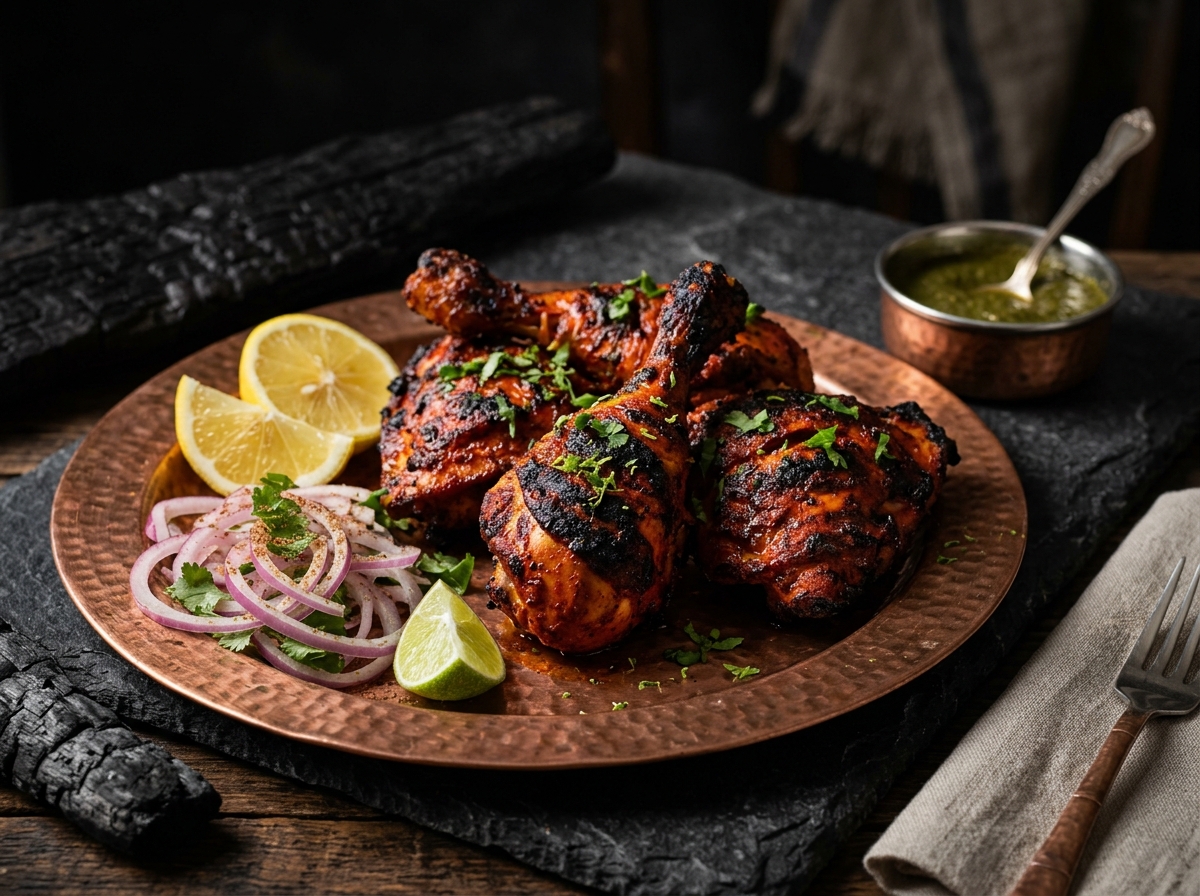
Tandoori Chicken — What They Taught Me at HK Clarks Amritsar
HK Clarks Amritsar was where I first understood fire. Not the gentle blue flame of a French range or the controlled heat of a convection oven — but the roaring, 450°C fury of a tandoor. The tandoor chef there, a man with forearms thicker than my thighs, could tell the temperature of the clay oven by holding his hand near the opening for exactly two seconds. “Too hot — the chicken burns outside, raw inside. Too cold — no char, no soul,” he’d say. I spent months standing next to him, watching chickens go in pale and come out crimson, learning that tandoori chicken is as much about understanding heat as it is about marinade.
Most home cooks think tandoori chicken is just “yogurt + spices + oven.” It is. And a croissant is just “flour + butter + folding.” The devil is in the details, and today I’m sharing every single one.
“Tandoori chicken is the dish that separates people who cook from people who control fire.”
The Double Marinade Secret
At HK Clarks, we never used a single marinade. We used two — applied at different stages. This is the technique most home recipes completely miss.
First marinade (the tenderizer): Lemon juice, salt, and shallow cuts into the chicken. This goes on 30 minutes before the main marinade. The acid and salt begin breaking down surface proteins and allow the second marinade to penetrate deeper into the meat.
Second marinade (the flavor): Thick yogurt, Kashmiri chili, ginger-garlic paste, garam masala, mustard oil, and a touch of gram flour. This goes on for a minimum of 4 hours — ideally overnight. The gram flour (besan) is a professional secret: it creates a thin coating that chars beautifully in high heat, giving you those signature blackened spots.
Surprising facts about tandoori chicken:
- The red color was originally from saffron and Kashmiri chili. Food coloring became common only when restaurants needed consistent color across large batches. You don’t need it at home.
- Mustard oil is non-negotiable. It has a compound called allyl isothiocyanate that gives tandoori chicken its distinctive sharp, pungent bite. No other oil replicates this.
- Real tandoor temperatures reach 480°C. Your home oven maxes at 250°C. The workaround? Preheat your oven to maximum with a cast iron skillet inside, then use the broiler for the last 5 minutes.
Complete Ingredients
First Marinade:
- 1 whole chicken (about 1.2 kg), cut into 8 pieces, skin removed
- 2 tablespoons lemon juice
- 1 teaspoon salt
Second Marinade:
- 1 cup thick yogurt (hang regular yogurt in muslin for 30 minutes)
- 2 tablespoons ginger-garlic paste
- 1.5 teaspoons Kashmiri red chili powder
- 1 teaspoon garam masala
- ½ teaspoon turmeric
- 2 tablespoons mustard oil
- 1 tablespoon gram flour (besan)
- 1 teaspoon cumin powder
- Salt to taste
The HK Clarks Method for Home Ovens
Step 1: First marinade. Make deep slashes in the chicken pieces — 2-3 cuts per piece, down to the bone. Rub with lemon juice and salt. Rest for 30 minutes at room temperature.
Step 2: Second marinade. Mix all second marinade ingredients into a thick paste. The yogurt should be thick enough to coat the back of a spoon without dripping. Apply generously, pushing the marinade into the slashes. Cover and refrigerate for 4-24 hours.
Step 3: Preheat aggressively. Place a cast iron skillet or heavy baking tray in the oven. Preheat to your oven’s maximum temperature (usually 250°C/480°F) for at least 30 minutes. The tray must be screaming hot before the chicken touches it.
Step 4: Cook. Remove chicken from the fridge 20 minutes before cooking (this prevents thermal shock). Place pieces directly on the hot tray. Cook for 15 minutes, then flip. Cook another 10 minutes. Switch to broiler/grill mode for the final 5 minutes to char the surface.
Step 5: Rest and serve. Let the chicken rest for 5 minutes. Squeeze fresh lemon over top, add onion rings, green chutney, and serve immediately.
This tandoori chicken pairs perfectly with fresh naan. For more protein dishes, try our Butter Chicken or Chilli Chicken recipes. And learn why your tandoori chicken comes out dry if you’re troubleshooting.
Why Your Tandoori Chicken Isn’t Red Enough
If you’re getting orange or pale chicken, you’re likely using regular chili powder instead of Kashmiri chili powder. Kashmiri chili has 10x the color of normal chili powder with only mild heat. Use 1.5 teaspoons minimum. Some professionals also add a tiny pinch of beetroot powder for deeper color — this is a natural alternative to food coloring.
Frequently Asked Questions
Can I make tandoori chicken on a regular gas stove?
Yes — use a heavy cast iron pan. Preheat the pan until it’s nearly smoking, add a tablespoon of oil, and cook the chicken pieces for 6-7 minutes per side on medium-high heat. Finish under the broiler for char. It won’t be identical to a tandoor, but it’ll be closer than a standard oven method.
Why is my tandoori chicken dry inside?
Three common causes: the yogurt wasn’t thick enough (watery marinades steam instead of roast), the chicken was overcooked (pull it at 74°C internal temperature, not higher), or the chicken pieces were too small. Bone-in pieces retain moisture far better than boneless.
Is it safe to use mustard oil in cooking?
Yes — when heated past its smoke point, the erucic acid in mustard oil breaks down. In India, mustard oil has been used for centuries in cooking. Heat it until it smokes lightly, then let it cool slightly before adding to the marinade.
Fire and Patience
Tandoori chicken taught me respect — for heat, for timing, for the difference between cooking food and transforming it. The tandoor chef at HK Clarks retired after 40 years of standing next to that oven. When I asked him his secret, he said: “I listen to the chicken. When it stops sizzling, it’s done.” Learn to listen to your food.
📌 Save this tandoori chicken recipe for your next barbecue or weekend dinner — it’s the real deal from Amritsar.
Have you tried making tandoori chicken at home? What method do you use — oven, grill, or stovetop? Tell me in the comments 👇
Follow @cookingdepth on Instagram for daily recipes, chef tips, and behind-the-scenes hotel kitchen stories.