
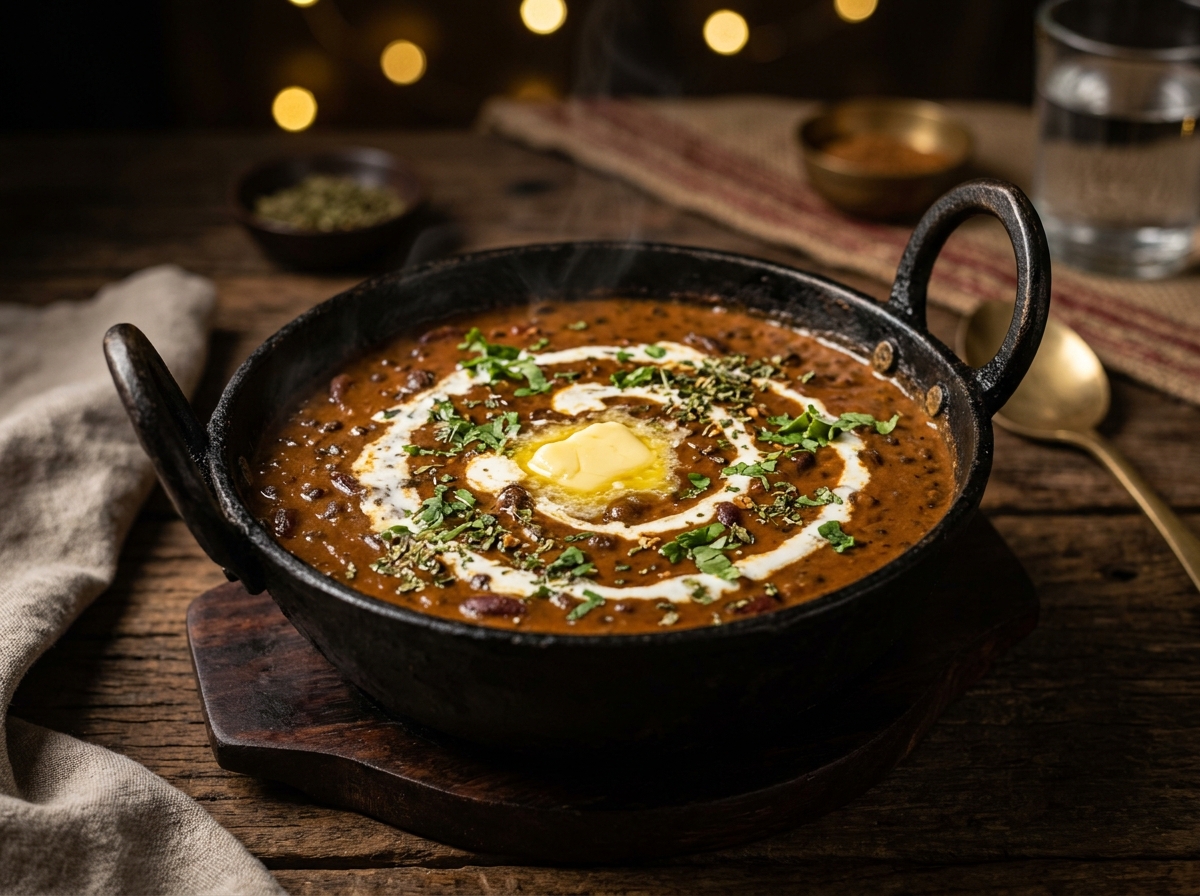
Dal Makhani — The Exact Recipe From Jaipur Marriott’s Kitchen
At Jaipur Marriott, dal makhani wasn’t just a menu item — it was a religion. The pot went on the stove at 6 AM and didn’t come off until dinner service at 7 PM. Thirteen hours of slow simmering. No shortcuts. No pressure cookers for the final cook. The executive chef, a man who had spent thirty years in hotel kitchens across India, once told me: “Anyone can make dal. Making dal makhani that makes a guest close their eyes while eating — that takes a lifetime.” I spent two years learning his method, and today I’m writing it down for the first time.
If your dal makhani tastes “fine but not special,” this is the post that will change everything. Because the difference between home-style and hotel-style isn’t ingredients — it’s time and technique.
“Dal makhani is the only dish where being lazy — literally letting it sit and do nothing — actually makes it better.”
What Makes Hotel-Style Dal Makhani Different
The single biggest difference is cooking time. Most home recipes call for 30-45 minutes in a pressure cooker. At Jaipur Marriott, we cooked dal makhani for a minimum of 6 hours on the lowest possible flame. This slow reduction is what creates that signature creamy texture without adding excessive cream.
The second difference is the charcoal smoke finish — called dhungar. We placed a small piece of burning charcoal in a steel bowl right inside the pot, drizzled ghee over it, and covered immediately. That 2-minute smoke infusion gives hotel dal makhani its mysterious depth that no amount of spices can replicate.
Here are surprising facts about dal makhani that most people don’t know:
- It was created in the 1930s by Kundan Lal Gujral at Moti Mahal in Peshawar (now Pakistan), making it younger than most people assume.
- The “makhani” means butter, not cream. Original dal makhani used generous amounts of butter with minimal cream. Modern restaurants have reversed this ratio.
- Rajma (kidney beans) are essential. Authentic dal makhani is a mix of whole black urad dal AND rajma in a 3:1 ratio.
- The overnight soak changes the protein structure. Soaking urad dal for 8-12 hours activates enzymes that break down complex proteins, resulting in a creamier texture.
The Complete Ingredient List
- 1 cup whole black urad dal, soaked overnight
- ¼ cup rajma (kidney beans), soaked overnight
- 4 tablespoons butter (divided)
- 2 tablespoons ghee
- 1 large onion, finely chopped
- 2 tablespoons ginger-garlic paste
- 3 large tomatoes, puréed
- 1 teaspoon Kashmiri red chili powder
- ½ teaspoon garam masala
- 1 teaspoon cumin seeds
- 2 green cardamom pods
- 1 bay leaf
- ¼ cup heavy cream
- 1 teaspoon sugar
- Salt to taste
- Small piece of charcoal (for dhungar, optional)
- Fresh coriander and cream for garnish
The Hotel Method: Step by Step
Step 1: Pressure cook the dal. Drain soaked urad dal and rajma. Pressure cook with 4 cups water, salt, and a pinch of turmeric for 5-6 whistles until completely soft. The dal should be mashable between your fingers — not just “done” but falling-apart soft.
Step 2: Prepare the masala base. In a heavy-bottomed pot, heat 2 tablespoons butter and 1 tablespoon ghee. Add cumin seeds, cardamom, and bay leaf. When the cumin crackles, add onions and cook until deep golden — about 12-15 minutes on medium heat. Don’t rush this step.
Step 3: Build the tomato base. Add ginger-garlic paste, cook for 1 minute. Add tomato purée, Kashmiri chili powder, and salt. Cook until oil separates — this takes 8-10 minutes.
Step 4: The slow simmer (the magic). Add the cooked dal to the masala. Add 1-2 cups of water to reach a thick soup consistency. Turn the flame to the absolute lowest setting. Cover partially and let it simmer for 2-4 hours minimum. Stir every 30 minutes. The dal will gradually break down and the sauce will become silky.
Step 5: Finish. In the last 15 minutes, add cream, remaining butter, garam masala, and sugar. For dhungar: place a steel bowl in the dal, add burning charcoal, drizzle 1 tablespoon ghee, cover immediately for 2 minutes.
Pair this with our fluffy naan recipe, and explore more hotel recipes like Paneer Butter Masala, Heritage Village Club Biryani, and Butter Chicken secrets.
The Overnight Trick Professional Chefs Use
At Jaipur Marriott, we often cooked dal makhani in the evening and refrigerated it overnight. The next day, we’d reheat it slowly, adding a little more butter and cream. This overnight rest allows the flavors to deepen in a way that same-day cooking cannot match. The starches continue to break down in the fridge, creating an even creamier texture.
Frequently Asked Questions
Can I make dal makhani in an Instant Pot?
You can pressure cook the dal in an Instant Pot, but the slow simmer phase is non-negotiable for hotel-style results. After pressure cooking, transfer to a regular pot and simmer for at least 2 hours on the stove.
How much butter is too much for dal makhani?
In hotel kitchens, we used roughly 4-5 tablespoons per cup of raw dal. Don’t reduce below 3 tablespoons — the dish is literally named after butter.
Why is my dal makhani not creamy enough?
Three reasons: the dal wasn’t soaked long enough (need 8-12 hours), it wasn’t cooked until completely soft, or you didn’t simmer it long enough. Creaminess comes from starch breakdown over time, not from adding more cream.
The Dish That Defines Patience
Dal makhani taught me that great cooking isn’t about speed. The best bowl I ever made at Jaipur Marriott took 14 hours from start to finish. The guest simply said, “This tastes like home, but better.” That’s the highest compliment any chef can receive.
📌 Save this dal makhani recipe for your next weekend cook — it’s the kind of dish that rewards patience with perfection.
Have you tried the slow-cook method for dal makhani? How long do you usually cook yours? Tell me in the comments 👇
Follow @cookingdepth on Instagram for daily recipes, chef tips, and behind-the-scenes hotel kitchen stories.