
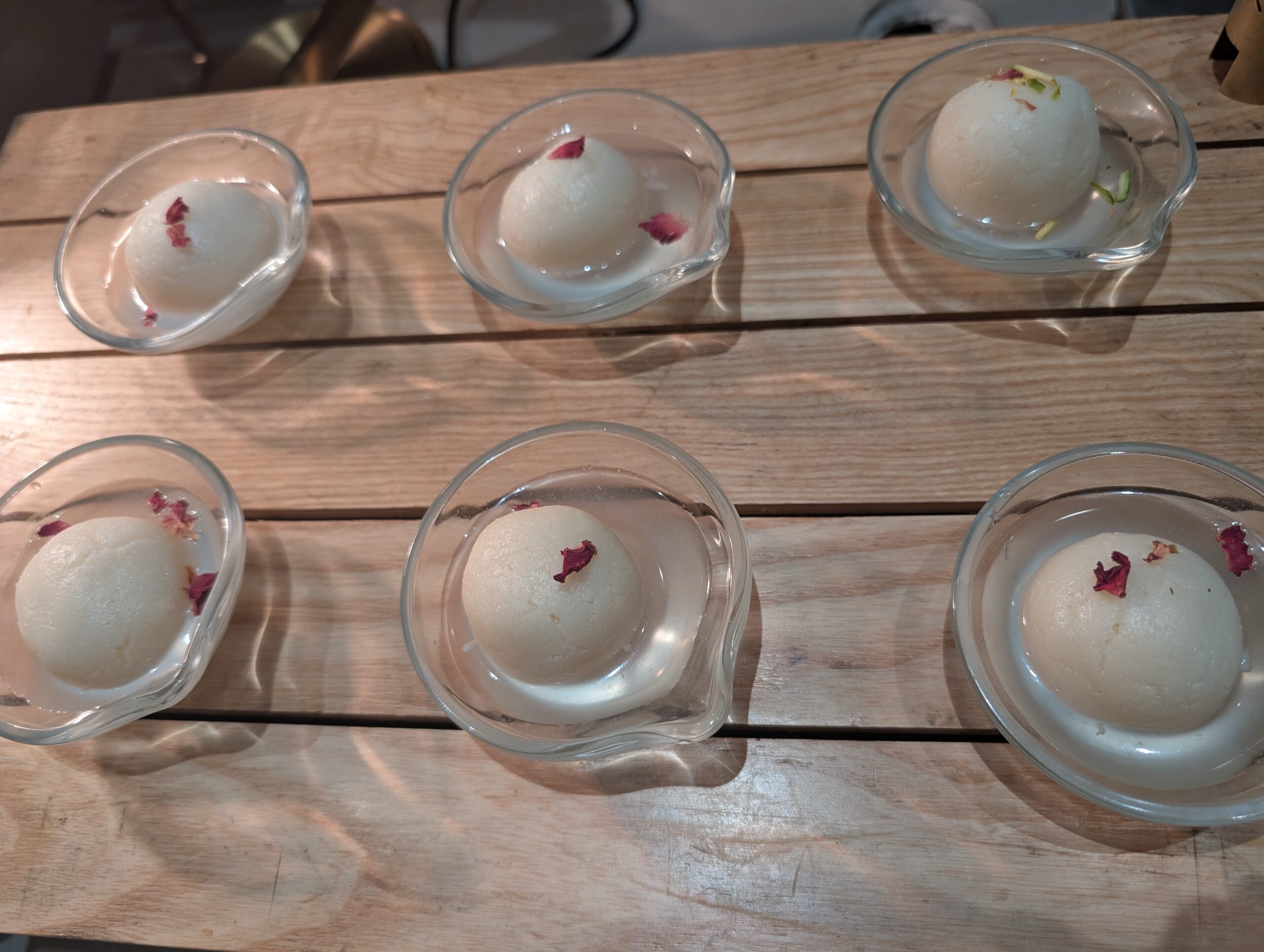
Rasgulla — The Bengali Sweet I Perfected at a 5-Star Hotel
Rasgulla broke me before it made me. During my early days in the pastry section at Grand Hyatt, I ruined twelve batches before I produced one that the head pastry chef deemed “acceptable.” Not good — acceptable. The problem was always the same: my rasgullas either dissolved in the syrup, turned hard as golf balls, or cracked open like tiny white volcanoes. The chef watched me fail, smiled, and said: “Rasgulla is the simplest sweet in the world — two ingredients, one technique. But that technique will take you fifty attempts to learn.” He was right. It took me forty-seven.
Today, after years of practice across multiple hotel kitchens, I can make spongy, perfect rasgulla consistently. The secret isn’t talent — it’s understanding the science of chenna (Indian cottage cheese) and how it behaves under pressure.
“Rasgulla is Bengal’s gift to civilization. If you disagree, you haven’t had a good one yet.”
The Science Behind Spongy Rasgulla
Rasgulla is essentially chenna balls cooked in sugar syrup. The sponginess comes from a chemical reaction: when chenna hits boiling syrup, the heat causes trapped air and moisture to expand, making the balls puff up. If the chenna has too much moisture, the balls dissolve. Too little, and they stay dense. Getting this balance right is the entire challenge.
At the hotel, we followed a precise protocol: after straining the chenna, we kneaded it for exactly 8-10 minutes until it became smooth and stopped cracking. Then we rested it for 5 minutes. This kneading breaks down the protein structure and creates a pliable dough that can trap air — which is what expands in the syrup.
Facts about rasgulla most people don’t know:
- Rasgulla originated in Odisha, not Bengal. While Kolkata popularized it, historical records trace the sweet to Odisha’s Jagannath Temple, where a similar sweet called “khira mohana” has been offered for centuries. Both states claim it — the debate is India’s tastiest controversy.
- The syrup must be thin, not thick. Unlike gulab jamun, rasgulla syrup should be light — almost like flavored water. Thick syrup prevents the balls from expanding properly.
- Lemon juice makes better chenna than vinegar. Vinegar produces a sharper, grainier chenna. Lemon juice gives a subtler acid that creates smoother, finer curds — essential for spongy rasgulla.
Ingredients
- 1 liter full-fat milk
- 2 tablespoons lemon juice (diluted in ¼ cup water)
- 1 cup sugar
- 4 cups water (for syrup)
- 2-3 green cardamom pods, lightly crushed
- 1 teaspoon rose water (optional)
The Professional Method
Step 1: Make the chenna. Bring milk to a full rolling boil. Reduce heat and add diluted lemon juice slowly, stirring gently. The milk will curdle — you’ll see white solids separating from greenish whey. When fully separated, pour through a muslin cloth. Rinse the chenna under cold water for 30 seconds to wash away all acid — this step is critical. If acid remains, the rasgulla will taste sour.
Step 2: Drain and knead. Squeeze the muslin to remove excess water, but not all of it — the chenna should feel moist, like soft clay. Transfer to a clean surface and knead with the heel of your palm for 8-10 minutes. You’ll feel the texture change from grainy to smooth. When a small piece pressed between your fingers feels silky with no grains — it’s ready. This kneading is non-negotiable.
Step 3: Shape. Divide into 10-12 equal portions. Roll each between your palms into smooth, crack-free balls. Even tiny cracks will cause the rasgulla to break apart in the syrup. If the surface looks rough, knead that piece a bit more.
Step 4: Prepare the syrup. Dissolve sugar in water and bring to a rolling boil. Add crushed cardamom. The syrup should be thin — not thick or sticky.
Step 5: Cook. Gently drop the chenna balls into the boiling syrup. They’ll sink first, then float as they cook. Cover the pot and cook on medium heat for 12-15 minutes. The rasgullas will double in size. Don’t open the lid frequently — each opening releases steam and drops the temperature.
Step 6: Cool. Remove from heat and let the rasgullas cool completely in the syrup. They’ll absorb more syrup as they cool, becoming even juicier. Add rose water at this stage. Refrigerate for at least 2 hours before serving.
For more Indian desserts, explore our Gulab Jamun recipe, Rasmalai Mousse Cake, Gulab Jamun Choux Buns, and Pistachio Kheer Éclair.
Troubleshooting Rasgulla
Dissolving in syrup? The chenna had too much moisture or wasn’t kneaded enough. Drain better and knead until completely smooth.
Hard and dense? Over-kneaded or the chenna was too dry. The dough should feel moist and soft, not like stiff clay.
Not expanding? The syrup wasn’t at a rolling boil when you added the balls, or you used too much sugar (thick syrup inhibits expansion).
Frequently Asked Questions
Can I use store-bought paneer for rasgulla?
Absolutely not. Store-bought paneer is pressed too firmly and has had too much moisture removed. It will never become soft enough for rasgulla no matter how much you knead it. You must make fresh chenna from milk — there is no shortcut for this step.
Why do my rasgullas flatten after cooling?
They collapsed because the chenna had excess moisture. When the balls cool, the expanded air contracts, and if the structure is too wet to hold its shape, they deflate. Next time, drain the chenna slightly longer before kneading.
Can I make rasgulla with low-fat milk?
You can, but the texture will be significantly less rich and the balls may not expand as well. Full-fat milk produces chenna with more body and better structure. If using low-fat, add 1 teaspoon of semolina (sooji) to the dough for binding.
Forty-Seven Failures and One Sweet Victory
Rasgulla taught me that simplicity is the hardest form of cooking. Two ingredients. One technique. Infinite ways to get it wrong. But when you finally get it right — when you bite into a rasgulla and feel it collapse on your tongue, flooding your mouth with cardamom-scented syrup — every failed batch becomes worth it.
📌 Save this rasgulla recipe for your next festive occasion — homemade rasgulla is in a completely different league from store-bought.
Have you tried making rasgulla at home? What’s the hardest part for you — the chenna or the cooking? Tell me in the comments 👇
Follow @cookingdepth on Instagram for daily recipes, chef tips, and behind-the-scenes hotel kitchen stories.