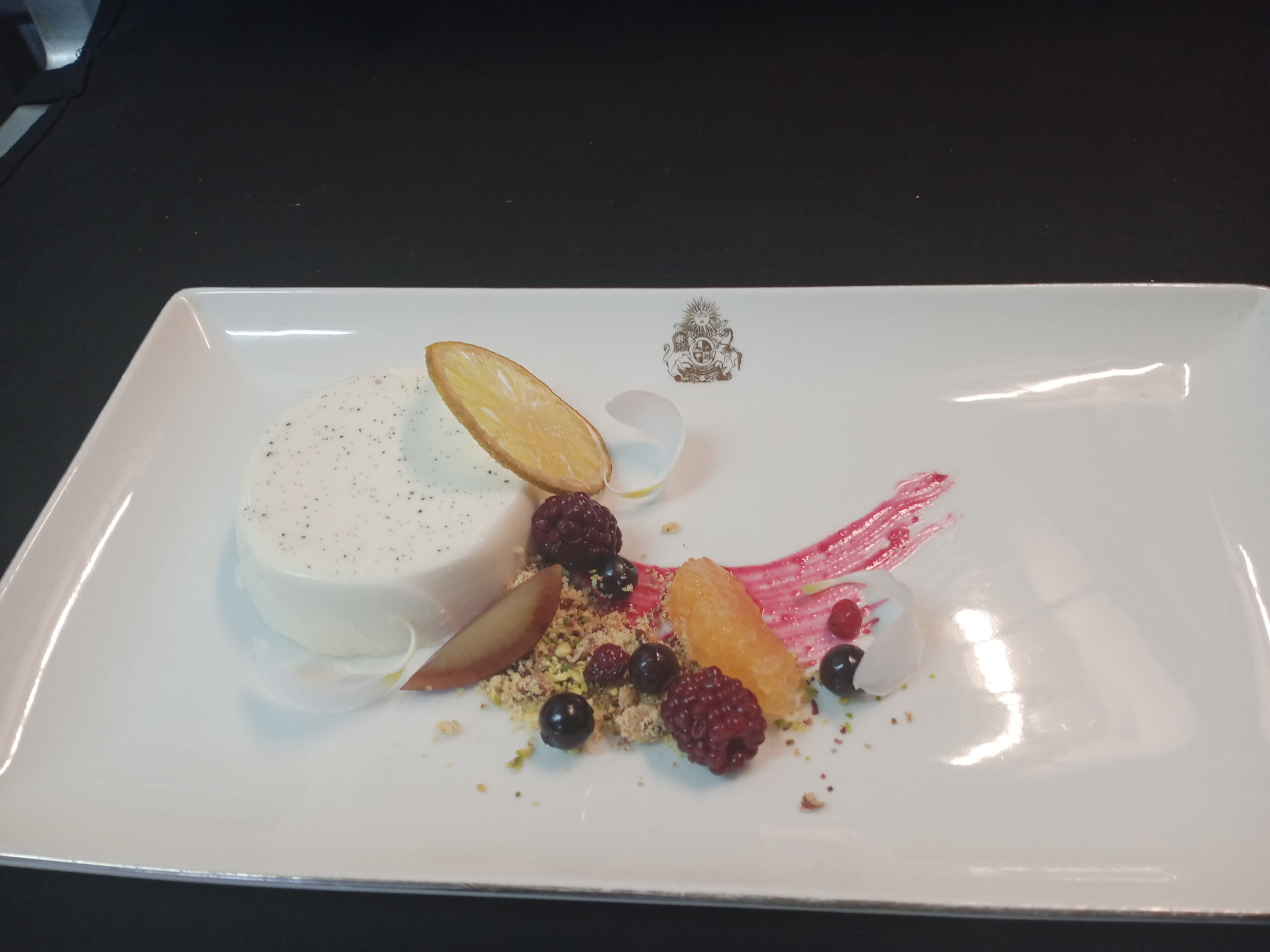
There’s a dessert I come back to again and again when I want to remind myself what good cooking actually means. It’s not some elaborate showpiece with fifteen components and a sugar cage on top. It’s panna cotta. Three ingredients. No oven required. And yet somehow, this humble Italian dessert has taught me more about restraint, balance, and trusting simplicity than anything else in my entire career.
If you’ve ever tried a panna cotta recipe and ended up with something that tasted like vanilla-flavoured rubber, or a sad puddle that wouldn’t hold its shape — stay with me. I’m going to give you the ratio that changes everything.
The Gelatin Ratio That Makes or Breaks Everything
Panna cotta lives and dies by its gelatin. Too much, and you’ve made a bouncy ball that belongs in a child’s toy box, not a dessert plate. Too little, and it collapses the moment you unmould it, spreading across the plate like it’s given up on life. The perfect panna cotta exists in that magical middle ground — firm enough to hold its shape, soft enough to tremble when you nudge the plate.
Here’s my ratio, tested over hundreds of batches across multiple hotel kitchens: for every 500ml of liquid (cream + milk combined), use 5 grams of powdered gelatin or about 2.5 sheets of leaf gelatin. That’s it. This gives you a set that wobbles beautifully — what we call the “jiggle test” in the kitchen. Tap the side of the mould and it should shimmy like it’s dancing. If it doesn’t move, you’ve used too much gelatin. If it sways so much it looks unstable, too little.
One more critical detail: bloom your gelatin in cold water for at least 5 minutes before adding it to the warm cream. If you skip this step and dump dry gelatin into hot liquid, you’ll get lumps. Ugly, chewy lumps that ruin the silk-smooth texture that makes panna cotta special.
Panna cotta is not about what you add. It’s about what you have the courage to leave out. The moment you start overcomplicating it, you’ve lost the plot.
The Italian Philosophy of Less
The name tells you everything: panna cotta means “cooked cream.” That’s the whole recipe in two words. Cream, heated, set. The Italians understood something profound — that when your ingredients are good enough, the best thing you can do is get out of their way. This is the opposite of French pastry, where technique and complexity are celebrated. Italian desserts are about trust. Trust in the cream. Trust in the vanilla. Trust that simplicity is not the same as laziness.
When I first started making panna cotta in a hotel, I wanted to add things. Lavender! Cardamom! Saffron! Rose water! And yes, those variations can be beautiful. But my chef pulled me aside and said, “First, make a perfect plain one. Then earn the right to add things.” He was right. A classic vanilla panna cotta, made with real vanilla bean and good cream, is one of the most satisfying things you’ll ever eat. If you can’t make that taste incredible, no amount of exotic flavouring will save you.
I use a combination of heavy cream and whole milk — usually 60% cream to 40% milk. All cream is too rich and heavy. All milk won’t set properly and lacks that luxurious mouthfeel. The blend gives you something that’s indulgent but not cloying. You want your guests to finish it and quietly wish there was more. That’s the mark of a great dessert.
Flavour Variations That Actually Work
Once you’ve nailed the plain version — and please, actually nail it before moving on — here are the variations I’ve loved most over the years. Coffee panna cotta: dissolve two shots of espresso into the cream while it’s warm. The bitterness cuts through the richness beautifully. Coconut panna cotta: replace half the cream with full-fat coconut milk. Gorgeous with a mango coulis. Citrus panna cotta: steep lemon or orange zest in the warm cream for 20 minutes, then strain. Bright and elegant.
For toppings, a simple berry compote is hard to beat. Cook mixed berries with a little sugar and lemon juice until they just start to break down. You want some whole berries remaining — not a jam, not a syrup, but something in between. Spoon it over the set panna cotta right before serving. The contrast between the cool, smooth cream and the warm, tart berries is the kind of thing that makes people close their eyes while eating.
The Wobble Test and Final Wisdom
Before you unmould your panna cotta, run a thin knife around the edge and dip the base of the mould in warm water for about 10 seconds. Not hot — warm. Then invert it onto the plate with a confident motion. Hesitate and you’ll get a mess. Commit and it slides out clean.
If you’re nervous about unmoulding, here’s a secret: serve it in the glass or ramekin. Plenty of fine dining restaurants do this. A panna cotta in a beautiful glass with a berry compote spooned on top is just as elegant as an unmoulded one, and a hundred times less stressful.
This panna cotta recipe has served me well through a decade of professional kitchens. It’s the dessert I make when I’m tired, when I’m happy, when I want to show someone that cooking doesn’t have to be complicated to be extraordinary. Three ingredients. Five grams of gelatin per 500ml. And the wisdom to stop adding things when it’s already perfect.
That, my friends, is restraint. And it makes all the difference.