There is a particular kind of silence at 4 in the morning.
The kitchen is yours. Nobody is watching. Nobody is waiting. It is just you, a cold slab of butter, and a decision you made the night before that suddenly feels questionable.
That’s how croissants start. A commitment made in the evening, paid for in the dark.
Croissants are not a recipe. They are a relationship. Slow, demanding, occasionally frustrating — and completely worth it when they work.
I have shaped hundreds of croissants. In professional kitchens before sunrise. At home just to see if I could. Each time, there is a moment — usually around the third fold — where you feel whether the dough is right. Whether the butter is behaving. Whether today is going to be a good day or a bin day.
Most days, it works. The ones that don’t teach you something the good ones never could.
This is the recipe I use. It is not quick. It is not easy. But the morning you pull a tray of golden, layered, shattering croissants out of your own oven — that morning will stay with you.
Classic Butter Croissants — Makes 12
For the dough (détrempe)
- 500g strong white flour
- 10g salt
- 80g caster sugar
- 10g instant yeast
- 300ml cold whole milk
- 30g unsalted butter, softened
For the butter block (beurrage)
- 280g unsalted European-style butter, cold
Method — Day 1 (Evening)
- Mix flour, salt, sugar and yeast in a bowl (keep salt and yeast on opposite sides — they don’t like each other).
- Add cold milk and softened butter. Mix until a smooth dough forms — about 5 minutes. Don’t overwork it.
- Shape into a rectangle, wrap in cling film, refrigerate overnight.
- Bash the cold butter between two sheets of baking paper into a flat 20x20cm square. Refrigerate.
Method — Day 2 (Morning, early)
- Roll the dough into a rectangle about 40x20cm.
- Place the butter block in the centre. Fold the dough over it like an envelope. Press the edges to seal.
- Roll out gently to about 60x20cm. Fold into thirds (letter fold). Wrap and rest 30 minutes in the fridge.
- Repeat the roll and fold two more times, resting 30 minutes between each.
- After the third fold, refrigerate for at least 1 hour, up to overnight.
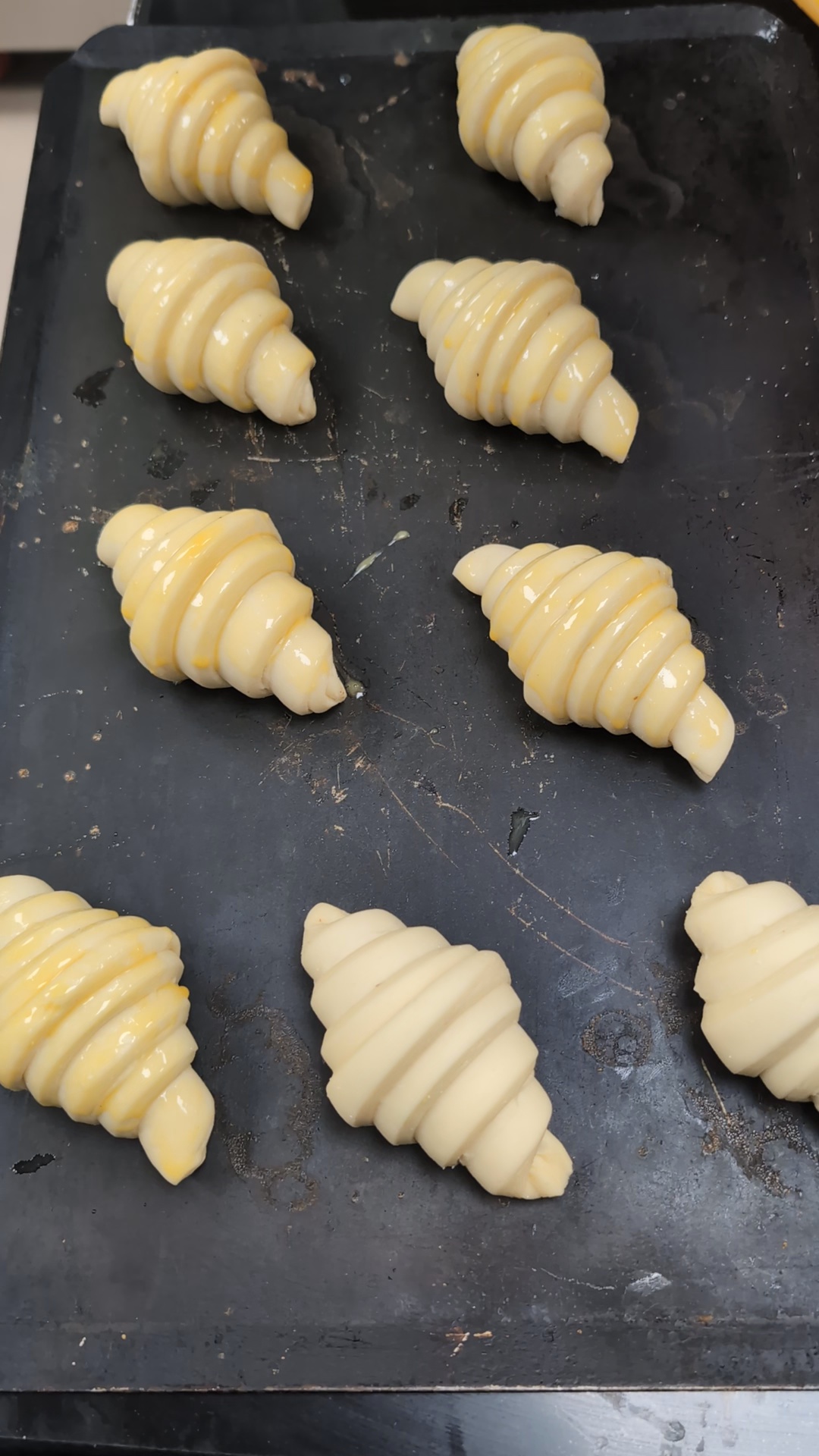
- Roll to 4mm thickness. Cut into long triangles. Roll each from the wide base to the tip, gently stretching as you go. Curve into a crescent shape.
- Place on lined trays. Brush with egg wash. Prove at room temperature for 2–3 hours until puffed and wobbling slightly.
- Egg wash again, bake at 190°C for 18–20 minutes until deeply golden.
The details that matter
- Keep everything cold. Warm butter = no layers = flat sadness.
- Don’t rush the prove. An under-proved croissant will not have the layers you want inside.
- European butter (82%+ fat) is not optional. It is the whole point.
- The egg wash before AND after proving gives you that deep lacquered colour.
Eat them warm. Straight from the tray. The butter will run and the layers will shatter and for a moment everything will make sense.
That is what 4am is for.
— Giriraj / @cookingdepth