
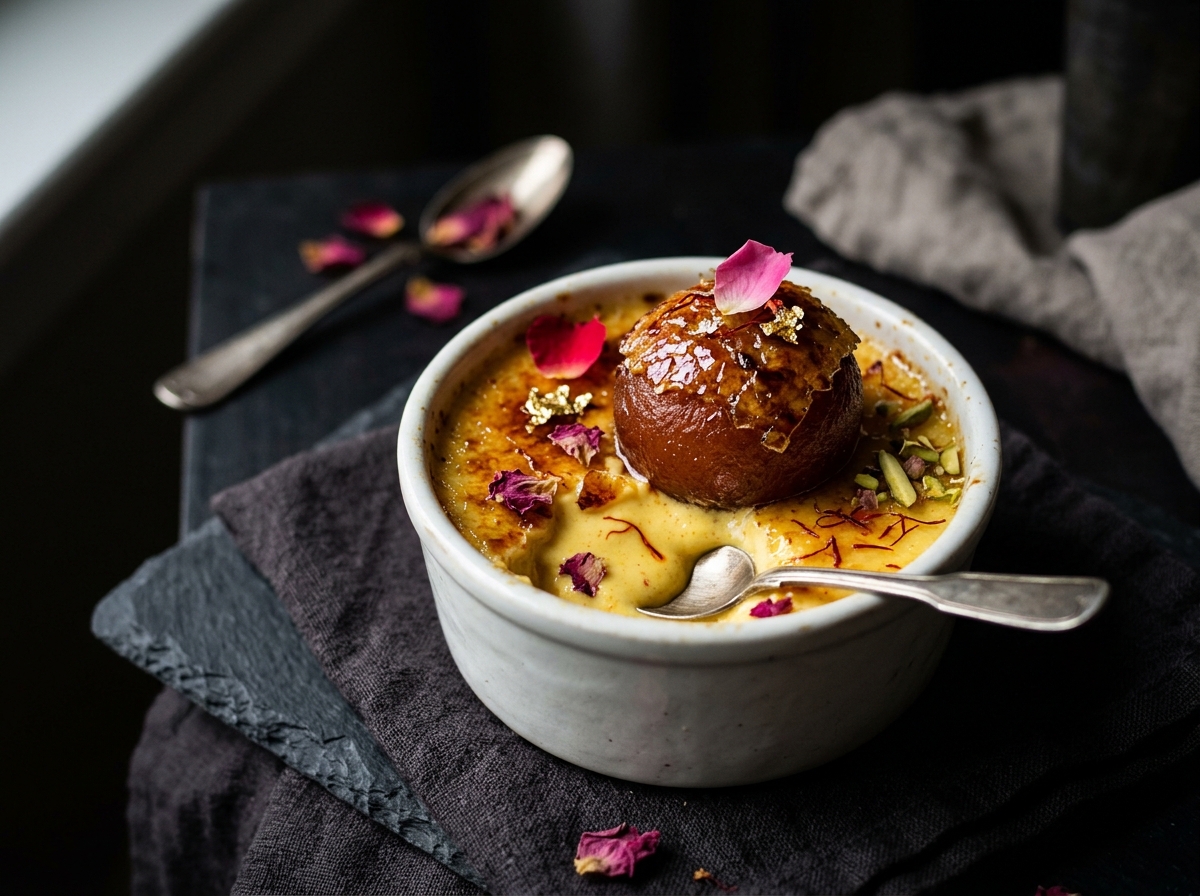
Gulab Jamun — The Dessert That Made Guests Order More at Royal Orchid
At Royal Orchid, we had a rule in the pastry section: if a guest orders one gulab jamun, they’ll order two. If they order two, they’ll order four. I’ve never seen a dessert with a higher reorder rate. There was a regular guest — a businessman from Mumbai — who would fly in every month and his first call would be to room service: “Four gulab jamun, warm, extra syrup.” Not hello. Not check-in. Gulab jamun. That’s the power of a perfectly made gulab jamun, and at Royal Orchid, we took that power very seriously.
The irony? Gulab jamun is one of the simplest desserts to make. Three ingredients in the dough, sugar and water for the syrup. And yet, it’s the dessert that defeats more home cooks than any other. Cracked balls, hard centers, syrup that won’t absorb — I’ve seen it all. Let me fix that today.
“Gulab jamun is proof that God loves India — it’s basically fried dough in sugar syrup, and it’s divine.”
Why Hotel Gulab Jamun Is Softer Than Yours
The number one mistake home cooks make is over-kneading the dough. At Royal Orchid, we barely touched it. The dough should be pressed together gently — just enough that it holds its shape. Over-kneading develops gluten (even in khoya-based dough), which makes the finished gulab jamun chewy instead of melt-in-your-mouth soft.
The second secret is frying temperature. Hotel kitchens fry gulab jamun at exactly 130°C — much lower than you’d think. Low and slow is the mantra. This ensures the inside cooks through before the outside gets too dark. If your oil is too hot, you get gorgeous brown balls that are raw in the center.
Facts about gulab jamun that surprise most people:
- It’s not originally Indian. Gulab jamun descended from the Persian/Turkish dessert “luqmat al-qadi” (judge’s morsels), which arrived in India during the Mughal era.
- “Gulab” means rose water, “jamun” means berry. The name describes both the flavoring (rose-scented syrup) and the shape (similar to the jamun fruit).
- Khoya (mawa) quality determines everything. Fresh khoya made from full-fat milk produces the softest gulab jamun. Store-bought khoya that’s been sitting often has a grainy texture that no amount of kneading can fix.
The Hotel Ingredient List
- 200g fresh khoya (mawa), crumbled
- 3 tablespoons maida (all-purpose flour)
- ½ teaspoon baking soda
- 2-3 tablespoons milk (as needed for binding)
- A pinch of cardamom powder
- Ghee or neutral oil for deep frying
For the syrup:
- 2 cups sugar
- 2 cups water
- 4-5 green cardamom pods, lightly crushed
- 1 teaspoon rose water
- A few saffron strands (optional)
Step-by-Step: The Royal Orchid Method
Step 1: Make the syrup first. Dissolve sugar in water over medium heat. Once dissolved, add crushed cardamom and simmer for 7-8 minutes until the syrup reaches a one-string consistency. Remove from heat, add rose water and saffron. The syrup must be warm (not hot, not cold) when you add the fried gulab jamun.
Step 2: Prepare the dough. Crumble khoya into a bowl. Add maida, baking soda, and cardamom powder. Mix gently with your fingertips — imagine you’re pressing sand, not kneading bread. Add milk one teaspoon at a time until the dough just comes together. It should feel like soft play-doh. Rest for 10 minutes.
Step 3: Shape. Oil your palms lightly. Take small portions and roll into smooth, crack-free balls. If cracks appear, the dough is too dry — add a few drops of milk. At Royal Orchid, we made them slightly smaller than a golf ball. They expand 50% during frying.
Step 4: Fry low and slow. Heat ghee or oil to 130°C (test with a tiny dough ball — it should rise slowly after 15-20 seconds, not immediately). Slide balls in gently. Fry on low heat, turning constantly, for 6-8 minutes until deep golden brown all around. They should feel light when you lift them.
Step 5: Soak. Transfer hot gulab jamun directly into warm syrup. Let them soak for at least 2 hours, ideally overnight. They should swell and become spongy as they absorb syrup.
If you love Indian desserts, explore our Rasgulla recipe, Rasmalai Mousse Cake fusion, Gulab Jamun Choux Buns, and Mango Shrikhand Tart.
Troubleshooting Common Problems
Gulab jamun cracking while frying? The dough was too dry, over-kneaded, or the oil was too hot. Ensure smooth, crack-free balls before frying and keep oil at 130°C.
Hard in the center? Oil was too hot. The outside cooked before the inside had time. Lower the temperature and fry longer.
Not absorbing syrup? The syrup was too thick (becomes a coating instead of being absorbed) or the gulab jamun were fried too hard. Syrup should be thin — one-string consistency at most.
Frequently Asked Questions
Can I use milk powder instead of khoya?
Yes — mix 1 cup milk powder with 3 tablespoons maida and ¼ cup milk. Add a tablespoon of ghee for richness. The texture will be slightly different but still delicious. Many home cooks prefer this method because fresh khoya can be hard to find.
How long do gulab jamun last?
In syrup, they last 5-7 days refrigerated. Reheat gently by warming the syrup with the gulab jamun in it — never microwave them dry. At the hotel, we always served them warm, never hot and never cold.
Can I bake gulab jamun instead of frying?
You can bake them at 180°C for 15-18 minutes, brushing with ghee halfway through. They won’t have the same exterior texture as fried versions, but they’ll be lighter. Some modern hotels now offer “baked gulab jamun” as a healthier option.
The Sweetest Memory
Every time I make gulab jamun, I think of that businessman from Mumbai. Food at its best creates rituals — reasons to return, reasons to call room service before you even unpack. A perfect gulab jamun is a tiny, golden, syrup-soaked reason to believe that simple things can be extraordinary.
📌 Save this gulab jamun recipe for your next celebration — Diwali, birthdays, or just a Tuesday that needs sweetening.
Have you tried making gulab jamun at home? What’s your biggest struggle — shaping, frying, or the syrup? Tell me in the comments 👇
Follow @cookingdepth on Instagram for daily recipes, chef tips, and behind-the-scenes hotel kitchen stories.