
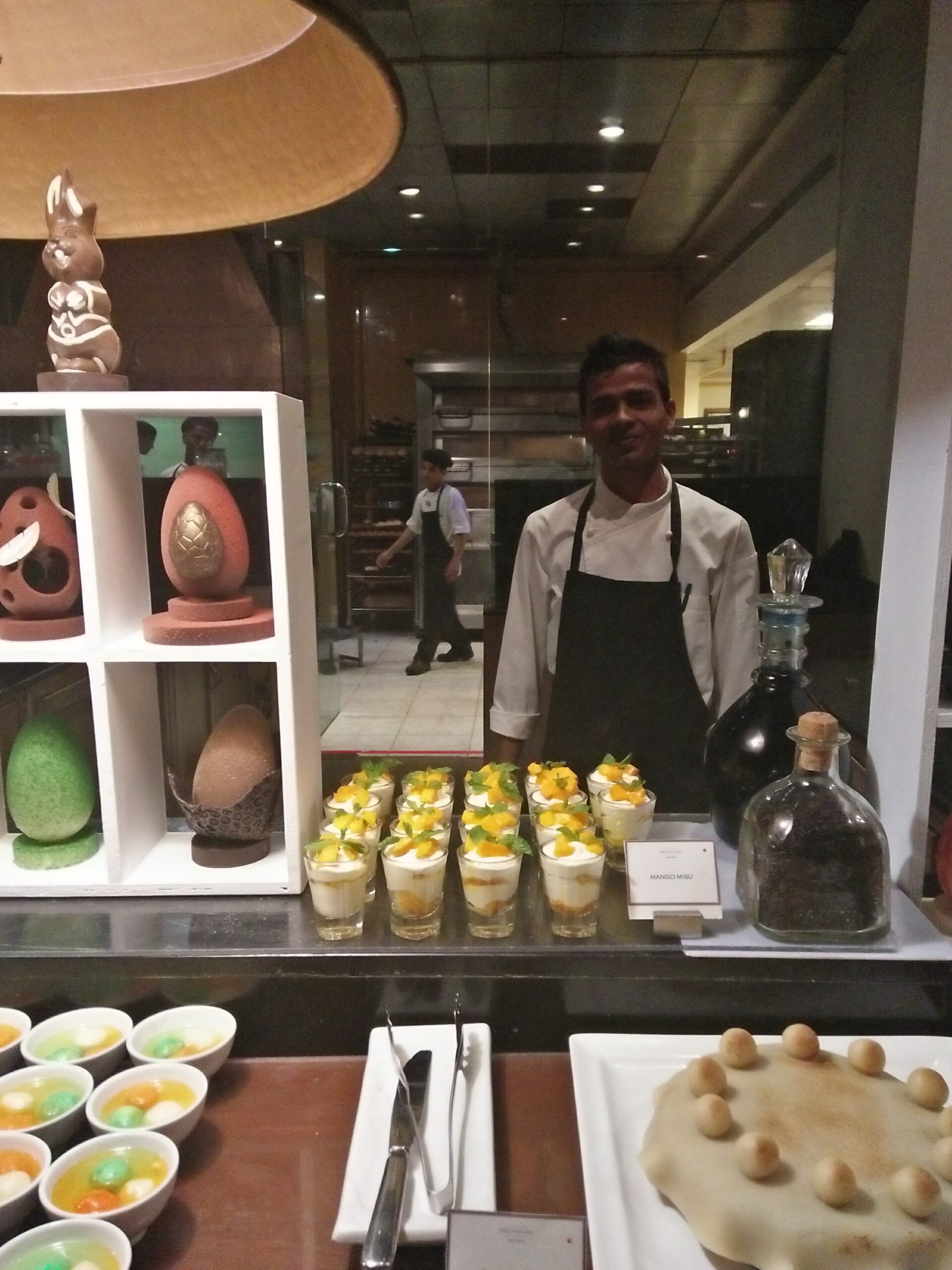
What Eating in Goa Taught Me About Food
The first time I stepped into a Goan kitchen — a real one, not the sanitised prep line of a luxury hotel — a woman was grinding coconut on a stone slab with the kind of quiet rhythm that told me she’d done this ten thousand times before. No recipe card. No weighing scale. Just her hands, the stone, and a mound of fresh coconut that smelled like it had been cracked open minutes ago. I stood there in my chef whites, a pastry professional with years of training, and I felt like I knew absolutely nothing about food.
That feeling never fully left me in the four years I lived and worked in Goa. And honestly, I’m grateful for it.
The Kitchen Behind the Paradise
I came to Goa for work. Not for the beaches, not for the Instagram sunsets — for a position at Park Hyatt Goa Resort & Spa, where I’d be running pastry operations in one of the most beautiful hotel properties I’d ever seen. Later I moved through Heritage Village Club Goa and Grand Hyatt, spending a combined four years cooking in kitchens where precision was everything and presentation could make or break a dish. I’d already done stints at properties in Amritsar, Jaipur, and elsewhere, but Goa was different. Goa got under my skin.
In a hotel kitchen, you work with supply chains. Ingredients arrive in labelled crates, temperatures are logged, and everything follows a system. But what Goa did — what no other posting had done — was blur the line between the professional kitchen and the world outside it. Our suppliers weren’t faceless distributors. They were fishermen from Cansaulim who’d bring the morning catch still glistening with seawater. They were women from the Mapusa Friday Market who’d show up with baskets of kokum, fresh turmeric, and curry leaves so fragrant you could smell them from the loading dock. I started paying attention to what they brought, not just what we ordered.
There’s a particular education that happens when you work in a coastal kitchen. You learn that a fish curry tastes different depending on whether the tamarind was dried in shade or sun. You learn that coconut milk extracted the first time is not the same as the second pressing, and a good Goan cook uses both — in the same dish — at different stages. These aren’t things they teach you in culinary school. These are things a sixty-year-old woman at the Panaji market will tell you if you have the sense to ask and the patience to listen.
Walking Goa With a Chef’s Tongue
On my days off, I did what any restless cook would do — I ate. But I didn’t eat the way tourists eat. I wasn’t looking for the best beach shack on TripAdvisor. I was walking through Anjuna on a Wednesday morning, finding the flea market vendors who also sold plates of fish thali on the side, the rice still steaming, the curry a deep red-orange from Kashmiri chilli and a base of freshly ground coconut. I was sitting in tiny Fontainhas cafés where the walls were painted that crumbling Portuguese yellow and the sol kadhi came in a steel glass, pink and cold and sour enough to make your eyes water in the best way.
I walked the stretch from Baga to Calangute more times than I can count, not for the crowds — God, the crowds — but because there was an old shack near the Baga end, almost hidden behind a boat repair yard, where a man made the most extraordinary prawn curry I’ve ever tasted. He used a stone-ground masala that he prepared fresh each morning: coriander seeds, cumin, a little bit of black pepper, dried red chillies, and an almost reckless amount of fresh coconut. The curry was thin, not thick like you’d get in a hotel buffet version. It clung to the rice just enough. It tasted like the sea and the earth had reached some kind of agreement.
Palolem taught me something else entirely. Down in South Goa, things slow down. The food slows down too. I remember eating a simple vegetable xacuti at a family-run place near the beach — no signboard, just a woman cooking out of her front room. Xacuti is one of those Goan dishes that sounds complicated when you list the spices — poppy seeds, star anise, cinnamon, clove, nutmeg, dried coconut — but when it’s made by someone who learned it from their mother, it comes together into something that tastes inevitable. Like those spices were always supposed to meet in that exact combination. As a pastry chef, I understand layering flavours with precision. But this woman wasn’t layering. She was just cooking. And somehow the result was more complex than anything I’d engineered in a controlled kitchen.
What Coconut Taught Me About Ego
If there is one ingredient that defines Goan cooking, it’s coconut. Not coconut as a garnish or an afterthought — coconut as the foundation. Coconut oil for frying. Coconut milk for curries. Freshly grated coconut in chutneys, in rice, in sweets. Coconut toddy fermenting quietly in clay pots. I came from a background of butter, cream, and European pastry technique. I thought I understood fat, richness, how to build texture. Coconut humbled me.
In the hotel pastry kitchen, I started experimenting. I swapped out dairy cream for fresh coconut cream in certain preparations and the results were revelatory — a different kind of richness, lighter but somehow deeper, with a sweetness that wasn’t sugary. I studied bebinca obsessively. If you haven’t encountered it, bebinca is Goa’s legendary layered dessert — each layer made from coconut milk, eggs, sugar, ghee, and flour, baked one layer at a time until you have this dense, golden, almost caramelised cake that tastes like patience itself. I never mastered it the way local grandmothers do. I’m not sure anyone who didn’t grow up making it can. But pulling it apart, understanding its logic, taught me more about the relationship between heat and patience than any pastry textbook ever did.
Goa also taught me to let go of the idea that complexity equals quality. Some of the best things I ate there were brutally simple — a piece of fresh kingfish pan-fried in coconut oil with nothing but salt, turmeric, and a squeeze of lime. These things didn’t need technique. They needed good ingredients and the confidence to not mess with them.
The Chaos That Feeds You
I want to talk about the markets because no story about eating in Goa is complete without them. The Mapusa Friday Market is sensory overload — piles of dried fish that hit you from twenty feet away, mountains of green chillies, vendors selling fresh bread and spices in newspaper cones. The Panaji municipal market is quieter but just as rich, with its neat rows of vegetables and its fish section where you can watch women clean and fillet pomfret with a speed that would put most trained chefs to shame.
I used to go to these markets not to buy — the hotel had its own procurement — but to learn. To see what was in season. To watch how locals selected their fish, pressing a thumb into the flesh to check freshness, examining the eyes, smelling the gills. To notice which spices were being bought in bulk that week, which told me what people were actually cooking at home. A market is a living document of a food culture. It tells you truths that menus and cookbooks edit out.
And then there were the mornings. Goan mornings before the heat sets in, when the bread sellers — the poder — cycle through villages with fresh pao in covered baskets, honking a rubber horn to announce their arrival. The sound of that horn became so familiar to me that I still hear it sometimes in half-sleep, years after leaving. Fresh pao with butter and a cup of strong Goan chai — tea that’s been boiled with milk until it’s thick and sweet and slightly caramelised — is one of the most perfect breakfasts I have ever eaten. Not because it’s technically impressive. Because it’s honest. Because it knows exactly what it is.
What I Carried Home
I left Goa with more than memories. I left with a different relationship to simplicity. With a deeper respect for the cooks who never went to culinary school and never needed to. With a permanent suspicion of any recipe that tries to make things more complicated than they need to be. The four years I spent in those hotel kitchens — the Park Hyatt, Heritage Village, Grand Hyatt — taught me discipline and technique. But the beaches, the markets, the shacks, the Fontainhas cafés and the Palolem family kitchens taught me something harder to learn: restraint. Trust in the ingredient. The courage to do less.
Every time I work with coconut now, I think of that woman grinding on the stone slab. Every time I pull a curry together, I think about the difference between the first press and the second. Goa didn’t just feed me. It retaught me what feeding someone actually means.
That, more than any single dish, is what I carried home.