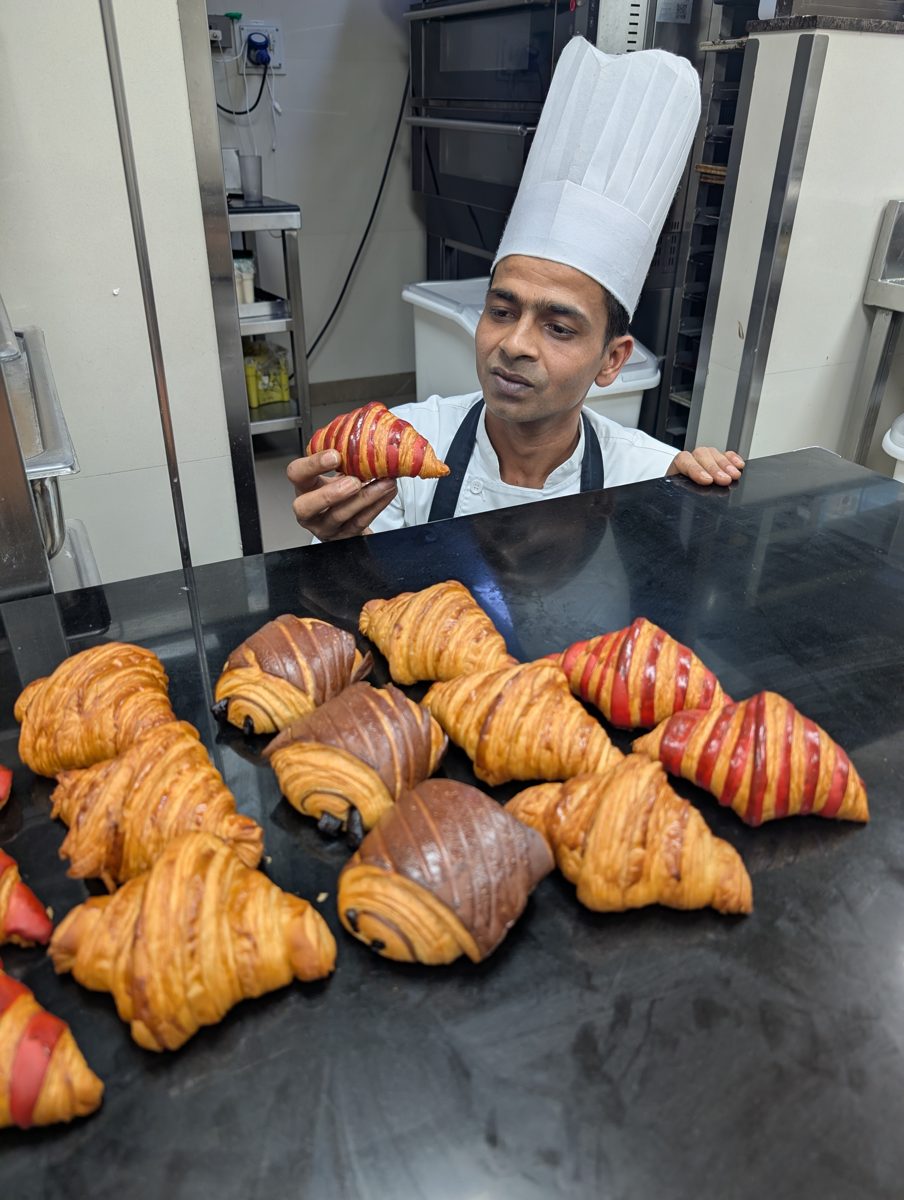
There’s a reason that a perfectly browned crust on bread smells incredible, why a seared steak tastes ten times better than a boiled one, and why golden croissants sell out before pale ones. It’s called the Maillard reaction — and understanding this perfect browning cooking technique will genuinely change the way you cook.
I’m Giriraj Singh, a Pastry & Bakery Chef with over a decade of experience across luxury kitchens in India. From baking croissants at Rajmahal Palace Jaipur to searing proteins at Park Hyatt Goa, the Maillard reaction has been my best friend in the kitchen. Let me break it down simply.
What Is the Maillard Reaction?
In simple terms, it’s a chemical reaction between amino acids (proteins) and sugars that happens when food is heated above roughly 140°C (280°F). It creates hundreds of new flavour compounds and that beautiful golden-brown colour we all love.
It’s not caramelisation — that’s just sugar browning. The Maillard reaction involves both proteins and sugars, which is why it produces far more complex flavours. That nutty, roasted, deep savoury taste? That’s Maillard at work.
Why Does Perfect Browning Matter So Much?
Because browning literally creates flavour that didn’t exist before. A pale chicken breast and a golden-brown one use the same ingredients, the same seasoning. But the browned one has developed hundreds of new taste and aroma compounds through the Maillard reaction.
In my bakery work, this is everything. A croissant that comes out of the oven with a deep golden colour has that buttery, toasty, slightly caramelised flavour. One that’s underbaked — pale and soft — tastes doughy and flat. Same dough, same butter, vastly different results. All because of browning.
The Enemies of Good Browning
Moisture is the biggest enemy of the perfect browning cooking technique. Water on the surface of food keeps the temperature at 100°C — boiling point — which is well below what you need for Maillard. This is why:
- Pat your meat dry before searing. Always. Paper towels, both sides.
- Don’t overcrowd the pan. Too much food releases steam, which traps moisture. Cook in batches.
- Use a hot pan. The surface temperature needs to be high enough to evaporate moisture instantly.
At Jaipur Marriott, the biggest mistake I saw junior cooks make was crowding the pan. They’d pile in chicken pieces, the temperature would drop, steam would build up, and instead of a beautiful sear they’d get sad, grey, boiled-looking meat. Don’t be that cook.
How to Get Perfect Browning Every Time
Here’s my method, refined over years of professional cooking:
- Dry your food. Whether it’s paneer, chicken, fish, or vegetables — surface moisture must go.
- Preheat properly. Heat your pan on medium-high for 2-3 minutes before adding oil.
- Use the right oil. High smoke-point oils like sunflower, grapeseed, or refined groundnut oil. Save your extra virgin olive oil for finishing.
- Don’t touch it. Once food hits the pan, leave it alone. Resist the urge to flip and poke. Let the crust form — it takes 3-4 minutes of uninterrupted contact.
- Listen to the sizzle. A steady, confident sizzle means browning is happening. If it’s quiet, your pan isn’t hot enough.
Maillard in Baking
As a pastry chef, I rely on Maillard for bread crusts, cookie edges, pie pastry, and of course croissants. The egg wash on pastries isn’t just for shine — the proteins in the egg accelerate Maillard browning, giving that gorgeous deep golden colour.
At Rajmahal Palace, I learned to brush pastries with an egg wash that had a tiny pinch of sugar and salt. The sugar helps caramelisation while the salt boosts Maillard. Small detail, massive impact.
Common Browning Mistakes
After years of training junior chefs, these are the mistakes I see most often:
- Using non-stick pans for searing (they don’t get hot enough for good Maillard)
- Adding garlic too early (it burns before meat browns)
- Flipping too often (crust never forms)
- Not preheating the oven enough for baking (10-15 minutes minimum)
Master this one perfect browning cooking technique and every dish you make — from a simple omelette to a complex curry — will taste noticeably better. It’s science, but it feels like magic.
Follow me on Instagram @cookingdepth for daily cooking inspiration.