
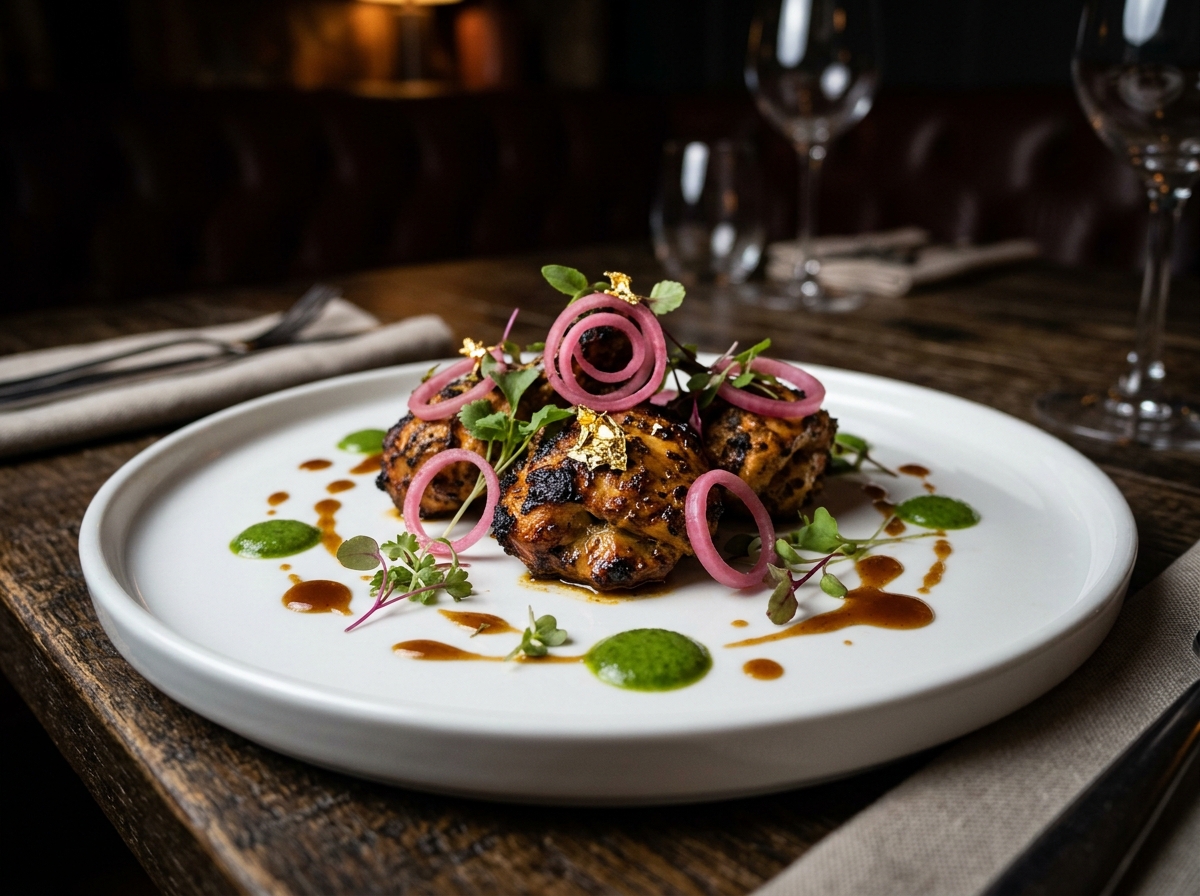
Restaurant Plating Secrets — 5 Rules That Transform Home Cooking
In every hotel kitchen I’ve worked, the moment food leaves the pan and hits the plate is when cooking becomes art. At Grand Hyatt, the head chef would stand at the pass — that final station where plates are inspected before leaving the kitchen — and send back any plate that didn’t meet his visual standards. I’ve seen him send back technically perfect food because the sauce was drizzled in the wrong direction. “The guest eats with their eyes first,” he’d say. “If the plate doesn’t make them want to photograph it, you’ve already lost half the battle.” In the age of Instagram, he was ahead of his time.
Plating is not about fancy tools or edible flowers. It’s about five fundamental rules that any home cook can learn and apply tonight. These rules work for a weeknight dal-rice dinner just as well as they work for a seven-course tasting menu. Let me teach you what it took me years to learn.
“A beautiful plate doesn’t need expensive ingredients. It needs intentional placement — which costs nothing.”
Rule 1: The Clock Face Method
Imagine your plate is a clock face. The protein (main element) goes at 6 o’clock — the position closest to the diner. The starch (rice, bread, potatoes) goes at 10 o’clock. The vegetable or side goes at 2 o’clock. The sauce goes at the center or underneath. This arrangement ensures the diner sees the most impressive element first and creates a visual triangle that the eye naturally follows.
At Park Hyatt, every plate followed this rule. Whether it was butter chicken with naan or a French-style duck breast, the layout was the same. Consistency creates professionalism.
Rule 2: Height Equals Drama
Flat plates of food look boring — like a buffet leftover. Adding vertical height transforms the same food into something that looks composed and deliberate. The easiest technique: stack or lean components against each other.
Examples:
- Instead of spreading rice flat, mold it in a small bowl and invert it for a dome shape
- Lean naan or roti against the curry bowl instead of laying it flat
- Stack paneer cubes in a small pyramid instead of scattering them
- Place a chutney quenelle (oval scoop) on top of a grilled item instead of beside it
The rule of thumb: your plate should have at least one element that rises above the rim of the plate. This single change makes every dish look restaurant-caliber.
Rule 3: Odd Numbers Look Better
The human eye finds odd-numbered groupings more appealing than even ones. Three pieces of tandoori chicken look better than four. Five dots of chutney look better than six. This is called the “rule of odds” and it’s used in photography, interior design, and — yes — food plating.
At Grand Hyatt, our appetizer portions were always in odd numbers: 3 samosas, 5 kebab pieces, 1 large preparation. Even when the recipe mathematically produced an even number, we plated odd and kept the extra for the next order.
Surprising facts about plating:
- White plates are the gold standard. White provides the highest contrast for colorful food and makes everything look vibrant. Dark plates work for pale foods (like white fish or cream-based desserts). Patterned plates distract from the food — avoid them for composed plating.
- The rim is sacred. In professional plating, nothing touches the rim of the plate. The rim is the “frame” — like a picture frame, it creates visual separation between the food and the table. A dirty rim looks unprofessional. Always wipe the rim with a clean, damp cloth before serving.
- Sauces should never cover the protein. Sauce goes underneath or beside the main element — never poured on top (which hides the food’s surface texture). The exception is South Indian gravies and dals where the sauce IS the dish.
Rule 4: Color Contrast Is Non-Negotiable
Every plate needs at least three colors. A plate of butter chicken with white rice and naan is all orange-white — visually flat. Add a green element (fresh coriander, a mint chutney, sautéed greens) and suddenly the plate comes alive. Color contrast is what makes food photographs pop and what makes diners’ eyes widen when a plate arrives.
The easiest color additions:
- Green: Fresh herbs (coriander, mint, microgreens), sliced green chilies, cucumber
- Red: Pomegranate seeds, sliced red chilies, cherry tomatoes, paprika dust
- White: Cream drizzle, yogurt, thinly sliced radish, sesame seeds
- Yellow: Saffron strands, fried onions, lemon zest
Rule 5: Negative Space Is Your Friend
The biggest mistake home cooks make in plating: filling the entire plate. In restaurant plating, 30-40% of the plate should be empty. This negative space (white space) frames the food and makes each element stand out. A crowded plate looks like a mess; a spacious plate looks intentional.
At the hotel, we used plates that were much larger than the portion size demanded. A single piece of grilled fish on a 12-inch plate looks elegant. The same piece crammed onto an 8-inch plate with sides tumbling over the edges looks like a school cafeteria.
For more professional techniques, explore Chocolate Tempering, Lamination, Emulsion Science, Caramelization, and Chocolate Troubleshooting.
Quick Plating Toolkit
You don’t need specialized tools. These household items work perfectly:
- Squeeze bottle: For sauces and drizzles (any clean ketchup bottle works)
- Small bowl or cup: For molding rice into domes
- Spoon: For quenelles (oval scoops) of chutney, raita, or ice cream
- Tweezers: For placing microgreens and small garnishes precisely
- Damp cloth: For wiping rims clean
Frequently Asked Questions
Does plating really matter for home cooking?
Studies show that beautifully plated food is perceived as tasting 30% better than the same food served carelessly. Plating creates anticipation and appreciation — both of which genuinely enhance the eating experience. You don’t need restaurant-level precision; even basic intentionality makes a difference.
How do restaurants plate so fast during service?
Practice and mise en place (everything in its place). Each dish has a predetermined layout that every cook memorizes. Garnishes are pre-prepared. Sauces are in squeeze bottles. When an order fires, the cook builds the plate from muscle memory, not creative improvisation. Speed comes from repetition.
What’s the most common home plating mistake?
Overcrowding. Home cooks try to fit everything onto one plate, filling every inch. Use a larger plate and leave at least a third of it empty. The food you do place will look dramatically better with space around it.
Eat With Your Eyes
Plating is the final act of cooking — the moment where craft becomes presentation. You don’t need to be an artist. You just need to be intentional: place food deliberately, not randomly. Use color, height, and space. Clean the rim. That’s it. Five rules that take 30 seconds to apply but change how every meal is experienced.
📌 Save these 5 plating rules for tonight’s dinner — even a simple meal looks extraordinary when you plate with intention.
Have you tried the clock face method? What plating trick made the biggest difference for you? Tell me in the comments 👇
Follow @cookingdepth on Instagram for daily recipes, chef tips, and behind-the-scenes hotel kitchen stories.