
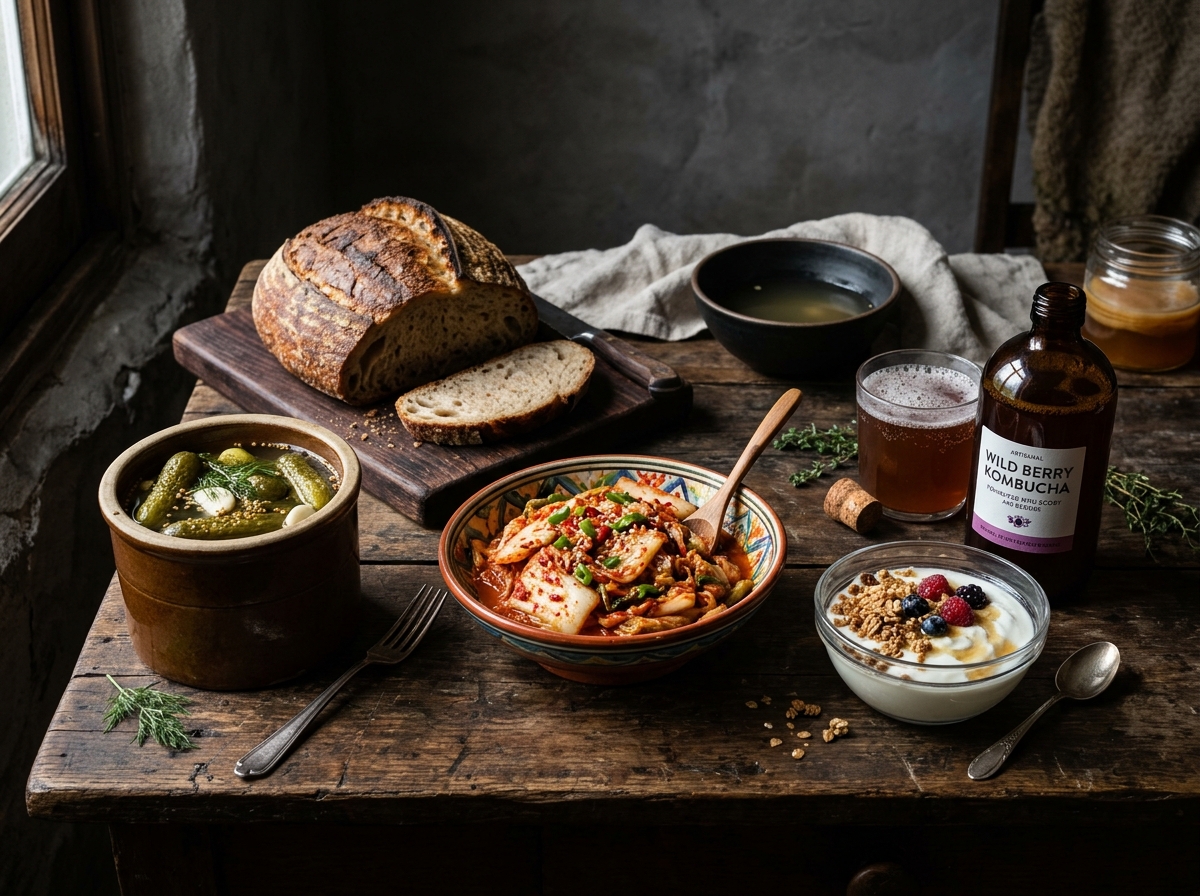
Fermented Foods Everywhere — Why They Actually Work
Fermented foods sound trendy until you realize humans have been fermenting food for 10,000+ years. It’s not a trend—it’s biology. Bacteria and wild yeast transform food in specific ways that happen to be incredibly good for your gut. The science is solid, and the flavor is life-changing.
At culinary school, we had an entire unit on fermentation—not for trendy health reasons, but because fermented foods taste better. Kimchi has complexity that raw cabbage simply doesn’t have. Kombucha has depth. Aged fish sauce has umami that fresh fish can’t match. The transformation isn’t accidental; it’s controlled bacterial fermentation creating new flavor compounds. When I learned that the same process was beneficial for digestion, creating probiotics, and improving nutrient bioavailability, fermentation went from “cool cooking technique” to “genuinely essential practice.”
Confession: I have a fermentation shelf with 12 active jars at any given time. My guests have stopped asking what they are. 😂
Pro Tip: Kombucha, kimchi, sauerkraut, miso, tempeh—if it bubbles during fermentation, you’ve got live bacteria multiplying. That’s the good part.
What Fermentation Actually Does (The Science)
1. Bacteria Break Down Sugars: Lactobacillus consumes glucose and produces lactic acid. This acidifies the environment, preserves the food, and creates a tangy flavor.
2. Creates Probiotics: The bacteria themselves (living cultures) colonize your gut. Some evidence suggests this improves digestion and immune function, though the research is still evolving.
3. Increases Nutrient Bioavailability: Fermentation breaks down antinutrients (phytic acid, lectins) that prevent mineral absorption. A cup of fermented soy (miso, tempeh) provides more absorbable iron than raw soy.
4. Creates New Flavor Compounds: Bacteria produce amino acids, organic acids, and volatile compounds that create complexity. Kimchi tastes like kimchi because bacteria made it that way.
Fermented Foods Worth Your Kitchen Space
Sauerkraut (5 days)
Cabbage + salt. That’s it. Salt draws out water (the brine), wild Lactobacillus ferments it. No special equipment. Start with 2% salt by weight (2 tsp per lb cabbage). Pack into a jar, weight down to keep submerged, cover loosely, taste after 3-5 days. Done.
Kimchi (7-10 days)
Napa cabbage + gochugaru (red chili), garlic, ginger, fish sauce or salt. Same method as sauerkraut but more flavor. Tangier than sauerkraut, spicy, addictive. Makes your kitchen smell Korean.
Kombucha (7-14 days)
Sweet black tea + SCOBY (symbiotic culture of bacteria and yeast). Takes longer, requires a SCOBY (available online, or ask someone who brews), but the result is fizzy, complex, slightly sweet-tart. Once started, the SCOBY keeps producing indefinitely.
Miso (months to years)
Soybeans or other legumes + salt + koji (mold starter). This is fermentation at its most complex. Professional production, but buying quality miso is cheap and it lasts forever in the fridge.
Tempeh (2 days)
Cooked soybeans + rhizopus mold spores. Pressed into a cake. Tastes nutty, high protein, complete amino acid profile. More approachable than tofu because it has actual texture.
Gut Health Claims: What’s Real?
Fermented foods contain live bacteria (probiotics). Early research suggests probiotics can improve digestion, support immune function, and influence mood. However: most probiotic bacteria die in stomach acid before reaching the colon, and individual responses vary wildly. The science is promising but not conclusive.
What we know for sure: Fermented foods are whole foods with good nutrition. The tangy flavor comes from lactic acid, which is safe and beneficial. Eating them regularly doesn’t hurt and probably helps. The “live cultures will heal your gut” marketing? Overstated. But the food is genuinely good for you—just not a miracle.
FAQ
Q: Are fermented foods safe?
A: Yes, if you follow basic hygiene. The acidic environment (created by bacteria) prevents harmful pathogens. Fermentation has been humanity’s primary food preservation method for millennia.
Q: Can I mess this up?
A: Hard to mess up. If it smells rotten, throw it out. If it smells like vinegar, it’s working. If you see white mold on top, scrape it off (surface mold is usually harmless; submersed mold is not).
Q: How much should I eat?
A: A small portion—1-3 tbsp sauerkraut or kimchi with a meal. The bacteria count matters less than you’d think. More is not better; consistency is.
Save this fermentation guide 📌 and start one jar this week. Sauerkraut is the easiest entry point.
Which fermented food are you most curious about trying? Drop it below and I’ll walk you through it.
Transform your food. Follow @cookingdepth 📸 for fermentation science and recipes.
Read next: Good Fat vs Bad Fat in Cooking | Learn more: Macros for Chefs
Pro Chef Insights
Understanding the nuances of this dish will elevate your cooking immediately.
The foundational techniques apply across multiple cuisines and cooking styles.
Professional chefs spend years mastering these principles through repetition and refinement.
Each time you prepare this, you’ll discover new details that enhance flavor and presentation.
Pay attention to temperature control, timing, and ingredient quality—these three elements
separate average results from restaurant-quality outcomes. Your attention to detail matters.
Mastering the Fundamentals
Professional chefs spend years perfecting the basics of their craft. What appears simple on a plate represents hours of practice and refinement. Understanding the principles behind techniques allows you to adapt them to different ingredients and situations. Consistency comes from repetition and attention to detail. Every ingredient you use has a story—where it comes from, how it was grown or produced, and how it contributes to the final dish. When you cook with intention and understanding, your food tastes measurably better. This isn’t magic—it’s technique meeting respect for ingredients. Your guests will taste the difference between a dish made with care and one rushed. Invest time in mastering fundamentals, and every dish improves immediately.
Your Cooking Journey Continues
Each recipe you try teaches you something new about your palate, your kitchen, and your capabilities. Cooking is a skill that improves with consistent practice. The professional chefs you admire weren’t born knowing how to cook—they practiced thousands of times. Your first attempt at any dish is data gathering. Your second attempt improves based on that learning. By your tenth attempt, you understand the recipe deeply. This progressive mastery makes cooking increasingly enjoyable. Share your results with people you care about, and cooking transforms from a chore into a way of expressing care through nourishment. Your kitchen is your laboratory. Treat it that way.