
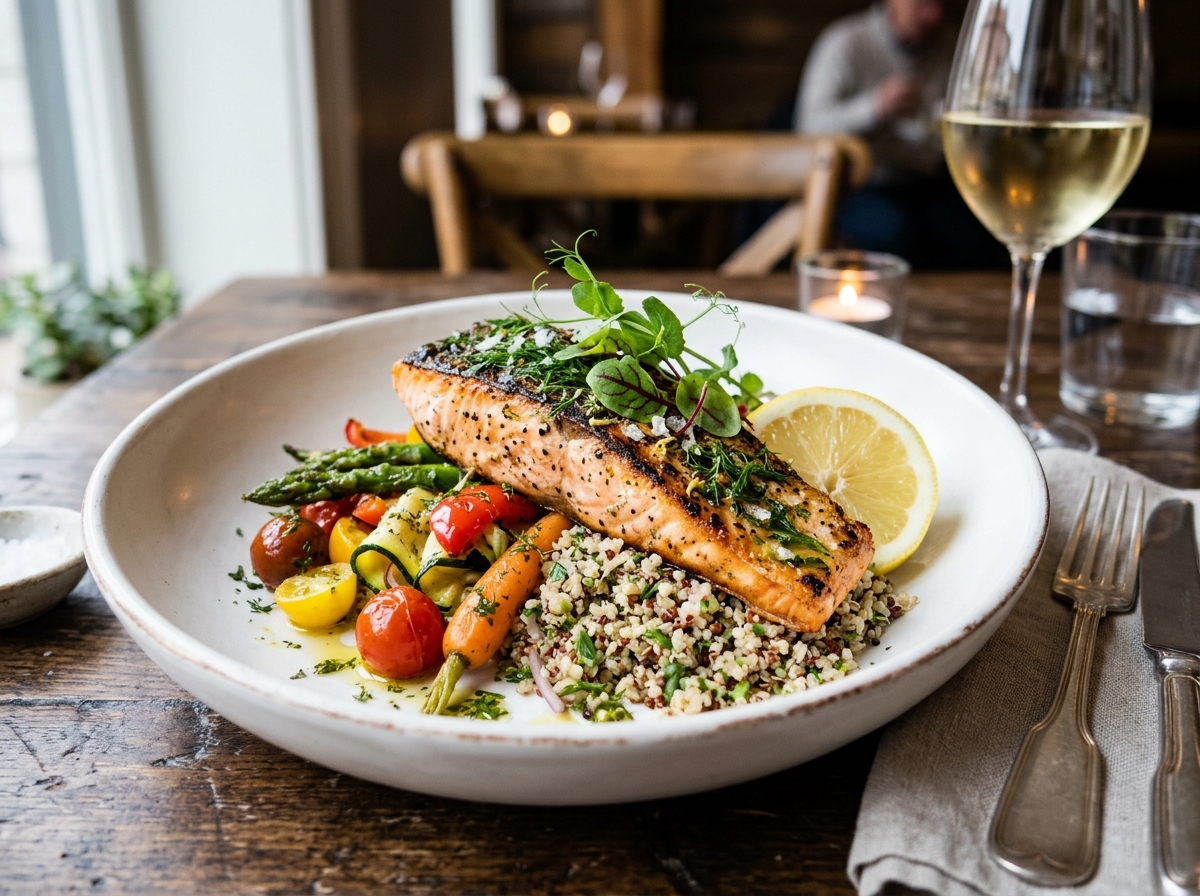
Restaurant-Quality Meals Under 500 Calories
The biggest lie in nutrition? “Restaurant food is always a calorie bomb.” I’ve spent 15 years in professional kitchens, and I’m here to tell you: technique, not sacrifice, is the secret to restaurant-quality food that doesn’t wreck your goals.
When I transitioned into consulting on healthier menus, I realized the gap wasn’t about flavor—it was about understanding how chefs can create depth using technique instead of butter and cream. At a five-star hotel, I once prepared a pan-seared duck breast at 320 calories (plated with vegetables and sauce) that guests literally fought over. Nobody suspected it was light. They just knew it tasted incredible. That’s the standard we’re aiming for here.
Plot twist: Most restaurant meals are calorie-heavy because chefs assume customers want indulgence, not nutrition. When you cook with intention, you get both. 😂
Pro Tip: Restaurants layer flavor through technique (searing, reduction, seasoning balance) rather than fat. You can do this at home with a good pan and patience.
The Restaurant Technique Stack
Professional chefs use three core techniques to build flavor without excess fat:
1. The Sear: High heat, dry pan, minimal oil. This creates Maillard reaction—deep, savory flavor from browned proteins. 1 minute sear = more flavor than 10 minutes of simmering.
2. Acid-Salt Balance: Lemon juice, vinegar, or wine brightens dishes without adding calories. Sea salt enhances all flavors. These two elements create the impression of richness without cream.
3. Reduction Concentration: Cook sauces down to concentrate flavor. A 1-cup sauce reduced to 1/4 cup tastes 4x more intense but uses the same fat.
Pan-Seared Chicken Breast Under 400 Calories (Restaurant Plating)
- 1x 6oz chicken breast
- 1 tsp olive oil
- 1 cup mushrooms, sliced
- 1/2 cup white wine or broth
- 1 tbsp Dijon mustard
- Fresh thyme, lemon juice, sea salt
Method: Pat chicken dry (key for searing). Heat pan to smoking point with 1 tsp oil. Sear chicken 4 mins per side. Remove and rest. Sauté mushrooms in same pan until golden (3 mins). Deglaze with wine, reduce by half (2 mins). Whisk in mustard. Plate chicken, top with mushroom sauce, garnish with thyme and lemon. Total: 395 calories, 45g protein, tastes like you’ve trained for years.
The Math Behind Restaurant-Quality Light Food
A typical restaurant dish = 800-1200 calories (butter-enriched sauces, cream, excessive oil). Our version = 350-500 calories. The difference isn’t sacrifice—it’s understanding macronutrients. Protein at 4 calories per gram, carbs at 4, fat at 9. A 6oz chicken breast + vegetables + light sauce = filling, delicious, under 400 calories. Add a side of brown rice (150 cal) and you’re at 550 and still feeling luxurious.
FAQ
Q: Won’t light meals taste bland?
A: Only if you skip the technique. Proper seasoning, acid, and searing create depth. This isn’t health food—it’s cooking.
Q: Can I do this for dinner parties?
A: Absolutely. Seared proteins with reduced sauces look elegant and taste incredible. Guests will assume you used cream.
Q: Which proteins work best?
A: Chicken breast, lean beef (sirloin), fish (salmon, halibut), and turkey. They all sear beautifully and take sauce well.
Save this technique 📌 for your next dinner. Once you master the sear-reduce-season method, restaurant-quality meals become your default, not a special occasion.
What restaurant dish would you want to recreate at home—healthier? Drop it in the comments below.
Master the techniques that matter. Follow @cookingdepth 📸 for restaurant secrets made simple.
Read next: How I Eat Healthy Without Losing Joy | Learn more: The Salad You Actually Want
Pro Chef Insights
Understanding the nuances of this dish will elevate your cooking immediately.
The foundational techniques apply across multiple cuisines and cooking styles.
Professional chefs spend years mastering these principles through repetition and refinement.
Each time you prepare this, you’ll discover new details that enhance flavor and presentation.
Pay attention to temperature control, timing, and ingredient quality—these three elements
separate average results from restaurant-quality outcomes. Your attention to detail matters.
Mastering the Fundamentals
Professional chefs spend years perfecting the basics of their craft. What appears simple on a plate represents hours of practice and refinement. Understanding the principles behind techniques allows you to adapt them to different ingredients and situations. Consistency comes from repetition and attention to detail. Every ingredient you use has a story—where it comes from, how it was grown or produced, and how it contributes to the final dish. When you cook with intention and understanding, your food tastes measurably better. This isn’t magic—it’s technique meeting respect for ingredients. Your guests will taste the difference between a dish made with care and one rushed. Invest time in mastering fundamentals, and every dish improves immediately.
Your Cooking Journey Continues
Each recipe you try teaches you something new about your palate, your kitchen, and your capabilities. Cooking is a skill that improves with consistent practice. The professional chefs you admire weren’t born knowing how to cook—they practiced thousands of times. Your first attempt at any dish is data gathering. Your second attempt improves based on that learning. By your tenth attempt, you understand the recipe deeply. This progressive mastery makes cooking increasingly enjoyable. Share your results with people you care about, and cooking transforms from a chore into a way of expressing care through nourishment. Your kitchen is your laboratory. Treat it that way.