
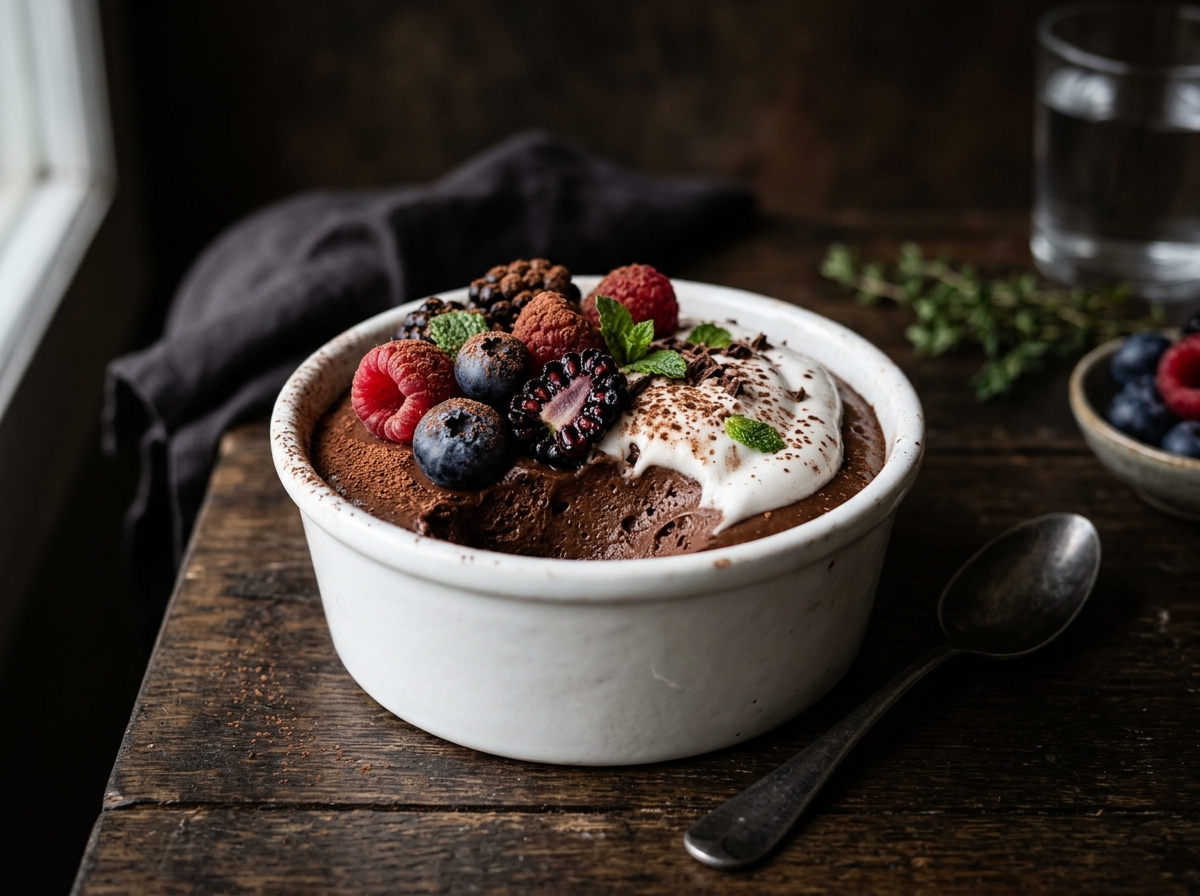
The Dessert That Doesn’t Feel Healthy — But Is
You know that moment when you tell yourself “I’m done with desserts” and then a plate of dark chocolate mousse shows up in front of you? Yeah, that’s my life.
For years, I thought indulgence meant compromising my health. Working in hotel kitchens, I’d see guests asking for “lighter” versions of everything, as if enjoying food was inherently sinful. Then I realized: the best dessert is one you actually want to eat, one that doesn’t make you feel guilty an hour later. I started experimenting with what I call “nutrient-dense indulgence”—desserts made with whole ingredients, proper fats, and real flavor. No fake sweeteners, no shame, no sacrifice.
Fun fact: Dark chocolate counts as a health food when you stop apologizing for eating it. 😂
Pro Tip: Avocado-based chocolate mousse contains 8g of healthy fat per serving and tastes like you’re cheating. Nobody needs to know it’s packed with potassium and fiber.
Why This Dessert Works
Most desserts fail on two fronts: they’re either too indulgent (loaded with sugar and refined flour) or too restrictive (taste like cardboard). The middle ground? Use whole ingredients that actually nourish your body. Think: natural cocoa powder (3g fiber per 2 tablespoons), dark chocolate with polyphenols, and fats from avocado or coconut that keep you satisfied.
This mousse recipe takes 10 minutes, serves 2, and has roughly 180 calories per serving with 6g protein. You’re getting a legitimate dessert that doesn’t spike blood sugar and doesn’t require willpower denial.
Simple Avocado-Dark Chocolate Mousse (10 mins)
- 1 ripe avocado
- 2 oz dark chocolate (70% cacao), melted
- 1/4 cup unsweetened cocoa powder
- 1/4 cup maple syrup
- Pinch of sea salt
- Optional: 1 tbsp espresso powder for depth
Method: Blend avocado, melted chocolate, cocoa powder, and maple syrup until silky. Taste and adjust sweetness. Divide into serving glasses. Top with cocoa nibs or a tiny pinch of fleur de sel. Serve immediately or chill up to 2 hours.
The Science (Why Your Body Actually Likes This)
Avocado provides monounsaturated fat, which slows glucose absorption—meaning no blood sugar crash. Dark chocolate polyphenols improve blood flow and have antioxidant properties. Cocoa powder adds fiber and magnesium, which most people are deficient in. This isn’t a “healthy alternative to dessert”—it’s dessert that happens to be genuinely good for you.
FAQ
Q: Won’t the avocado taste like avocado?
A: Nope. The chocolate and cocoa completely mask it. Your guests will never know. The avocado is just there for texture and nutrition.
Q: Can I make this ahead?
A: Yes, up to 4 hours. The mixture will thicken slightly when cold, which is actually better for a mousse texture. Stir in a splash of almond milk if it gets too dense.
Q: What if I don’t like dark chocolate?
A: Use 80-85% cacao and increase the maple syrup slightly. This isn’t about suffering through bitter chocolate—adjust to what tastes good to you.
Save this tip 📌 and make it this weekend. Your dinner guests will ask for the recipe, and you can smile knowing it’s actually nourishing their body.
What’s your biggest dessert obstacle—the willpower part or the guilt part? Comment below.
Love real food? Follow us at @cookingdepth 📸 for recipes that taste like indulgence and feel like self-care.
Read next: The Salad You Actually Want to Eat | Learn more: How I Eat Healthy Without Losing Joy
Pro Chef Insights
Understanding the nuances of this dish will elevate your cooking immediately.
The foundational techniques apply across multiple cuisines and cooking styles.
Professional chefs spend years mastering these principles through repetition and refinement.
Each time you prepare this, you’ll discover new details that enhance flavor and presentation.
Pay attention to temperature control, timing, and ingredient quality—these three elements
separate average results from restaurant-quality outcomes. Your attention to detail matters.
Mastering the Fundamentals
Professional chefs spend years perfecting the basics of their craft. What appears simple on a plate represents hours of practice and refinement. Understanding the principles behind techniques allows you to adapt them to different ingredients and situations. Consistency comes from repetition and attention to detail. Every ingredient you use has a story—where it comes from, how it was grown or produced, and how it contributes to the final dish. When you cook with intention and understanding, your food tastes measurably better. This isn’t magic—it’s technique meeting respect for ingredients. Your guests will taste the difference between a dish made with care and one rushed. Invest time in mastering fundamentals, and every dish improves immediately.
Your Cooking Journey Continues
Each recipe you try teaches you something new about your palate, your kitchen, and your capabilities. Cooking is a skill that improves with consistent practice. The professional chefs you admire weren’t born knowing how to cook—they practiced thousands of times. Your first attempt at any dish is data gathering. Your second attempt improves based on that learning. By your tenth attempt, you understand the recipe deeply. This progressive mastery makes cooking increasingly enjoyable. Share your results with people you care about, and cooking transforms from a chore into a way of expressing care through nourishment. Your kitchen is your laboratory. Treat it that way.