
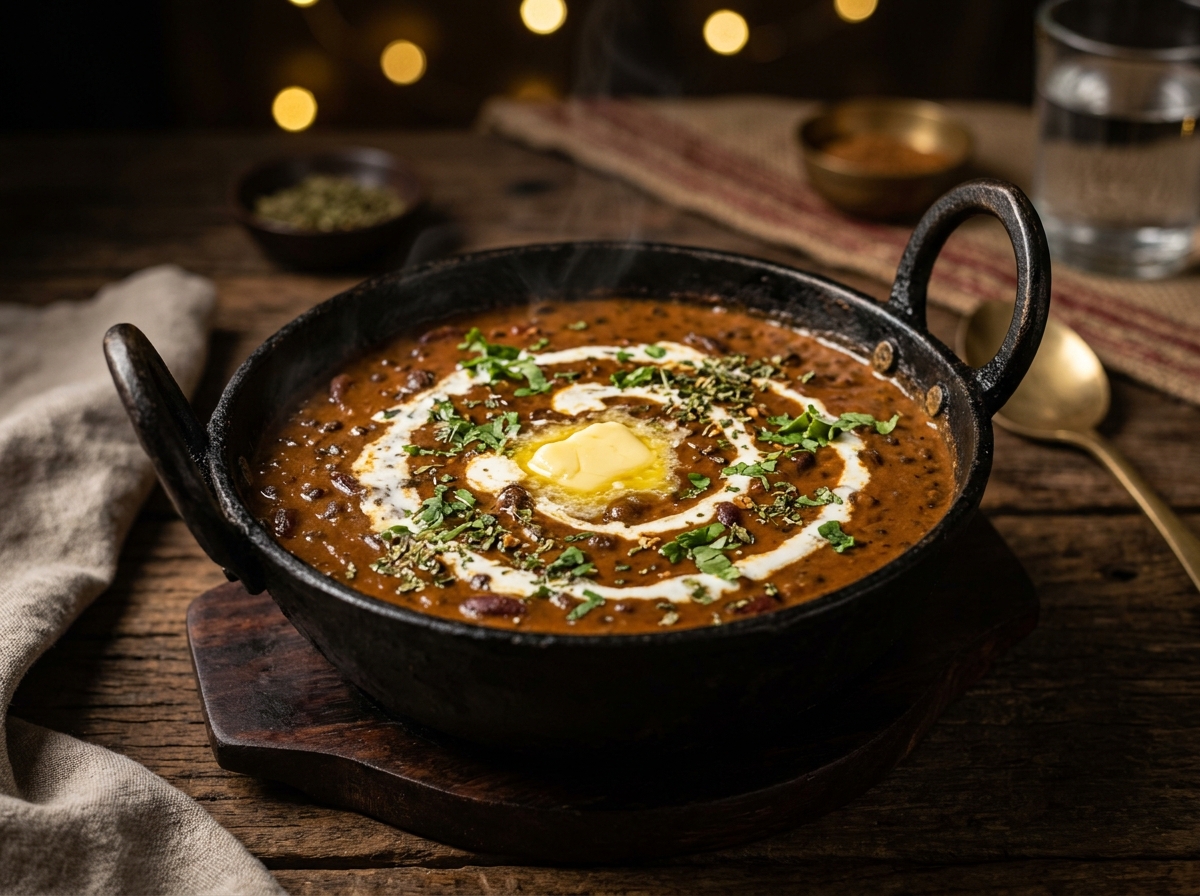
Dal Makhani — Why Yours Never Gets That Restaurant Consistency
Dal Makhani is supposed to be luxurious—creamy, deeply spiced, almost velvety on the tongue. But when you make it at home, it comes out thin and watery. You add more cream to compensate, and it becomes grainy or splits. The problem isn’t your ingredients. It’s your understanding of how Dal Makhani actually works.
At Park Hyatt Goa, I watched the chef prepare Dal Makhani in a massive pot that never left the stove. It simmered for hours, not minutes. Every day, fresh dal was added to what was already there. The older dal thickened the liquid. The new dal provided fresh flavor. This is how restaurants maintain consistency—they build layers of cooking time and flavor depth.
Why did Dal Makhani get its own personal chef? Because it demanded slow, consistent attention 😂
Here’s the restaurant secret most recipes don’t mention: Dal Makhani relies on the starch from the dal itself to create creaminess, not cream alone. Home cooks skip steps that allow this starches to release and thicken naturally. Hotels don’t rush—they understand that proper thickening takes time.
Restaurant-Consistency Dal Makhani Recipe
- Prep Time: 20 minutes
- Soaking Time: 4-6 hours (or overnight)
- Cook Time: 90 minutes (yes, really)
- Total Time: 2.5-3 hours
- Servings: 4-5 people
Ingredients
- 200 grams kidney beans (rajma)
- 100 grams whole black lentils (urad dal, whole, not split)
- 4 cups water
- 3 cups chicken or vegetable stock (adds depth)
- 4 tablespoons butter (divided: 2 for cooking, 2 for finishing)
- 2 tablespoons vegetable oil
- 1 medium onion, finely chopped
- 2 tablespoons ginger-garlic paste
- 4 large tomatoes, blended into smooth paste (or 400g canned crushed tomatoes)
- 2 tablespoons tomato paste (this is critical for depth)
- 2 green chillies, finely minced
- 1 teaspoon red chilli powder
- 1 teaspoon garam masala powder
- ½ teaspoon cumin powder
- ¼ teaspoon asafoetida (hing)
- 2 teaspoons Kasuri methi (fenugreek leaves), crushed
- 150 grams heavy cream (single or double)
- 1 teaspoon salt (adjust to taste at end)
- ½ teaspoon lemon juice
Step-by-Step Recipe
- Rinse kidney beans and whole black lentils together. Soak in 6 cups water for 4-6 hours or overnight. This softens the beans and makes them cook faster while reducing gas-causing elements.
- Drain soaked beans and lentils completely. In a large, heavy-bottomed pot, bring 4 cups fresh water and 3 cups stock to a boil. Add drained beans and lentils. Bring back to boil and immediately reduce to low-medium heat.
- Simmer for 45-50 minutes until beans are completely soft and starting to break apart. The lentils should be broken down but the mixture should NOT be mashed yet. Add more stock if the liquid level drops below the beans—they should always be submerged.
- While beans cook, prepare the tempering base: Heat 2 tablespoons butter and 2 tablespoons oil in a separate pan over medium heat. Add finely chopped onion and cook for 5-7 minutes until it’s deep golden (not just translucent—deep golden). Patience here matters enormously.
- Add ginger-garlic paste and cook for 1 minute. Then add the blended tomatoes and tomato paste. Stir well and cook for 8-10 minutes on medium heat, stirring occasionally. The mixture should reduce slightly and the raw tomato smell should disappear. You’re creating a foundation.
- Add green chillies, red chilli powder, garam masala, cumin, and asafoetida to the tomato mixture. Cook for 1 minute on medium-high heat until spices bloom and fill the air with aroma. This is called “tempering”—it releases the essential oils from the spices.
- Now add this entire tempering mixture to the cooked beans and lentils pot. Stir thoroughly and ensure everything is well mixed. The color should change from plain cooked dal to a darker, more complex tone.
- Reduce heat to low and simmer the combined mixture for 20-25 minutes, stirring occasionally. Do NOT rush this step. This simmering time allows the flavors to marry and the dal’s own starches to release, naturally thickening the mixture. This is what creates restaurant consistency.
- Mash approximately 30-40% of the cooked dal against the side of the pot using the back of a wooden spoon. Don’t mash all of it—you want some texture and body. You’re not making a paste; you’re creating a creamy base while maintaining some tooth.
- Add crushed fenugreek leaves and give it a final stir. Slowly add 150 grams heavy cream while stirring constantly. The cream should be at room temperature—cold cream can shock the mixture and potentially split.
- Taste for salt and adjust. The dal should be deep, complex, creamy, and luxurious. If it’s too thick, add a bit more stock (never water). If too thin, it means you rushed and didn’t simmer long enough in step 8.
- Cook for 2 more minutes on low heat. Finish with 2 tablespoons cold butter stirred in off the heat. This finishing butter creates a silky, glossy top—exactly what restaurants plate. Add lemon juice for a subtle brightness.
- Serve immediately in warm bowls or plates. The consistency should be such that it slowly spreads across the plate when spooned, never running like soup, but never stiff like a paste.
Chef Tips from Hotel Kitchens
- Time is the Main Ingredient: Dal Makhani can’t be rushed. Total cooking time of 90 minutes is standard in hotels. Shortcuts always show in the final texture and flavor depth.
- Whole Beans Cook Differently: Hotels use whole kidney beans and whole black lentils, not split. Whole versions break down slower and create a creamier, more complex texture when mashed partially.
- Tomato Depth Matters: Using both fresh blended tomatoes AND tomato paste creates layered flavor. One alone doesn’t build the same depth that restaurants achieve.
- Partial Mashing is Key: Mashing everything makes it a paste. Mashing nothing leaves it thin. Partial mashing—about 30-40% of the dal—creates the right consistency and texture balance.
- Stock Over Water: Using stock (chicken or vegetable) instead of water adds depth that plain water can’t provide. This subtle difference compounds over the long cooking time.
FAQ — Dal Makhani Texture Problems
Q: My Dal Makhani is too thin/watery. How do I fix this?
A: You likely didn’t simmer long enough in step 8. The dal’s starches need time to naturally release and thicken the liquid. You also might not have mashed enough of the dal. Try partial mashing (30-40%) to create body without making it paste-like.
Q: The cream split or curdled. What happened?
A: The cream was likely too cold, or you added it too quickly. Always bring cream to room temperature first. Add it slowly while stirring constantly—never dump it in. Also, make sure the dal isn’t boiling when you add cream.
Q: Can I make this with canned dal to save time?
A: Not recommended. Canned dal is already overcooked and won’t benefit from the long simmering time that builds restaurant-quality texture. Buy dry beans and lentils. The extra 90 minutes of cooking time creates a completely different product.
Save this recipe 📌
What’s your biggest challenge making Dal Makhani at home? Is it texture, flavor, or timing? Drop a comment and let me know—I can help troubleshoot!
Follow @cookingdepth on Instagram 📸 for daily street food inspiration and quick cooking hacks.
Explore Butter Chicken techniques or learn Paneer Tikka Masala secrets.
2 thoughts on “Dal Makhani — Why Yours Never Gets That Restaurant Consistency”