
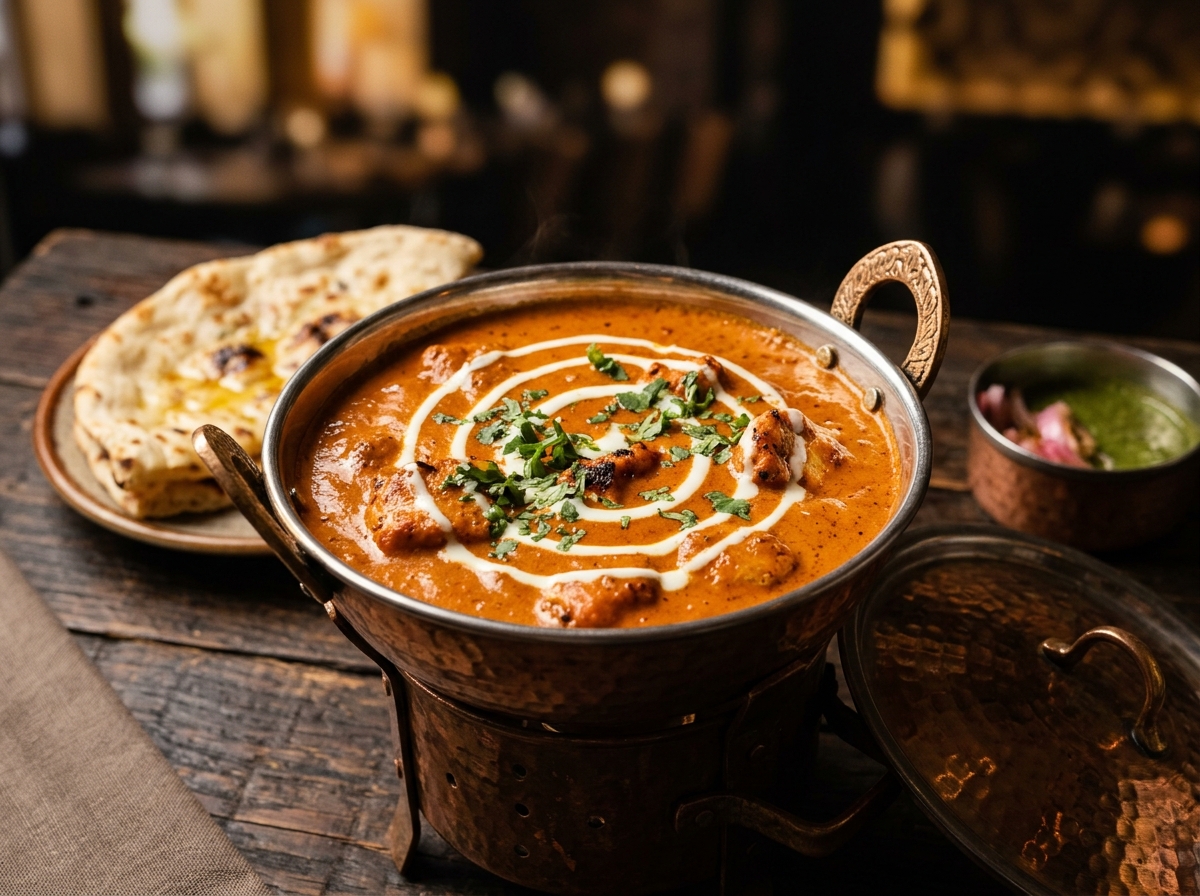
Butter Chicken — The Restaurant Version You’ve Never Made Correctly
Butter Chicken is simultaneously the most ordered Indian dish in restaurants and the most butchered in home kitchens. You make it with all the right ingredients, follow a recipe perfectly, and it still tastes like… something’s missing. That something is technique. Not ingredients. Not timing. Technique.
At FCI Ajmer (Food and Catering Institute), I watched a master chef make Butter Chicken in two different ways: the home way and the hotel way. Same ingredients. Different results. The hotel version had a silky, luxurious mouthfeel. The home version tasted good but flat. The difference? Hotels make the sauce first, THEN add the chicken. Home cooks do it backwards.
Why did Butter Chicken go to culinary school? Because it wanted to understand the secret to staying smooth and creamy under pressure 😂
Here’s the revelation: restaurant Butter Chicken is 60% sauce and 40% chicken. Most home cooks think it’s the opposite. They make chicken first, then try to coat it in sauce. That’s why it tastes dry and separated. Hotels build the sauce first, then the chicken becomes part of it—not an afterthought.
Restaurant-Style Butter Chicken Recipe
- Prep Time: 20 minutes (plus 6-8 hours marinating)
- Cook Time: 35 minutes
- Total Time: 55 minutes (plus marinating)
- Servings: 4-5 people
For the Chicken (Marinade)
- 700 grams boneless, skinless chicken breast, cubed 1.5-inch
- 150 grams plain yogurt (full-fat, room temperature)
- 1 tablespoon ginger-garlic paste
- ½ teaspoon red chilli powder
- ¼ teaspoon turmeric powder
- ½ teaspoon salt
- 1 tablespoon vegetable oil
- ½ teaspoon garam masala powder
For the Sauce (This is 60% of the dish)
- 3 tablespoons butter (divided: 2 tablespoons for sauce, 1 for finishing)
- 2 tablespoons vegetable oil
- 1 medium onion, finely chopped
- 1 tablespoon ginger-garlic paste
- 3 green chillies, finely minced
- 400 grams crushed tomatoes (canned or fresh blended)
- 1 tablespoon tomato paste
- 2 teaspoons red chilli powder
- 1 teaspoon garam masala powder
- ½ teaspoon fenugreek leaves (kasuri methi), crushed
- ¼ teaspoon asafoetida (hing)
- 100 grams heavy cream (or evaporated milk if budget-conscious)
- 1 tablespoon honey or jaggery (for sweetness balance)
- ½ teaspoon lemon juice
- Salt to taste
- Fresh coriander for garnish
Step-by-Step Recipe
- Prepare the marinade: Combine 150 grams yogurt with ginger-garlic paste, red chilli powder, turmeric, salt, oil, and garam masala. This should smell aromatic and deeply spiced.
- Add chicken cubes to the marinade and coat thoroughly. Make sure every piece is covered. Marinate for minimum 6 hours, preferably overnight in the refrigerator. The yogurt enzymes will tenderize the chicken during this time.
- When ready to cook, preheat a cast-iron skillet or heavy-bottomed pan on high heat for 3 minutes. The pan should be smoking hot—this is non-negotiable for proper searing.
- Shake off excess marinade from chicken pieces (reserve the marinade—you’ll use it later). In batches, sear the chicken in the hot pan without moving it for 2-3 minutes per side. You want a golden crust, not raw-looking surfaces. Don’t overcrowd; do this in 2 batches. Remove to a plate and set aside.
- THIS IS THE CRITICAL DIFFERENCE: Make the sauce BEFORE adding chicken back in. Heat 2 tablespoons butter and 2 tablespoons oil in the same pan over medium heat. Add finely chopped onion and cook until deep golden—this takes 8-10 minutes. Do not rush. The onion must be golden, not just translucent.
- Add ginger-garlic paste and cook for 1 minute. Add green chillies and cook for 30 seconds. The entire aromatics section should smell intoxicating at this point.
- Add tomato paste and cook for 1 minute, stirring constantly. Then add crushed tomatoes. Stir well and let it simmer for 8-10 minutes on medium heat, stirring occasionally. The tomato sauce should reduce by 20% and deepen in color. The smell should change from raw to cooked.
- Add red chilli powder, garam masala, fenugreek leaves, and asafoetida. Stir and cook for 1 minute until spices bloom and release their essential oils. The sauce should smell warm and complex.
- Now here’s the hotel trick: Slowly add cream while stirring constantly. The sauce should turn from red-orange to a beautiful salmon pink. This transformation is what you’re after. Don’t add cream all at once or it may split.
- Add honey or jaggery for sweetness. The sauce should have a subtle sweet note—enough to balance the spice and acidity, but not enough to taste sweet. Taste and adjust.
- Add the seared chicken pieces back into the sauce along with any juices that collected on the plate. Stir gently to coat every piece. Reduce heat to low and simmer for 8-10 minutes, stirring occasionally. The sauce should coat the back of a spoon.
- Add the reserved yogurt marinade (just the liquid, not any chunks) while stirring constantly. This enriches the sauce further and adds a subtle tang. Cook for 2 more minutes.
- Finish with 1 tablespoon of cold butter (this is the “finish” butter) and lemon juice. Stir until the butter melts completely. This gives the sauce a glossy, luxurious finish—exactly what restaurants do.
- Adjust salt and taste. The dish should be creamy, complex, slightly sweet, and deeply spiced. Garnish with fresh coriander and serve immediately with rice or naan.
Chef Tips from Hotel Kitchens
- Sauce First, Chicken Second: This is the philosophy that separates restaurants from home cooks. Build sauce to perfection, then introduce chicken as the final element. The chicken doesn’t define the dish; the sauce does.
- Deep Golden Onions: Don’t be afraid of color. Deep golden onions take 8-10 minutes over medium heat. This is where the entire flavor foundation lives. Pale or translucent onions make pale sauce.
- Cream Addition Matters: Add cream slowly while stirring. If you dump it all at once, temperature shock can cause it to split and look curdled. Slow addition = silky finish.
- Yogurt Marinade Recycling: Don’t throw away the leftover marinade. The yogurt at the bottom adds richness and tang to the sauce. Hotels always use this trick—waste nothing.
- Finishing Butter is Essential: The last tablespoon of cold butter stirred in at the end creates a glossy, luxurious finish that tastes expensive. This is invisible but critical. Never skip it.
FAQ — Butter Chicken Failures and Fixes
Q: My Butter Chicken separates and looks curdled. What’s wrong?
A: You’re either adding cream too quickly or your pan is too hot when adding cream. Always add cream slowly while stirring, and reduce heat to low first. Also, make sure the tomato sauce has cooled slightly before adding cream.
Q: The chicken is tough and rubbery. How do I fix this?
A: Your pan was too hot when cooking chicken, or you cooked it too long in the sauce. Sear chicken on high heat quickly (just to brown), then cook in sauce on LOW heat for minimum time. 8-10 minutes in sauce is plenty if sauce is hot.
Q: Can I make this with chicken thighs instead of breast?
A: Yes, absolutely. Thighs are actually better because they’re more forgiving and naturally juicier. Extend marinating time to 8 hours and increase simmering time in sauce to 12-15 minutes.
Save this recipe 📌
Have you tried the “sauce first” approach? Does it change your Butter Chicken game? Tell me in the comments and let’s discuss!
Follow @cookingdepth on Instagram 📸 for daily street food inspiration and quick cooking hacks.
Learn about Tandoori Chicken techniques or explore Dal Makhani secrets.