
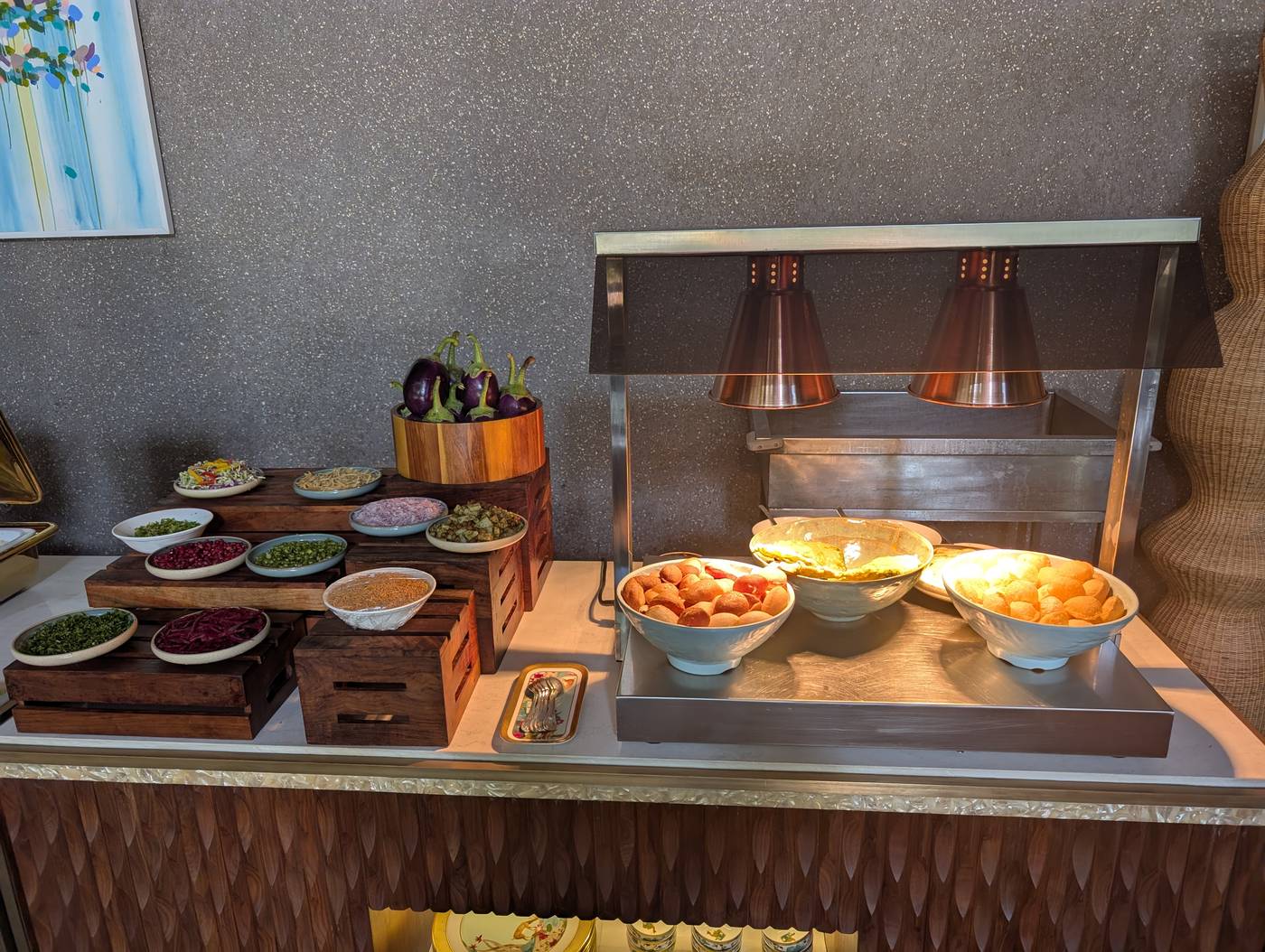
Street Food at Home — How Professional Hotels Do It
Street food has a magic that disappears the moment you try to recreate it in a home kitchen. The sizzle, the speed, the assault of aromas—it’s gone. And most people blame themselves, thinking they’re just not good enough. But that’s not the real issue. The real issue is that hotels use a completely different system.
Working across nine luxury hotels—from Jaipur Marriott to Rajmahal Palace to City Palace—I learned that the best street food at hotels isn’t casual. It’s obsessive. It’s systems-based. It’s reproducible. They don’t ask “how do I make this taste like street food?” They ask “what’s the system that maintains consistency while delivering that street food experience?”
Why do hotel chefs love street food? Because it teaches them that sometimes simplicity beats complexity 😂
Here’s what changed my game: hotels prep obsessively but assemble minimally. They do 80% of the work hours ahead of service, then 20% at the moment of eating. This is the opposite of what home cooks do, and it’s why they fail.
The Hotel System for Street Food at Home
- Conceptual Time: Understanding the system
- Prep Time: 60-90 minutes (done 2-4 hours before eating)
- Assembly Time: 5-10 minutes (at moment of service)
- Total Active Cooking Time: 90-100 minutes (spread over time)
- Servings: 6-8 people with leftovers
The Three-Step Hotel Approach
PHASE 1: THE PREP (2-4 hours before service)
- Make all chutneys fresh. Sweet tamarind chutney and green chutney should be made 2-3 hours ahead, not 10 minutes before. Flavors marry and deepen. Store in separate containers.
- Cook all starches: potatoes, rice, chickpeas. Cook them completely to the right texture, then cool them to room temperature on sheet pans spread thin. Never stack hot food—it creates steam and moisture.
- Roast all spice blends (Chaat Masala, garam masala, cumin powder) fresh if using for the first time. Small quantities only. Hotels roast 2 hours before service to catch them at peak fragrance.
- Prep all vegetables: chop onions, mince coriander, chop chillies. Store each in separate, labeled containers. This takes 20 minutes and saves 15 minutes during assembly.
- Make any fermented or marinated components (yogurt-based marinades, pickle elements). These need time to develop flavor complexity that last-minute prep can’t achieve.
- Chill serving dishes and utensils if the dish needs to be cold. Hotels do this. Temperature management is invisible but essential.
PHASE 2: THE MINDSET (critical thinking)
- Think about sequence: which component deteriorates fastest? That goes in last. Fried items go in last. Delicate greens go in last. Dense, durable items (potatoes, chickpeas) go in first.
- Think about temperature: contrast matters. Cold items meeting hot items, or vice versa, creates experience. Hotels calculate this deliberately—never accidental.
- Think about texture: every bite should have multiple textures. Soft, crispy, chewy, crumbly. If everything is soft, the dish fails. This is non-negotiable in hotel thinking.
- Think about flavor progression: first bite should hook you. Middle bites should develop complexity. Last bite should leave you wanting more. This is architecture, not chaos.
PHASE 3: THE ASSEMBLY (5-10 minutes before eating)
- Fill bowls or plates with the base item (potatoes, rice, etc.). Arrange on serving platters or individual dishes depending on your scenario.
- Layer vegetables in a logical order: dense items first, then aromatics, then delicate items.
- Add fried/crispy elements. These touch the plate last so they don’t absorb moisture. This is why sev and pappadums go on at the moment of service.
- Drizzle sauces. Use restraint—less is more. Too much sauce overwhelms. Hotels use a measured hand and often let guests add their own sauce.
- Garnish with fresh herbs if they’re on the menu. These go on literally 30 seconds before serving.
- Serve immediately. The window between completion and eating should be under 2 minutes for best results.
The Five Components System
Every street food dish at hotels breaks into five components. Master this, and you master street food at home:
- Component 1 – Base (Starch): Potatoes, rice, puffed rice, or bread. Prepared fully ahead, stored cool, used at room or cold temperature.
- Component 2 – Protein/Legumes: Chickpeas, lentils, paneer, or meat. Cooked ahead, cooled, stored separately. Proteins are durable—they don’t deteriorate quickly.
- Component 3 – Aromatics (Fresh): Onion, coriander, chillies, mint. Prepped ahead but added only during assembly. These are delicate and lose quality rapidly.
- Component 4 – Crunchy (Fried): Sev, pappadums, fried onions, roasted nuts. Prepared ahead but added literally at moment of service. This is the last thing touching the plate.
- Component 5 – Liquid (Sauce/Chutney): All chutneys and gravies. Made ahead, stored cool, applied with precision, not dumped. Less is more.
FAQ — System-Based Thinking About Street Food
Q: How do hotels make street food taste fresh if they prep hours ahead?
A: Because they separate components that deteriorate from components that improve with time. Potatoes improve with time (flavors meld). Sev deteriorates instantly. Store separately; combine only at service. This is the entire strategy.
Q: My homemade version never tastes as good as hotels. What am I missing?
A: You’re probably combining everything too early and not thinking about texture contrast or temperature contrast. Hotels think architecture first, ingredients second. Prep 80% ahead, assemble 20% at service.
Q: Can I prep street food the night before?
A: Yes, with caveats. Make starches, proteins, and chutneys the night before. Store everything in separate, labeled containers. Prep aromatics the morning of service (not night before). Add crunchy elements only at final assembly.
Save this recipe 📌
What’s your biggest challenge making street food at home? Is it texture, flavor, or the overall experience? Let me know in the comments and I’ll create a post specifically for your struggle!
Follow @cookingdepth on Instagram 📸 for daily street food inspiration and quick cooking hacks.
Master specific dishes like Crispy Bhel Puri or learn about Chaat Masala science.