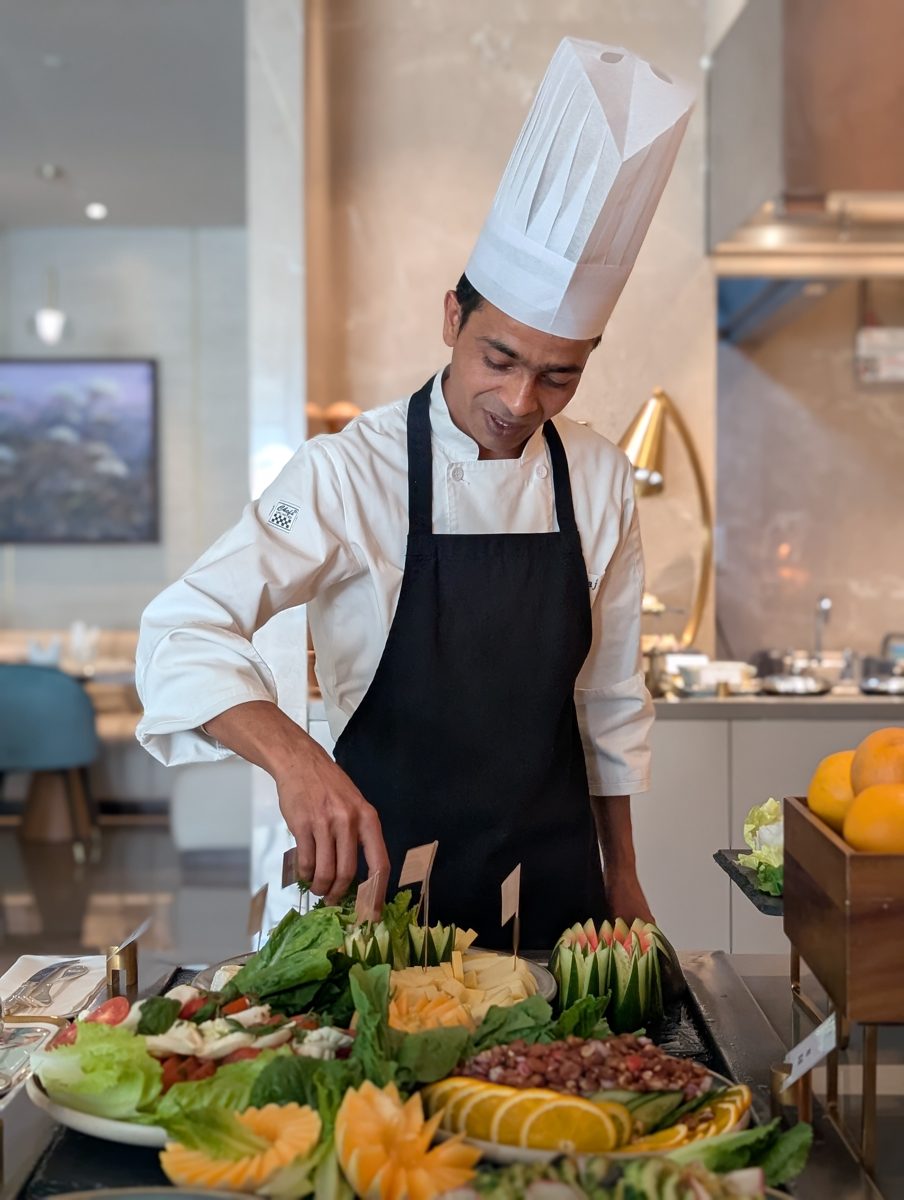
Recipes come and go. Trends change every season. But basic cooking techniques for beginners — the real foundational skills — remain the same whether you’re cooking in a home kitchen or a five-star hotel. Master these five techniques and you can cook almost anything, with or without a recipe.
I’m Giriraj Singh, a professional Pastry & Bakery Chef trained at FCI Ajmer, with over 10 years of experience at hotels like Park Hyatt Goa, Jaipur Marriott, Royal Orchid, and Rajmahal Palace Jaipur. These are the techniques I learned first, and they’re the ones I still use every single day.
1. Sautéing — The Art of Quick, High-Heat Cooking
Sautéing means cooking food quickly in a small amount of fat over high heat. The word comes from the French “sauter” — to jump. The food should literally be moving in the pan.
This is the foundation of almost every dish. Stir-fries, pasta sauces, curries — they all start with sautéing aromatics like onion, garlic, and ginger. The key is a hot pan, a little oil, and constant movement. Don’t walk away. Stay with it.
At HK Clarks Amritsar, my first professional kitchen, the senior chef made me sauté onions for an hour straight on my first day. Not because it was punishment — because getting comfortable with heat and a pan is the single most important basic cooking technique for beginners to learn.
2. Roasting — Letting the Oven Do the Work
Roasting is dry-heat cooking in an oven, and it’s criminally underused in Indian home kitchens. Roasted vegetables develop a sweetness and depth that boiled or steamed ones simply can’t match.
The secret to great roasting: high temperature (200-220°C), food spread in a single layer (not piled up), and a light coating of oil. Don’t open the oven door every five minutes — let the heat build and the browning happen.
At Jaipur Marriott, we roasted everything — bell peppers for sauces, tomatoes for soups, bones for stocks. Roasting concentrates flavour by driving out water. It’s effortless cooking with maximum flavour reward.
3. Braising — Low and Slow for Maximum Flavour
Braising is the opposite of sautéing. It’s slow, gentle cooking in liquid — and it turns tough, cheap cuts of meat or hard root vegetables into melt-in-your-mouth magic.
The technique is simple: sear your ingredient first (get that Maillard reaction going), then add liquid — stock, wine, water — cover the pot, reduce the heat, and let time do its thing. Two to three hours at a gentle simmer.
Some of the best dishes in the world — nihari, rogan josh, osso buco, coq au vin — are all braised. Patience is the only ingredient that most home cooks are missing.
4. Blanching — The Technique That Keeps Food Vibrant
Blanching means briefly boiling food and then immediately plunging it into ice water to stop the cooking. It’s how restaurants keep their vegetables bright green, perfectly tender, and full of snap.
At Park Hyatt Goa, every vegetable that went on a plate was blanched first and shocked in ice water. French beans, broccoli, asparagus — all of them. It preserves colour, locks in nutrients, and gives you control over the final texture.
At home, keep a bowl of ice water ready before you start boiling. Thirty seconds to two minutes in boiling salted water, then straight into ice. It’s one of those basic cooking techniques for beginners that immediately makes your food look and taste more professional.
5. Emulsifying — Making Things Creamy Without Cream
An emulsion is a stable mixture of two liquids that normally don’t mix — like oil and water, or oil and vinegar. Mayonnaise, vinaigrettes, hollandaise, even a glossy pasta sauce — all emulsions.
The trick is adding fat slowly while whisking constantly. For a vinaigrette, stream the oil in thin while whisking the vinegar. For a pasta sauce, toss hot pasta with a splash of pasta water and grated cheese — the starch in the water helps bind the fat and liquid into that creamy, clingy sauce.
This was a game-changer when I started working in Continental and Italian kitchens. Understanding emulsions means you can make sauces that are rich and glossy without drowning everything in cream.
Why These Five Matter
These aren’t fancy techniques. They’re the building blocks. Every complex dish you’ve ever admired at a restaurant is built on some combination of sautéing, roasting, braising, blanching, and emulsifying.
Learn these properly, and recipes become guidelines rather than rigid instructions. You’ll start understanding why a recipe asks you to do something — not just following steps blindly. That’s the difference between cooking and just heating food.
Follow me on Instagram @cookingdepth for daily cooking inspiration.