
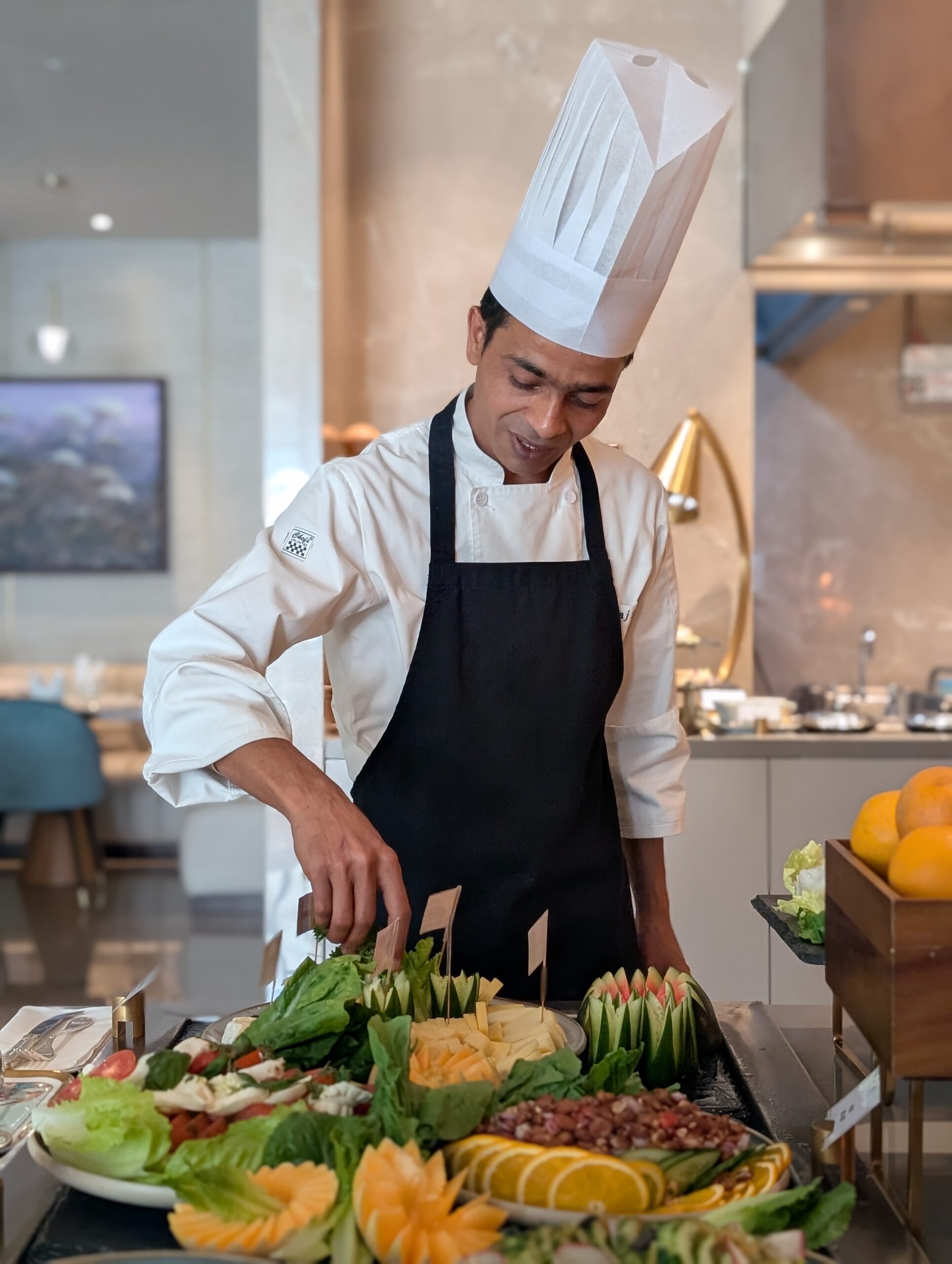
Hotel-Style Plating At Home — 5 Simple Rules
You spend an hour making a beautiful dessert, then plop it onto a plate like cafeteria food. The taste is five-star but the presentation says roadside dhaba. What if I told you that hotel-style plating follows just five rules?
At Park Hyatt Goa, plating was not a suggestion — it was law. Every dessert that left my section had to meet a visual standard before it could go to the guest. I remember my first week there, I placed a chocolate mousse in the center of a plate and called it done. My executive chef picked it up, scraped it off, and said “plate it like you care.” That moment stung, but it taught me that presentation is half the experience. Through my years at Rajmahal Palace by RAAS and City Palace Jaipur, I developed a simple system that works in any kitchen — professional or home.
Your dessert could cure heartbreak but if it looks ugly on the plate, nobody is posting it on Instagram 😂
Rule 1: Use White Space Like a Frame
The biggest mistake home cooks make is filling the entire plate. In hotel kitchens, we use only the center 60-70% of the plate. The rim acts as a frame for a painting. White space makes the food look elegant and intentional. Use plates that are slightly larger than you think you need.
Surprising fact: Research from Oxford University shows that food plated with adequate white space is perceived as 30% more flavorful than the same food crowded on a smaller plate.
Rule 2: Odd Numbers Always Win
Place elements in groups of three or five, never two or four. Three dots of sauce, five berries, three quenelles. Odd numbers create visual interest because the eye keeps moving. Even numbers feel static and boring. This rule comes from Japanese aesthetic principles that fine-dining kitchens adopted decades ago.
Rule 3: Build Height, Not Width
Stack elements vertically instead of spreading them flat. A slice of cake looks ordinary lying flat, but lean it at an angle against a quenelle of cream and suddenly it looks like a restaurant dessert. At Jaipur Marriott, we plated every pastry with at least two levels of height. Use a base layer (cake, cookie, crumble), a main element angled against it, and a top garnish. Three layers of height transform any dessert.
Rule 4: Add One Color Contrast
If your dessert is brown (chocolate cake), add one element that pops — a bright red raspberry, a green mint leaf, a golden tuile. The contrast draws the eye and makes the plate look professional. Do not add rainbow colors. One contrasting element is enough. At Royal Orchid, my go-to contrast elements were fresh berries, edible flowers, and gold leaf — simple but effective every time.
Rule 5: Clean the Plate Before It Leaves
This is the rule most people skip. After plating, take a clean damp cloth and wipe any smudges, drips, or fingerprints from the plate rim. In every hotel I have worked at — from HK Clarks Amritsar to Mor Baug Jamnagar — we kept a stack of damp side towels specifically for final plate cleaning. A clean rim is the difference between amateur and professional presentation.
Quick Plating Toolkit For Home
- A squeeze bottle for sauces (₹50 from any kitchen store)
- An offset spatula for spreading and lifting
- Two spoons for making quenelles (that elegant oval shape)
- A fine-mesh sieve for dusting cocoa or powdered sugar
- Tweezers for placing small garnishes precisely
You do not need expensive equipment. I trained at FCI Ajmer using the most basic tools, and these five items cover 90% of professional plating techniques.
Practice Exercise
Take any dessert you have — even store-bought ice cream. Put it on a white plate using these five rules: keep the rim clean, use an odd number of elements, build some height, add one color contrast, and leave white space. Photograph it. Then plate the same dessert ignoring these rules. Compare the photos. You will never plate the old way again.
FAQ
Do I need special plates for hotel-style plating?
Plain white round plates work best. They let the food be the star. You can find good ones at any home store for ₹100-200 each. Avoid plates with busy patterns or bright colors.
How do chefs make those perfect sauce dots?
Use a squeeze bottle. Place dots in a line or curve, then drag a toothpick through them for that classic teardrop effect. Practice on a cutting board before going to the actual plate.
FAQ
Is garnish just for decoration?
In professional kitchens, every garnish should be edible and complement the flavor. A mint leaf on chocolate works because mint and chocolate pair well. Never add garnish that clashes with the dish or that guests cannot eat.
Save this tip 📌 — screenshot these 5 rules and tape them to your kitchen wall.
Show me your best plating attempt in the comments — I would love to give you feedback!
Follow @cookingdepth on Instagram 📸
For desserts to practice your plating on, try my Chocolate Truffle Cake and Mango Mousse recipes.