
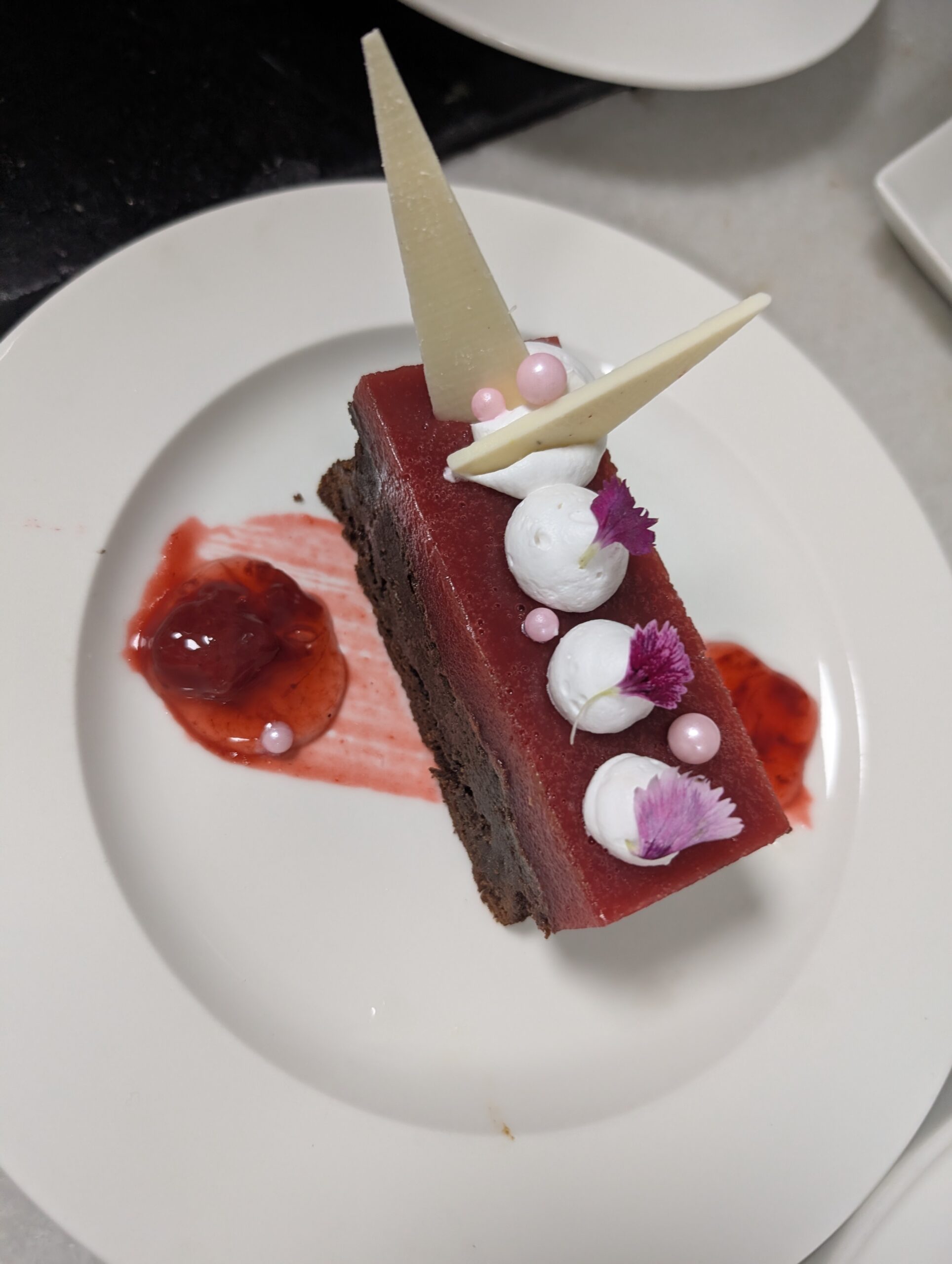
Fresh Cream That Holds All Day — The Gelatin Trick
You whip fresh cream to perfect peaks. You frost your cake. Two hours later, the cream is weeping, sliding, and your beautiful cake looks like it is crying. Every home baker has been there.
When I was working at Heritage Village Club Goa, we had outdoor dessert buffets in 35°C heat. Regular whipped cream would collapse in fifteen minutes under that Goan sun. My senior chef taught me a trick that changed everything — stabilizing whipped cream with gelatin. It was a simple technique but the result was extraordinary. The cream held its shape for the entire four-hour dinner service. Later, at Rajmahal Palace Jaipur, I refined this method further, adjusting ratios for different climates and applications. After ten years of using this across multiple five-star properties, I can tell you this is the single most useful cream technique any baker can learn.
Unstabilized whipped cream at an outdoor buffet is basically a countdown timer shaped like a cake 😂
Why Regular Whipped Cream Collapses
Whipped cream is a foam — tiny air bubbles trapped in fat. Over time, gravity pulls the liquid out and the fat network weakens. Heat accelerates this dramatically. The foam structure simply cannot support itself beyond 30-60 minutes at room temperature. This is physics, not a baking failure.
Surprising fact: Adding just 1 teaspoon of bloomed gelatin per cup of cream creates a protein network that reinforces the fat structure, making your whipped cream stable for 8-12 hours even without refrigeration.
The Gelatin Trick — Step by Step
Ingredients
- 250 ml heavy cream (minimum 35% fat), well chilled
- 2 tablespoons powdered sugar
- 1 teaspoon gelatin powder
- 1 tablespoon cold water
- ½ teaspoon vanilla extract
Method
- Bloom the gelatin: Sprinkle gelatin over cold water in a small bowl. Let it sit for 5 minutes until it absorbs the water and becomes spongy.
- Melt the gelatin: Microwave the bloomed gelatin for 10 seconds or place the bowl in hot water until it becomes a clear liquid. Let it cool to room temperature — this step is critical. Hot gelatin will melt the cream fat.
- Whip the cream: In a chilled bowl with a chilled whisk, whip the cream and sugar until you reach soft peaks (the cream folds over gently when you lift the whisk).
- Add gelatin: With the mixer running on medium speed, pour the cooled liquid gelatin in a thin stream into the cream. Continue whipping until you reach stiff peaks.
- Use immediately: Pipe or spread as needed. The cream will set firmer as the gelatin activates in the fridge.
Common Mistakes and How To Avoid Them
- Gelatin too hot: If you add hot gelatin to cold cream, it will form stringy lumps. Always cool it to room temperature first.
- Too much gelatin: More than 1.5 teaspoons per cup of cream makes the texture rubbery. You want stable, not bouncy.
- Under-whipping before adding gelatin: The cream must be at soft peaks before gelatin goes in. Adding gelatin to liquid cream does not work.
- Adding gelatin too fast: Pour in a thin, steady stream while whipping. Dumping it all at once creates gelatin clumps.
When To Use This Method
Use stabilized cream for layer cakes, outdoor events, dessert buffets, trifles, and any situation where your dessert needs to hold for more than an hour. At Park Hyatt Goa, we used this method for every whipped cream application during the monsoon season when humidity made regular cream even more unstable. For quick home use where you will eat the dessert within 30 minutes, regular whipped cream is perfectly fine.
Alternative Stabilizers
Besides gelatin, you can also stabilize cream with cornstarch (1 tablespoon cooked into a paste and cooled), cream cheese (2 tablespoons per cup of cream), or commercial stabilizers like Dr. Oetker Whip It. Each gives a slightly different texture. Gelatin gives the most natural whipped cream taste and feel, which is why professional kitchens prefer it.
FAQ
Can I use agar-agar instead of gelatin for vegetarian cream?
Agar-agar sets too firmly and does not give the same creamy texture. For vegetarian options, use cornstarch paste or a commercial vegetarian stabilizer instead.
How far in advance can I make stabilized whipped cream?
You can make it up to 24 hours ahead and store it covered in the refrigerator. Re-whip gently by hand before using if it has been sitting overnight.
Does the gelatin change the taste?
Not at all. The amount used is so small that it is completely undetectable in flavor. The texture feels like regular whipped cream — just one that actually behaves.
Save this tip 📌 — your cakes will never cry again.
What is your biggest struggle with whipped cream? Drop a comment and I will help you fix it!
Follow @cookingdepth on Instagram 📸
Check out my Eggless Black Forest Cake and Butterscotch Cake for recipes that use this exact cream technique.