
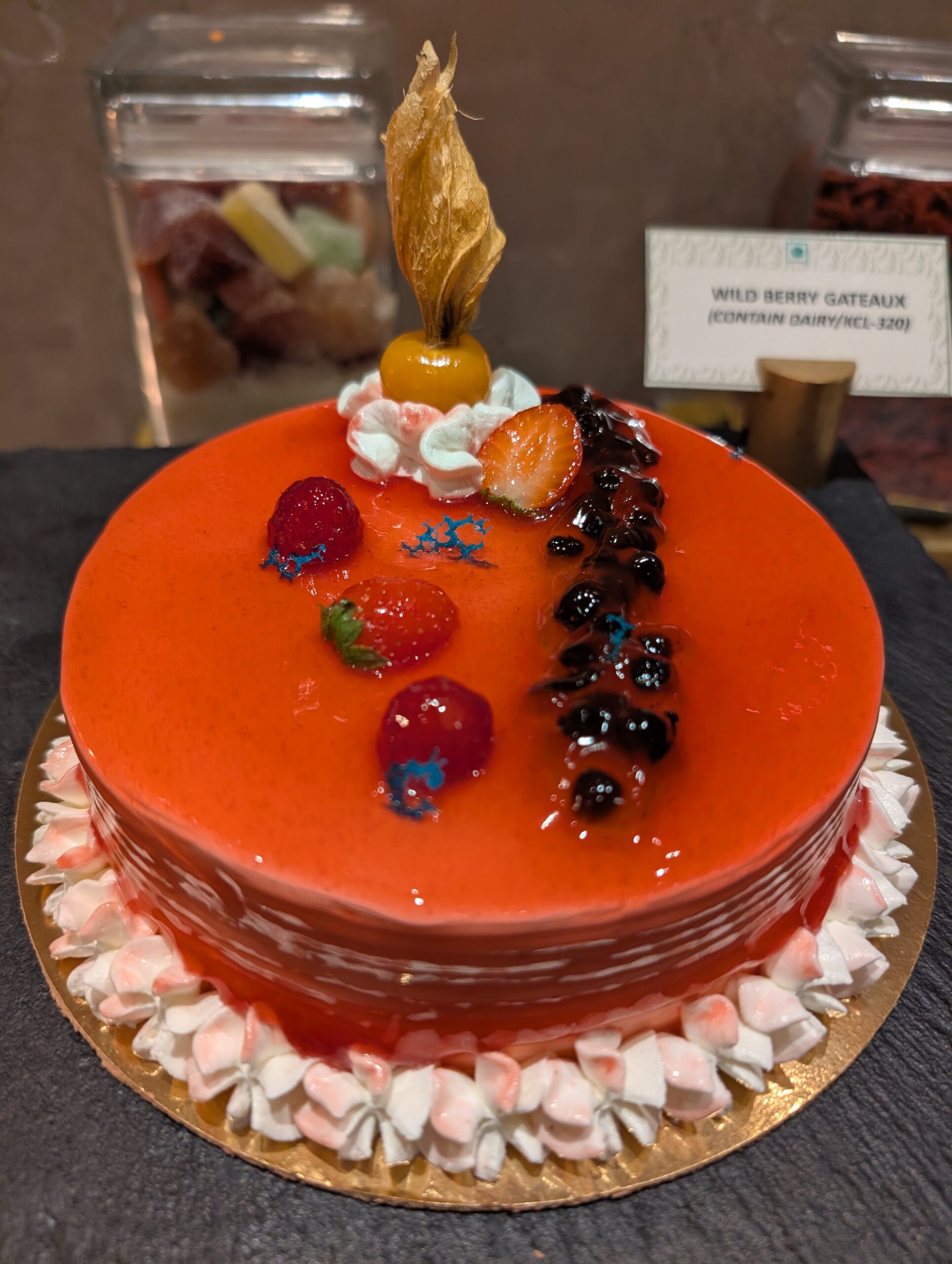
Mirror Glaze Temperature Guide — The One Degree That Matters
You can have the most expensive chocolate, the best silicone mould, and years of practice — but if your mirror glaze is one degree too hot or too cold, it will look like a kindergarten art project. Temperature is the single variable that separates a flawless, reflective finish from a streaky, lumpy disaster. And today, I am going to give you the exact numbers.
I have poured mirror glaze hundreds of times across Park Hyatt Goa, Rajmahal Palace Jaipur, and Mor Baug Jamnagar. And I still use a thermometer every single time. At Park Hyatt, our pastry chef had a rule: if he saw you pour glaze without checking the temperature, you started over — no exceptions. It seemed extreme until I realized he was right. At Rajmahal Palace by RAAS, I once had to glaze 30 individual entremets for a royal dinner. I checked the temperature before every single pour. All 30 came out flawless. My FCI Ajmer training covered the basics, but it was repetition in professional kitchens that burned these numbers into my memory.
Mirror glaze is the only recipe where your thermometer has more power than your skills — respect the numbers or the numbers will embarrass you 😂
The fact that changes everything: Mirror glaze does not care about your recipe — it cares about physics. At 35°C, gelatin is fluid enough to self-level into a perfect mirror. At 38°C, it is too thin and slides off. At 32°C, it sets too fast and creates ridges. The window is 33-35°C, and 34°C is the sweet spot for most formulas.
The Complete Mirror Glaze Temperature Guide
Prep Time: 15 minutes | Cook Time: 10 minutes | Cooling Time: 30-45 minutes | Total Time: 1 hour 10 minutes | Servings: Enough for one 7-8 inch entremet
Ingredients — Standard Mirror Glaze
- 150g sugar
- 150g glucose syrup
- 75ml water
- 100g sweetened condensed milk
- 150g white or dark chocolate (depending on desired colour)
- 10g gelatin sheets (bloomed in cold water)
- Gel food colouring (if using white chocolate base)
Instructions
- Bloom gelatin sheets in cold water for at least 10 minutes until soft and pliable.
- Combine sugar, glucose syrup, and water in a saucepan. Bring to a boil and cook to exactly 103°C. Remove from heat immediately.
- Add condensed milk to the hot syrup and stir gently.
- Pour the hot mixture over chopped chocolate in a tall container. Let it sit for 1 minute to melt the chocolate.
- Squeeze excess water from bloomed gelatin and add to the mixture.
- Blend with an immersion blender — keep the blender head submerged at an angle to avoid creating air bubbles. Blend for 2 minutes until perfectly smooth.
- If adding colour, add gel food colouring now and blend briefly to incorporate.
- Strain through a fine-mesh sieve twice. This removes any lumps and micro-bubbles.
- Cover with plastic wrap touching the surface (to prevent a skin) and let cool to 33-35°C. This takes approximately 30-45 minutes at room temperature.
- Once at 34°C, pour over your frozen entremet in one continuous, confident motion from the centre outward.
The Critical Temperature Breakdown
103°C — Syrup stage: This is when you stop cooking the sugar syrup. Higher than 103°C and the glaze becomes too thick when set. Lower and it will not set properly.
38°C+ — Too hot: Glaze is too fluid. It slides off the frozen entremet, pools at the bottom, and creates a thin, uneven coat with visible drip marks.
35-36°C — Slightly warm: Workable but thin. Good for a second coat if needed. Produces a thinner layer with more transparency.
33-35°C — The sweet spot: This is where the magic happens. The glaze is fluid enough to self-level but viscous enough to cling and create that signature mirror finish. Pour at 34°C for best results.
30-32°C — Too cool: Glaze is already starting to set. It will not self-level, creating ridges, lines, and an uneven surface. You will see the pour pattern instead of a mirror.
Below 30°C — Too late: The gelatin has set. Do not pour. Gently rewarm to 34°C in a bain-marie, stirring carefully to avoid bubbles.
Chef Tips
- Use a digital instant-read thermometer, not an oven thermometer. You need precision to the degree.
- If you see tiny bubbles on the surface after pouring, use a kitchen torch held at a distance to pop them within 30 seconds — before the glaze sets.
- Your entremet must be frozen rock-solid. If it is even slightly soft, the temperature difference will not be enough to set the glaze quickly, and it will slide.
FAQ
Can I reheat mirror glaze if it cooled too much?
Yes, gently rewarm in a bain-marie or in 5-second microwave bursts, stirring between each. Bring it back to 34°C. Avoid overheating — if it goes above 40°C, the gelatin structure weakens and you lose the mirror quality.
Why does my glaze have streaks instead of a smooth finish?
Streaks happen when the glaze is poured too cool (below 33°C) or when you pour hesitantly in multiple passes. One confident pour from the centre at 34°C is the fix.
Does the chocolate type affect the temperature?
Slightly. Dark chocolate glaze can be poured at 33-34°C, while white chocolate glaze works best at 34-35°C because it has a slightly different viscosity profile. Always test a small amount on a cold plate first.
Save this recipe 📌
What is your biggest mirror glaze frustration? Drop it below and I will give you a specific fix — I have seen every glaze disaster there is!
Follow @cookingdepth on Instagram 📸
Ready to put this guide to use? Try our Chocolate Mirror Glaze Brownie Entremet recipe, or master another precision skill with our guide on How To Temper Chocolate Like A Professional.