
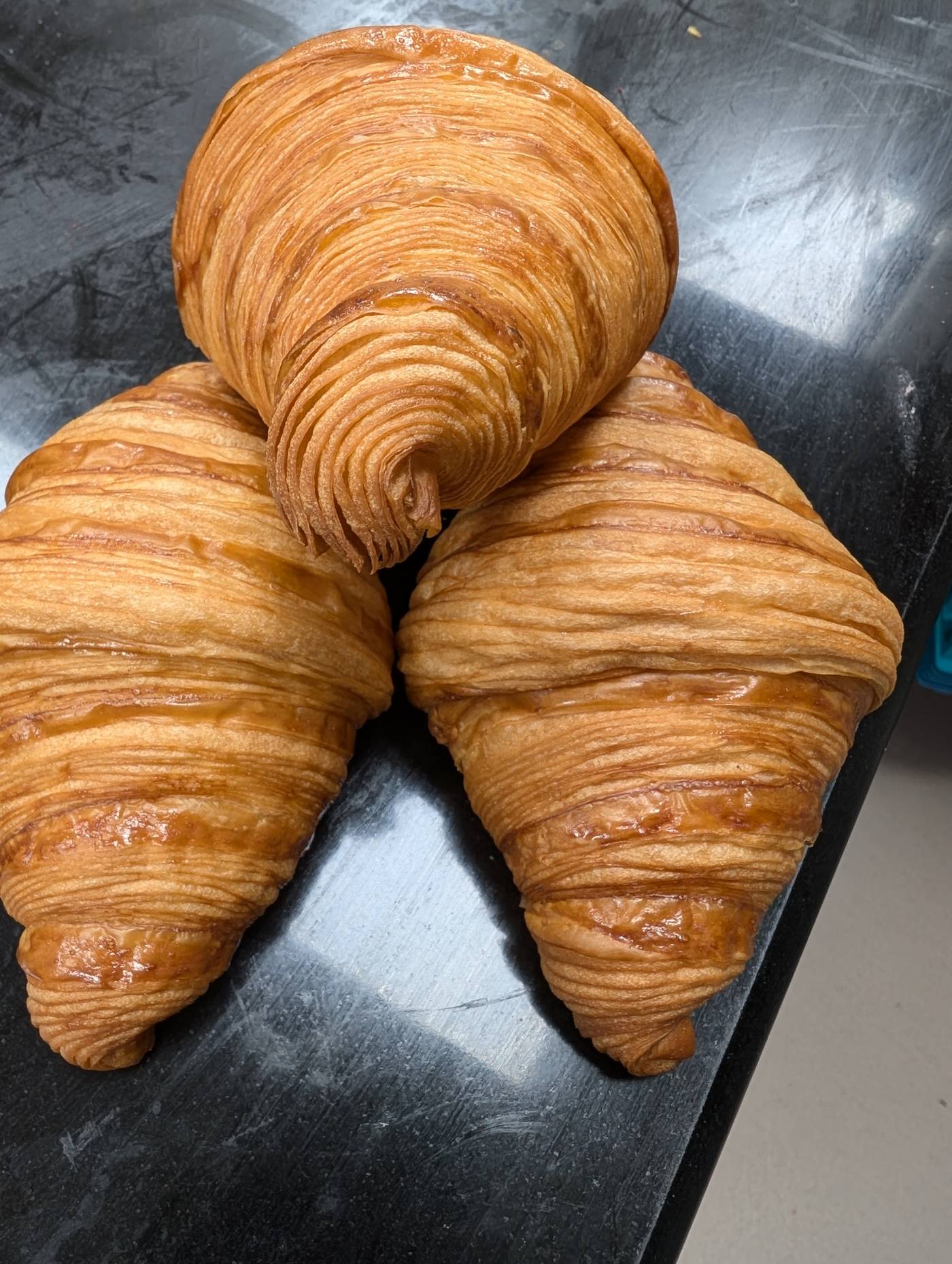
How To Make Perfect Croissants At Home (72 Layers, Step by Step)
My first croissant attempt was a buttery brick. Not flaky, not layered — just sad. My 50th attempt was this recipe. I am sharing it so yours does not take 50 tries. 🥐
The Truth About Croissants
Most people think croissants are impossible at home. They are not impossible — they just require patience and cold hands. The technique is called lamination, and it is what creates those 72 layers of butter that shatter when you bite in. You cannot fake it. You cannot rush it. But you absolutely can do it.
Fun fact nobody tells you: the hot coffee you see at French cafés next to croissants is not accidental. The butter in a good croissant melts slightly on contact with heat — releasing all the layers at once. That is why the first bite is always the best one. 🧈
Ingredients
- 500g strong bread flour
- 10g salt
- 80g caster sugar
- 10g instant yeast
- 300ml cold whole milk
- 30g unsalted butter (softened, for dough)
- 280g European-style unsalted butter (84% fat, for lamination)
- 1 egg + 1 tbsp milk (for egg wash)
Method
- Mix flour, salt, sugar and yeast. Add cold milk and softened butter. Knead 8 minutes to a smooth dough. Do not overwork.
- Shape into a rectangle, wrap in cling film, refrigerate overnight (minimum 8 hours).
- Beat lamination butter into a 20x20cm square between parchment. Refrigerate 30 minutes — it should be pliable but cold.
- Roll dough into a 40x20cm rectangle. Place butter block in centre. Fold dough over butter like an envelope.
- Roll to 60x20cm. Fold in thirds (letter fold). This is fold 1. Wrap and refrigerate 30 minutes.
- Repeat the roll and fold 2 more times with 30 minute rests between each. Total: 3 folds = 27 layers.
- Roll dough to 4mm thick. Cut into triangles 12cm base, 20cm height.
- Roll each triangle tightly from base to tip. Curve slightly into crescent shape.
- Place on lined tray. Prove at room temperature 2-3 hours until doubled and jiggly.
- Brush gently with egg wash. Bake at 200°C for 18-20 minutes until deep golden.
Chef Tips
- Temperature is everything — if butter breaks through the dough at any point, stop and refrigerate immediately for 20 minutes.
- Use European butter — higher fat content means more flavour and better lamination. Standard butter at 80% fat will work but 84% is noticeably better.
- The jiggle test — before baking, pick up the tray and shake gently. The croissants should wobble like jelly. That means the layers have proofed properly.
Frequently Asked Questions
Why did my croissants not have layers inside?
Either the butter was too warm and merged with the dough (no distinct layers), or the dough was under-proved before baking. Both issues are about temperature control.
Can I freeze croissant dough?
Yes — freeze after shaping, before proving. When ready to bake, thaw overnight in the fridge then prove at room temperature for 3-4 hours before baking.
How many days do croissants stay fresh?
Best eaten same day. Day 2 is acceptable warmed in oven at 160°C for 5 minutes. After that — they are only good for bread pudding.
Why Most Homemade Croissants Fail
Croissants fail for three reasons: the butter breaks through the dough, the layers are rushed, or the proofing is cut short. I have seen all three in professional kitchens, not just home ones. Butter that is too cold shatters and breaks through. Butter that is too warm melts into the dough and destroys the layers. The temperature window you are working in is about 5 degrees Celsius. That is it.
This is why laminated pastry requires patience more than skill. You can learn the technique in a weekend. But you cannot rush the resting times. Every fold needs the gluten to relax and the butter to firm up again before the next fold. Skip a rest and you will pull the layers apart yourself before the oven even gets a chance.
The 72-Layer Breakdown
A standard croissant uses a 3-fold, 3-fold, 3-fold process — also called a letter fold or book fold. After three rounds of folding, you have 27 layers of butter between 28 layers of dough. When baked, steam lifts each layer and you get the honeycomb interior that makes a real croissant different from a bread roll shaped like a crescent. The 72-layer count you often see refers to variations using four or more folds. More folds does not always mean better — too many and the layers merge and you lose definition.
Save this recipe for your next baking weekend 📌
Related Recipes
→ Classic Black Forest Cake Recipe
→ Pistachio Éclair Recipe
Save this recipe — you will want to come back to it 📌
First time making croissants? Tell me how it goes in the comments 👇 And if yours come out perfect first try — I want proof. 😄
Follow @cookingdepth on Instagram for daily recipes and behind-the-scenes 📸